
The Death of the Distance Model
The old playbook for food security relied on a simple, fragile logic: grow it where the land is cheap and ship it where the people are. That model is breaking. In the last twelve months, we have seen a violent pivot toward decentralization. It is no longer about efficiency; it is about resilience. We are witnessing the rise of autonomous micro-farms—small-scale, high-tech production units embedded directly into the urban fabric of Latin American hubs. Why wait for a truck to navigate a congested highway when the produce is grown three floors above the consumer?
This shift is not a slow evolution but a leapfrog event. In Latin America, the adoption of IoT-based systems for urban gardening, specifically in tomato production, signals a transition from hobbyist greenery to strategic infrastructure. These are not mere gardens; they are data-driven assets. By utilizing sensor networks and real-time monitoring, urban farmers are stripping away the guesswork of agriculture, turning concrete jungles into productive zones. This is the delta we are tracking: the move from passive urban gardening to active, autonomous food production.

Predictive Intelligence: Beyond Simple Monitoring
Six months ago, smart farming meant knowing when to water your plants. Today, the frontier is predictive intelligence. We are seeing the integration of AI-driven data fusion and volatilome sensing—using hyperspectral and multi-spectral signatures to detect crop stress before a human eye ever could. This shifts the paradigm from descriptive monitoring to near-real-time predictive disease intelligence. When you can stop a pathogen from entering the supply chain before it even manifests, you change the economics of food safety.
"Companies are using AI to improve forecasting and moving manufacturing closer to consumption centres rather than where production is cheapest."— Ramanathan, Industry Expert on Decentralized Manufacturing
This logic extends beyond the soil. Look at the parallel rise of precision aquaculture in Canada, where AI is being merged with genomics and sensor networks to monitor fish behavior and water quality in real time. Whether it is a tomato in Bogotá or a salmon in a land-based Canadian tank, the goal is the same: total environmental control. This convergence of AI and biology allows operators to optimize productivity with a level of precision that was unthinkable a decade ago.
The Resilience Pivot
The shift from efficiency to resilience is the defining economic trend of 2026. AI is not just a tool for cost-cutting; it is the backbone of a decentralized survival strategy.
The Infrastructure of Autonomy
Urban micro-farms do not exist in a vacuum; they require a modernized city. There is a fascinating correlation between the deployment of autonomous food systems and the broader tech-upgrading of Latin American hubs. For instance, the rapid rollout of electric bus fleets in cities like Curitiba, Bogotá, and Mexico City—with 5,900 e-buses now operating across 12 Latin American countries—demonstrates a systemic openness to high-tech, sustainable infrastructure. When a city can manage a complex network of bi-articulated electric buses, it possesses the technical literacy to manage a network of autonomous micro-farms.
| Feature | Traditional Urban Ag | Autonomous Micro-Farming |
|---|---|---|
| Decision Making | Human Observation | AI-Driven Predictive Intelligence |
| Supply Chain | Centralized/Long-Haul | Decentralized/Hyper-Local |
| Monitoring | Periodic/Manual | Real-time IoT/Volatilome Sensing |
| Goal | Cost Efficiency | Systemic Resilience |
Policy is finally catching up to the tech. In the United States, the removal of pilot status for the Office of Urban Agriculture and Innovative Production (OUAIP) signals that urban farming is no longer an experiment—it is a permanent fixture of national food strategy. This institutionalization provides a blueprint for Latin American governments to move beyond fragmented projects and toward integrated urban agricultural zones.
The Economic Calculus of the Micro-Farm
Can these systems actually scale? The numbers suggest they can, provided the energy equation is solved. The focus has shifted toward optimizing the Energy Return on Investment (EROI) for vertical farming. By integrating photovoltaic-powered irrigation and monitoring systems, these farms are decoupling production from the volatile energy grid. This is critical in regions where power stability remains a challenge.
The financial incentive is clear. In the FMCG sector, AI integration is already generating 8% to 10% cost savings across the value chain. When you move food manufacturing closer to the farm gate and production closer to the consumption center, you eliminate the most expensive and risky part of the chain: the middle. With 61% of companies already investing in AI upskilling, the workforce is preparing for a world where the farmer is as much a data scientist as a grower.
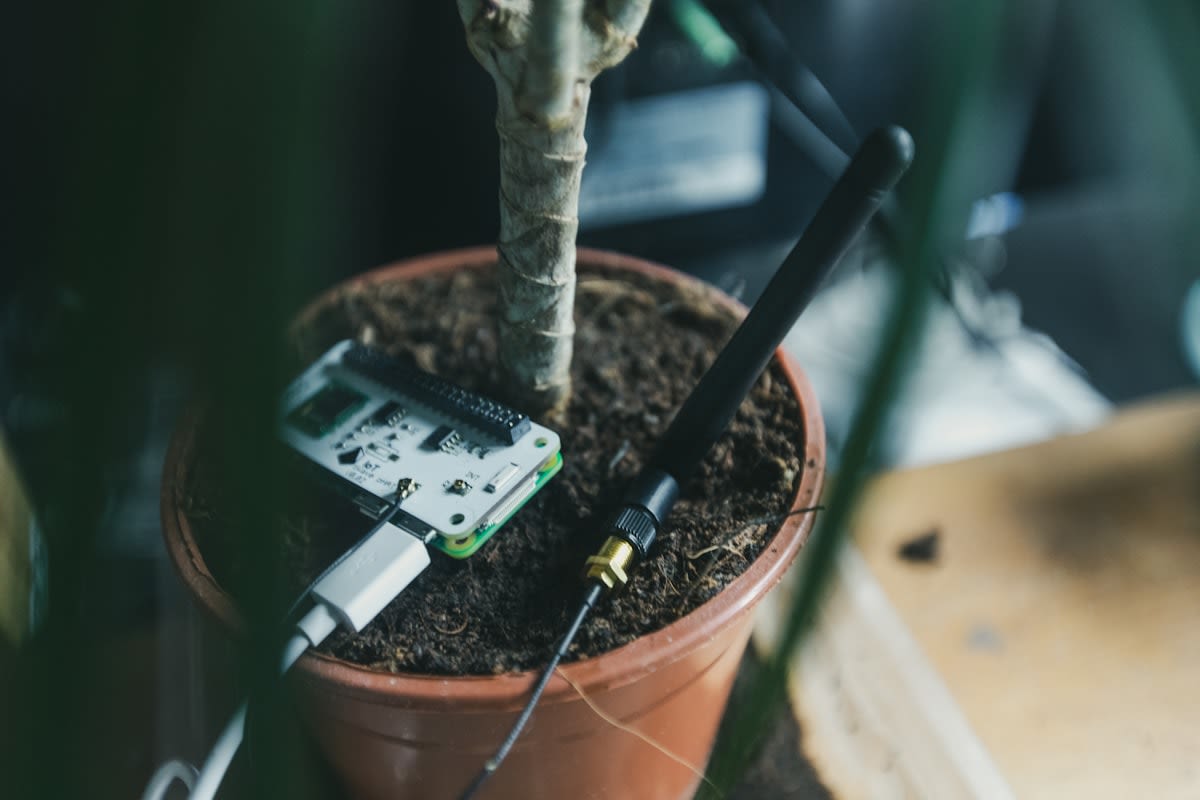
We are seeing this play out globally, from the remote sensing of urban agriculture in Niamey, Niger, to the high-tech roof space inventories being analyzed for production potential. The common thread is the reclamation of urban space. Cities are no longer just places where food is consumed; they are becoming the primary sites of production. The urban harvest shift is not just about food; it is about the autonomy of the city.
Is this the end of traditional farming? Hardly. But it is the end of the monopoly that rural land has held over food security. By distributing production across thousands of autonomous micro-hubs, we create a redundant, fail-safe system. If one hub fails, the city still eats. That is the definition of resilience.