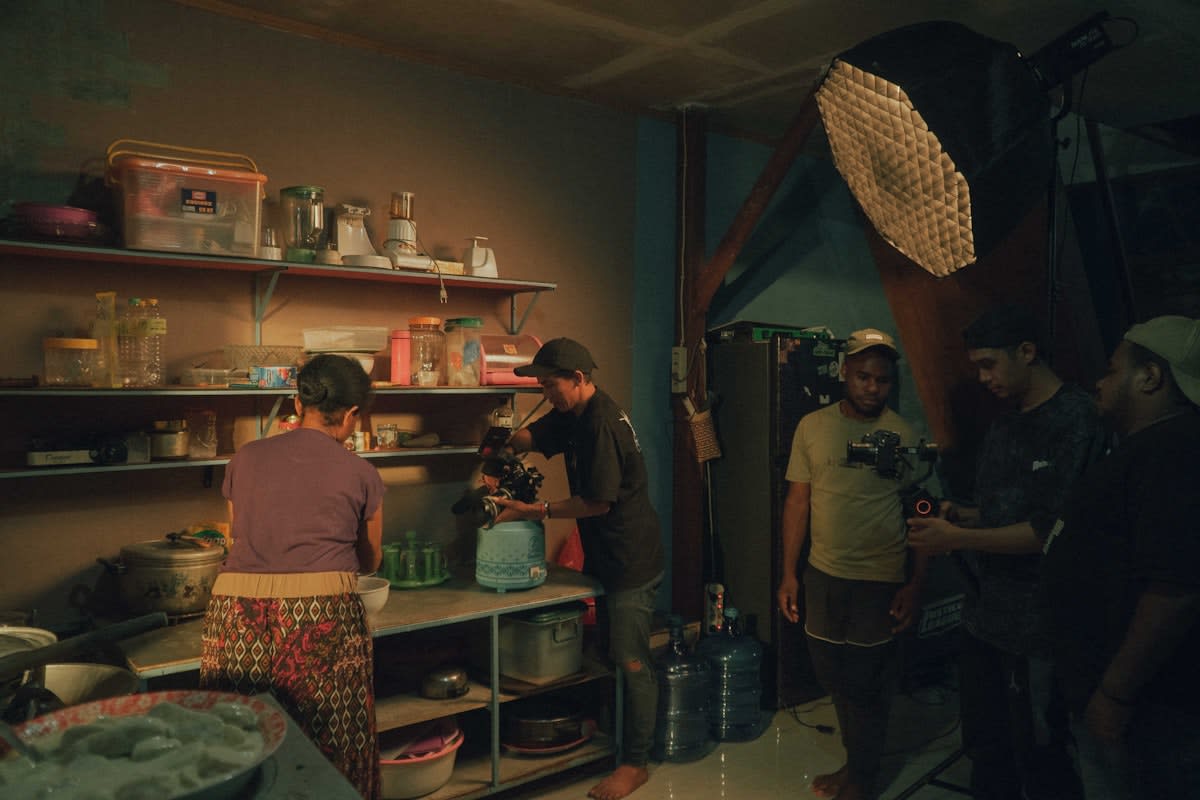
The Philosophy of Circular Gastronomy
Most people mistake zero-waste for a mere aesthetic choice involving matching glass jars and minimalist shelving. That is a hobby, not a system. Circular gastronomy is the rigorous application of industrial ecology to the home kitchen. It requires shifting your perspective from a linear 'buy-consume-discard' model to a closed-loop system where every output becomes an input for another process. Why do we accept that a carrot top is waste when it is actually a nutrient-dense ingredient? The goal is to eliminate the concept of waste entirely, treating the pantry as a resource library rather than a transit station for disposable packaging.
This shift is not just a moral imperative; it is a logistical necessity. According to the UNEP Food Waste Index Report 2024, approximately 19% of food available to consumers is wasted globally, contributing significantly to methane emissions in landfills (Source: UNEP, 2024). When you implement a circular pantry, you are essentially building a personal hedge against supply chain volatility. By maximizing the utility of every gram of organic matter, you reduce your dependency on external, fragile logistics and reclaim control over your nutritional intake.

Prerequisites: The Circular Toolkit
Before you purge your cabinets, you need the right infrastructure. Do not make the rookie mistake of buying a 'zero-waste starter kit' made of virgin plastic or imported bamboo. The most sustainable tool is the one you already own. Your primary objective is to acquire durable, non-reactive containers that allow for clear visibility of contents. If you cannot see the food, you will forget it exists, and it will eventually become waste.
- Diversified storage: Glass jars of varying sizes (repurposed from commercial products), stainless steel bins for bulk grains, and beeswax wraps for perishables.
- Precision weighing tools: A digital scale to ensure you only purchase the exact quantity required, minimizing surplus.
- A Sourcing Map: A curated list of local producers, bulk-bin stores, and farmers markets that accept own-container (BYOC) policies.
- Preservation hardware: Vacuum sealers or fermentation crocks to extend the lifecycle of seasonal gluts.
I have spent over a decade refining these systems in different climates, from the humid markets of Southeast Asia to the structured cooperatives of Northern Europe. One thing remains constant: the friction occurs at the point of procurement. In Japan, the concept of 'Mottainai'—a sense of regret when something is wasted—is embedded in the culture, making bulk sourcing intuitive. In contrast, in highly commodified Western supermarkets, you have to fight the architecture of the store, which is designed to push high-volume, packaged goods. You must be intentional about where you shop to avoid the 'packaging trap'.
Step-by-Step Implementation
- Conduct a Leakage Audit: For two weeks, track every single item that leaves your kitchen for the bin. Categorize it: was it avoidable (over-bought), structural (packaging), or biological (spoiled)? This data is your baseline.
- Map Your Resource Loops: Identify which 'waste' streams can be converted. Coffee grounds become garden nitrogen; citrus peels become fermented cleaning enzymes; stale bread becomes sourdough starter or croutons.
- Establish a 'First-In, First-Out' (FIFO) System: Organize your pantry so the oldest stock is always at the front. This simple industrial logic prevents the 'hidden bag of flour' syndrome that leads to spoilage.
- Transition to Bulk Procurement: Start with dry goods—lentils, rice, nuts. Move to liquids and oils once you have established a relationship with a supplier who accepts reusable glass bottles.
- Implement a Closed-Loop Composting Cycle: Whether using a Bokashi bin for urban apartments or a traditional heap for rural settings, ensure your organic waste returns to the soil to grow more food.
"The transition to a circular economy requires us to rethink the very definition of waste. In a truly circular system, waste is simply a resource in the wrong place."— Ellen MacArthur Foundation, Circular Economy Framework
Now that the structure is in place, you must address the chemistry of preservation. Circular gastronomy is as much about biology as it is about organization. To truly eliminate waste, you must master the art of the 'extended lifecycle.' This means understanding how to shift a vegetable from its fresh state to a fermented state, and finally to a dehydrated or powdered state. When I first started, I struggled with the 'seasonal glut'—having forty kilos of tomatoes in August and none in December. The solution isn't a larger freezer; it is a diversified preservation strategy.
| Storage Material | Best For | Circular Advantage | Lifespan |
|---|---|---|---|
| Borosilicate Glass | Ferments, Grains, Oils | Infinite recyclability, non-reactive | Decades |
| Stainless Steel | Bulk Dry Goods, Flour | Light-blocking, indestructible | Lifetime |
| Beeswax Wraps | Cheese, Half-cut Veg | Compostable, replaces LDPE plastic | 1-2 Years |
| Ceramic/Stoneware | Long-term Fermentation | Thermal stability | Centuries |
From a practitioner's perspective, the real battle is fought in the 'gray areas' of the pantry. Professionals in the field often debate the efficiency of home-composting versus centralized industrial composting. Some argue that small-scale Bokashi systems are too slow for high-volume households, while others claim that transporting organic waste to a central facility introduces too much carbon overhead. My experience? The best system is the one you actually maintain. I have seen people buy expensive electric composters only to let them collect dust because the maintenance was too high. Simplicity always beats high-tech complexity in a domestic setting.

Common Pitfalls to Avoid
The most dangerous trap is the 'Aesthetic Upgrade.' This happens when a person throws away perfectly functional plastic containers to buy a matching set of glass jars. This is not zero-waste; it is consumption disguised as sustainability. If you are buying new products to 'start' being zero-waste, you are missing the point. The circular economy is about utilizing what already exists within the system.
Another common error is 'Over-Provisioning.' The excitement of bulk buying often leads people to purchase 10kg of a grain they have never cooked with, simply because the unit price was lower. This is a linear mindset. In a circular system, the cheapest price is the one that results in zero waste. Buying 500g at a slightly higher price is more economical than buying 5kg and throwing away 3kg because of spoilage or lack of use.
Practitioner's Pro-Tip
The 'Perfect' is the enemy of the 'Functional.' Do not let the pursuit of a 100% waste-free kitchen lead to burnout. Focus on the high-impact changes first: reducing single-use plastics and managing organic waste. The marginal gains of the last 5% of waste reduction often require a disproportionate amount of effort.
Fact-Check & Accuracy Note
Key claims regarding global food waste percentages are sourced from the UNEP Food Waste Index Report 2024. The principles of circularity are aligned with the Ellen MacArthur Foundation's global frameworks. Note that the efficiency of home composting varies significantly by climate and organic load, and there is ongoing debate regarding the carbon footprint of home vs. industrial composting.