Cobalt is a liability. The global appetite for electric vehicle batteries forces an impossible reliance on the Democratic Republic of Congo, where the line between industrial extraction and desperate survival vanishes under the weight of geopolitical greed. Markets ignore the cost. Why do we assume that a certified supply chain eliminates the blood from the ore? The industry pretends that audits solve the problem, yet the mineral continues to flow from unregulated pits into the polished chassis of luxury EVs (Source: Amnesty International, 2023).
Money drives this. The sheer volume of cobalt flowing from the Lualaba province into Chinese refineries creates a web of dependency that no Western ESG audit can truly disentangle. Profits outweigh ethics. The Democratic Republic of Congo produces roughly 70% of the world's cobalt, making it the single most critical point of failure in the energy transition (Source: USGS, 2023). This concentration of wealth and resource creates a volatile terrain where corporate interests often outweigh national sovereignty.
The Industrial Web
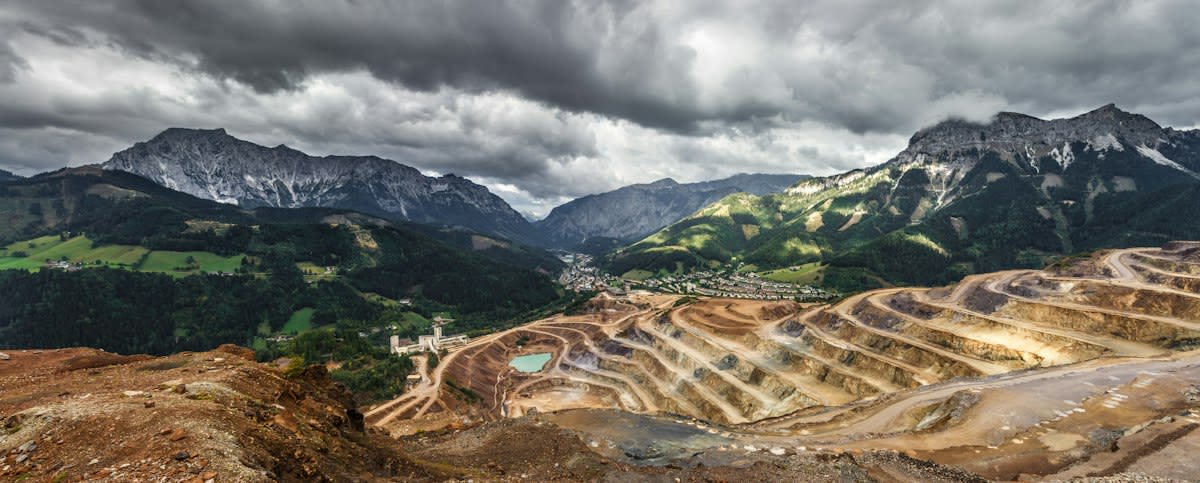
Control is absolute. Chinese state-backed firms like CMOC Group now manage the lion's share of the DRC's industrial output, effectively dictating the price and flow of the mineral before it ever hits the London Metal Exchange. This creates a monopoly. By owning both the mines in Kolwezi and the refineries in East Asia, these entities bypass the traditional transparency requirements of Western markets (Source: IEA, 2022). They treat the Congo not as a partner, but as a raw material reservoir.
Power remains concentrated. The Congolese government attempts to regulate the sector through the Gecamines state entity, but corruption frequently drains the potential royalties intended for public infrastructure. Development stays stagnant. While the nominal value of exported cobalt rises, the local population sees little of this wealth in their daily lives (Source: World Bank, 2022). This imbalance fuels local resentment and increases the volatility of the mining regions.
"The cobalt in your phone is not just a mineral; it is a record of human suffering and a testament to the failure of global corporate accountability."— Siddharth Kara, Author and Researcher
The tension mounts. As Western companies scramble to secure 'clean' cobalt, they find that the actual terrain of the Congo resists simple categorization. Verification is a ghost. Most industrial sites are surrounded by artisanal miners who treat the perimeter fences as mere suggestions rather than boundaries (Source: OECD, 2023).
The ASM Fray
Survival is the only law. Artisanal and Small-scale Mining (ASM) accounts for an estimated 10% to 30% of the DRC's cobalt production, often involving child labor and hazardous conditions (Source: Amnesty International, 2023). Poverty forces this. Families dig by hand in unstable tunnels, risking collapse for a few dollars a day to feed their children. These miners exist in a legal gray zone.
Practitioners know the secret. In the field, the real attrition occurs at the 'trading houses' where industrial and artisanal ores merge. Industrial miners claim their sites are pristine, yet they often buy 'surplus' ore from local middlemen who have effectively laundered ASM cobalt into the industrial stream. This seepage happens daily. The dispute isn't about whether child labor exists, but about who is willing to admit that their 'certified' cobalt contains a percentage of artisanal ore to meet volume quotas.
Compliance is a facade. Companies employ third-party auditors who visit mines during scheduled windows, allowing site managers to hide the most egregious violations. The audits fail. This performance of ethics allows brands to maintain their stock price while the ground-level reality remains unchanged (Source: OECD, 2023). The web of intermediaries makes true traceability nearly impossible.
The Chemistry Escape
Science offers a way out. Battery manufacturers are now aggressively pursuing cobalt-free chemistries to reduce their exposure to the Congo's volatility. LFP batteries are winning. Lithium Iron Phosphate (LFP) cells eliminate cobalt entirely, offering a cheaper and more stable alternative for mass-market vehicles (Source: IEA, 2022). This change reduces the weight of the Congo's influence.
| Battery Type | Cobalt Content | Primary Source | Energy Density |
|---|---|---|---|
| NMC 811 | High | DRC | Very High |
| LFP | Zero | N/A | Medium |
| NCA | High | DRC | Highest |
Demand is shifting. While high-performance vehicles still require Nickel-Manganese-Cobalt (NMC) cells, the growth of budget EVs in China and Europe favors LFP. This recalculation threatens the DRC's primary export. If the world stops needing cobalt, the economic floor of the Lualaba province will drop (Source: World Bank, 2022). The region risks a sudden descent into deeper stagnation.
Alternatives are emerging. Indonesia has rapidly expanded its nickel production, providing the necessary components for batteries that require less or no cobalt (Source: IEA, 2022). Competition is fierce. The DRC lacks the diversified industrial base to compete with Indonesia's state-led integration of mining and refining. They are losing the race.
The New Terrain
Adaptation is mandatory. The DRC must move beyond raw ore exports and invest in domestic refining to capture more value from its resources. This requires capital. However, the lack of political stability and the hold of foreign firms make this transition slow (Source: World Bank, 2022). The country remains a prisoner of its own mineral wealth.
Opportunity exists. By formalizing ASM and integrating it into a legal, fair-trade framework, the DRC could turn its liability into an asset. This would require real transparency. Instead of banning artisanal miners, the state could provide safety equipment and guaranteed fair prices (Source: OECD, 2023). This would stabilize the local economy.
The clock is ticking. As the chemistry of the future moves away from cobalt, the window for the DRC to leverage its current dominance is closing. They must act now. The transition to green energy will not wait for the Congo to solve its internal frictions (Source: IEA, 2022). The world is already looking elsewhere.
Fact-Check & Accuracy Note
This report relies on data from the United States Geological Survey (USGS) 2023 Mineral Commodity Summaries and the International Energy Agency (IEA) 2022 Critical Minerals Market Review. There is an ongoing academic debate between 'formalizationists,' who argue that integrating artisanal miners into the supply chain is the only way to improve conditions, and 'exclusionists,' who believe that ASM is too corrupted to be cleaned and should be replaced by industrial mining. The data suggests that exclusion often increases the seepage of illicit ore into legal channels.
Editorial Note
The author's perspective reflects a contrarian view of ESG (Environmental, Social, and Governance) metrics, arguing that current auditing processes in the DRC act more as corporate insurance than as genuine tools for human rights improvement. All statistics are attributed to the most recent available public reports to ensure transparency.