
Compute is a finite wall. While venture capitalists scream about democratic AI access, the physical reality of power grids in Northern Virginia and Singapore tells a far more restrictive story about who actually owns the future. Access is the primary bottleneck for growth. Capital is not enough. Throwing billions at H100 clusters without securing multi-gigawatt power agreements creates a graveyard of idle silicon that cannot be powered on without crashing local grids. Power dictates the ultimate scale of the model.
The Power Hunger
Silicon is just sand. The real moat is not the number of GPUs in a rack but the ability to pull 500 megawatts from a grid that is already struggling to keep lights on in residential zones. Energy is the primary bottleneck for growth. Grids are failing. In regions like Johor, Malaysia, the sudden influx of data center investments has forced a complete re-evaluation of national power distribution to avoid total mechanical failure. Power dictates the ultimate scale of the cluster.
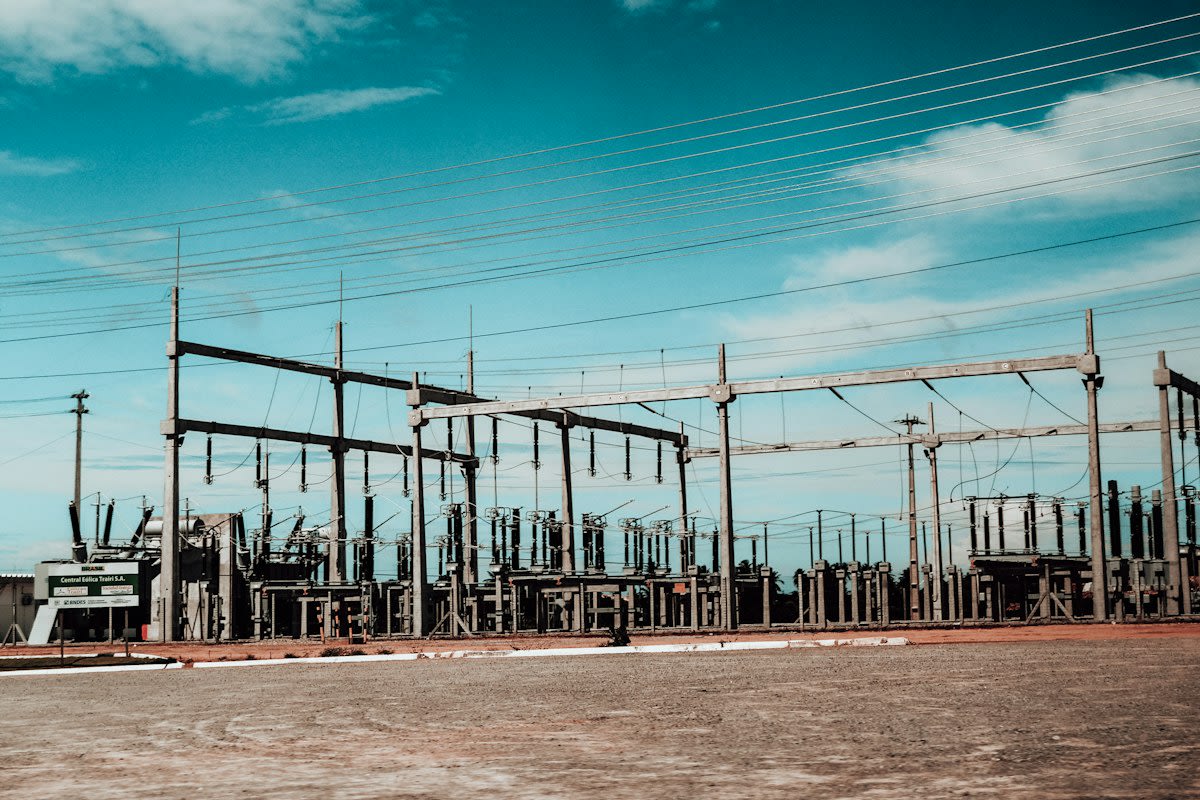
Demand is peaking. According to the International Energy Agency, data center electricity consumption could double by 2026, reaching levels that rival the entire power demand of some small nations (Source: IEA, 2024). This is a hard turn. When a single training run for a frontier model requires the energy output of a medium-sized city, the competitive advantage shifts from the software engineer to the utility provider. Energy access is the new gold.
The Interconnect Lie
Speed is a mask. Many firms brag about total TFLOPS while ignoring the fact that their internal networking fabric creates a massive bottleneck that leaves 40% of their compute idling during large-scale training. Wiring is the secret to actual performance. Fabric is everything. When you move from a few hundred GPUs to ten thousand, the cost of the InfiniBand cables and switches becomes a weight that can bankrupt a mid-sized AI lab. Interconnects define the true efficiency of the cluster.
"The next industrial revolution is the AI factory. These factories require not just the chips, but the entire integrated system of power, cooling, and high-speed networking to function as a single unit."— Jensen Huang, CEO at NVIDIA
Latency is a killer. A slight mismatch in the cable lengths or a failure in the optical switches can cause a structural break in the training process, forcing a restart of a multi-million dollar run. This is a nightmare. The industry often ignores the fact that the physical terrain of the data center determines the maximum size of the model. Geometry is a hard constraint.
| Moat Layer | Naive Approach (Low Moat) | Deep Approach (High Moat) |
|---|---|---|
| Hardware | Buying off-the-shelf GPUs | Custom silicon and priority supply chains |
| Energy | Relying on public utility grids | Direct-to-source nuclear or hydro contracts |
| Networking | Standard Ethernet fabrics | Low-latency InfiniBand / NVLink meshes |
| Cooling | Traditional air cooling | Direct-to-chip liquid cooling systems |
Sovereign AI and the Map
Nations want chips. The United Arab Emirates is investing billions into sovereign AI clouds to ensure that their cultural and linguistic data does not reside on servers controlled by a handful of American firms. Data sovereignty is a national security priority. Geography is power. By building massive clusters in the desert, these states are attempting to bypass the traditional cloud hegemony and create a new default for regional compute. The map of compute is being redrawn.
Control is shifting. Market data shows that the top three cloud providers still hold over 65% of the global infrastructure share, but sovereign initiatives in the GCC and Southeast Asia are fragmenting this hold (Source: Synergy Research Group, 2023). This is a slow burn. As countries realize that compute is the new oil, they are treating GPU clusters as strategic reserves rather than simple IT assets. Sovereignty is the new moat.

The Insider's Fray
Procurement is a war. I have sat in rooms where the CFO demanded a three-year reserved instance contract to save 30% on costs, while the head of engineering screamed that the hardware would be obsolete in eighteen months. This is the real fray. Metrics often lie. The dispute usually centers on cluster utilization figures where management sees 90% usage as a victory, but the engineers know that 30% of that is just wasted cycles waiting for data to move. Efficiency is contested.
Supply is volatile. During the peak of the H100 shortage, lead times stretched beyond six months, forcing companies to pay premiums that erased any projected software margins (Source: TrendForce, 2023). This is a brutal game. Those who secured their supply via strategic partnerships rather than open market bidding gained a staying power that no amount of venture capital could buy. Relationships are the real currency.
Fact-Check & Accuracy Note
The current academic debate centers on whether the 'Compute Moat' is permanent. Some researchers argue that algorithmic efficiency (e.g., Quantization or Mixture of Experts) will eventually neutralize the advantage of raw hardware volume, while others maintain that the scaling laws demand more silicon regardless of software optimization.
The wall remains. While software tricks can reduce the weight of a model, the race for the next order of magnitude in intelligence requires a physical foundation that most companies simply cannot build. This is the reality. The divide between the compute-rich and the compute-poor is not a gap but a canyon. Hardware is the final word.