
The global automotive industry is currently obsessed with a single metric: the percentage of Battery Electric Vehicles (BEVs) in new registrations. On the surface, the numbers look like a triumph of policy and engineering. In the first half of 2026, Vietnam saw a staggering 47% BEV share among new passenger car sales, while Thailand and China followed closely at 36% and 35% respectively (Source: International Council on Clean Transportation, 2026). Even the European Union, often viewed as the regulatory vanguard, reached a 22% share for battery electric passenger cars (Source: International Council on Clean Transportation, 2026). But these tailpipe-zero figures mask a deeper, more systemic friction. Are we actually reducing global carbon, or are we simply shifting the emissions from the city street to the mining pit and the power plant?
The assumption has always been that the transition to EVs is a linear path toward decarbonization. However, the raw materials required to build this future carry a heavy, often ignored, carbon price. The extraction of copper, nickel, cobalt, lithium, and rare earth elements—the strategic bedrock of the net-zero race—is an energy-intensive process that frequently relies on carbon-heavy infrastructure. Recent research indicates that the metals needed for low-carbon technologies may carry a substantially larger carbon burden than previously recognized (Source: Digital Journal, 2026). This creates a carbon debt that must be paid back before a vehicle even hits the road. When we scale this to hundreds of millions of vehicles, the initial emissions spike from mining and refining could offset years of operational gains.

The Energy Demand Loop
Electrification does not eliminate energy demand; it relocates it. The surge in EV adoption, coupled with the explosive growth of AI-powered data centers, is putting unprecedented pressure on global electrical grids. In the United States, the grid is projected to add 11.4 GW of wind generation capacity in 2026 to keep pace (Source: EIA, 2026). But is the greening of the grid happening fast enough to outrun the demand? The data suggests a worrying trend. Despite a record $2.1 trillion investment in clean energy in 2025, global greenhouse gas emissions are only plateauing rather than falling (Source: Energy Transition Monitor, 2026). This indicates that the sheer volume of new energy demand—driven in part by the EV transition—is eating the gains provided by renewable energy deployment.
"The world has already breached 1.5°C of global heating and remains on track for around 2.5°C, even as solar, batteries, and electric vehicles outperform every forecast."— Energy Transitions Commission, Energy Transition Monitor 2026
This creates a dangerous feedback loop. As we push for 100% EV adoption, we increase the load on grids that are still partially dependent on fossil fuels for baseload power. If the deployment of wind and solar cannot maintain a lead over the rising demand from EVs and AI, we risk prolonging the life of coal and gas plants to prevent blackouts. We are essentially betting that the rate of renewable installation will always exceed the rate of new electricity consumption. History shows that demand often finds a way to catch up to supply, leaving the net carbon impact stagnant.
| Region | BEV Share (H1 2026) | Primary Driver | Grid Pressure Level |
|---|---|---|---|
| Vietnam | 47% | Rapid Urban Adoption | High |
| Thailand | 36% | Manufacturing Hub Shift | Medium-High |
| China | 35% | State-Led Infrastructure | Extreme |
| European Union | 22% | Regulatory Compliance | Medium |
The divergence in global adoption rates further complicates the carbon math. In the EU, manufacturers are fighting a tight battle to meet an average target of 93 g CO2/km for the 2025–2027 period, currently sitting less than 2 g short of that goal (Source: International Council on Clean Transportation, 2026). While this looks like a regulatory win, it relies heavily on a compliance strategy centered on BEVs. If the energy used to charge these cars in Eastern Europe or parts of Asia remains carbon-intensive, the 'zero emission' label becomes a geographic illusion. We are exporting the emissions from the exhaust pipe to the power plant in a different jurisdiction.
The Heavy Transport Blind Spot
While passenger cars are the focus of public policy, the real carbon battle is fought in long-haul logistics. The physics of batteries make them poorly suited for heavy-duty trucking over long distances; the weight of the batteries required to move 40 tons of freight significantly reduces the payload and increases energy consumption per ton-mile. This has led to a fierce internal industry debate over whether hydrogen-powered internal combustion engines or fuel cells are the more viable path (Source: Springer Nature, 2026). If the world forces a BEV-only mandate on trucking, the resulting inefficiency and the massive increase in battery mineral demand could push global emissions higher than a diversified approach using hydrogen or advanced synthetic fuels.
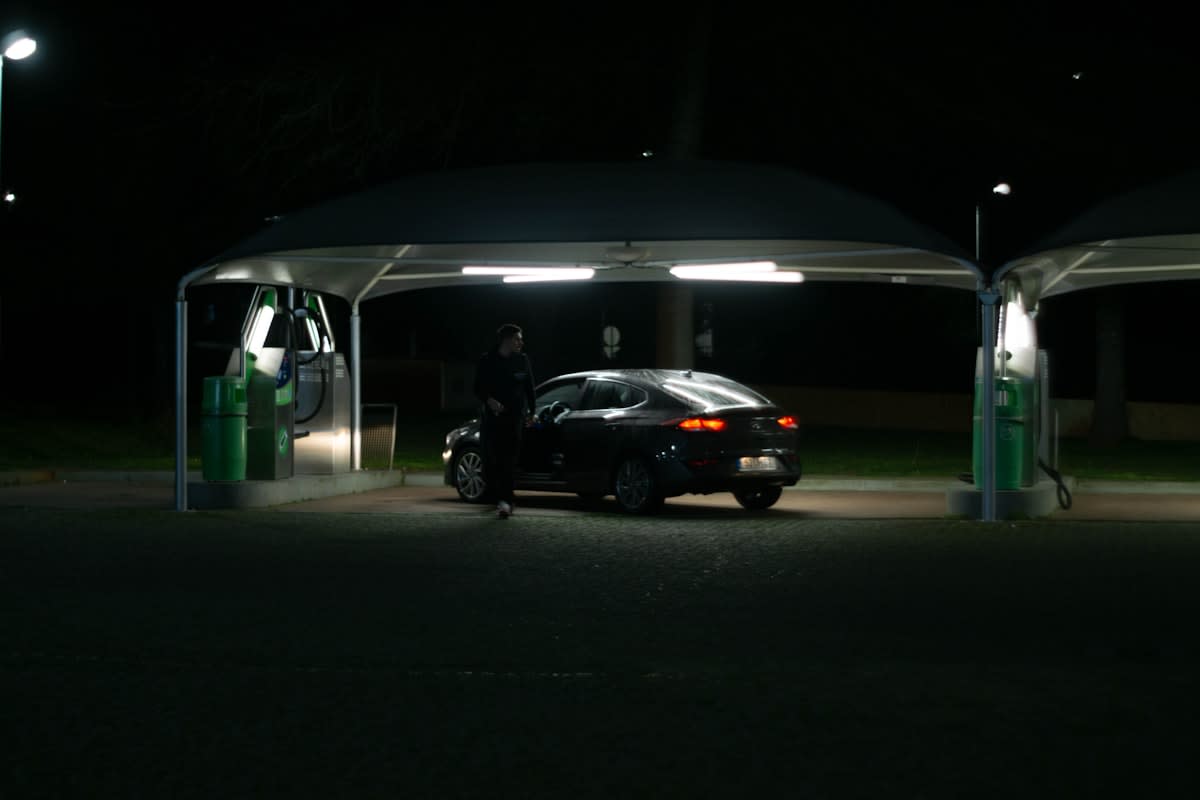
From the perspective of a field engineer or a fleet manager, the reality is far messier than the policy papers suggest. In the depot, the conversation isn't about 'net zero'—it's about power availability. I have seen the friction first-hand: companies wanting to transition to electric fleets only to find that the local utility cannot provide the megawatts required for simultaneous fast-charging without upgrading a substation, a process that takes years and involves massive amounts of carbon-intensive concrete and steel. The 'ugly' reality is that our infrastructure is not ready for the scale of electrification being mandated by governments. This gap between policy ambition and physical reality often leads to inefficient, rushed implementations that prioritize targets over actual carbon reduction.
Redefining the Path Forward
Does this mean we should abandon electric vehicles? Absolutely not. But it does mean we must stop treating BEVs as a silver bullet. The current trajectory suggests that an over-reliance on a single technology creates systemic vulnerabilities. We need a portfolio approach. This includes investing in hydrogen for long-haul transport, improving the energy density of batteries to reduce mining footprints, and prioritizing grid resilience over simple vehicle quotas. If we continue to ignore the hidden carbon costs of the supply chain and the rising energy demand of the grid, we may find that we have simply traded one environmental crisis for another.
The opportunity lies in adaptation. By diversifying the energy mix and focusing on the total lifecycle of the vehicle—from the first scoop of lithium in a mine to the final recycling of the battery—we can build a resilient system. The goal should not be 'more EVs,' but 'lower systemic carbon.' This requires a shift in perspective: moving away from the obsession with tailpipe emissions and toward a holistic understanding of global energy flows. Only then can we ensure that the transition to clean transport actually delivers the results the planet requires.
Fact-Check & Accuracy Note
Key claims regarding BEV market shares in Vietnam, Thailand, China, and the EU are sourced from the International Council on Clean Transportation (2026). Data on global clean energy investment and the 1.5°C breach is attributed to the Energy Transition Monitor (2026). Claims regarding the carbon costs of mining are based on research reported by Digital Journal (2026). The debate over hydrogen vs. fuel cells for trucking is sourced from Springer Nature (2026). Ongoing debates persist regarding the exact 'break-even' point where an EV's operational savings offset its manufacturing emissions.
Editorial Note
This analysis takes a contrarian view of the EV transition, emphasizing systemic risks over individual vehicle benefits. It argues that without a simultaneous and faster acceleration of grid decarbonization and mining efficiency, the net global carbon impact of rapid EV adoption may be negligible or negative.