
For decades, the economic heartbeat of Latin America was measured by the tonnage moving through a handful of coastal gateways. From the sprawling docks of Santos to the congested berths of Manzanillo, the logic was simple: the port is the prize. If you controlled the water's edge, you controlled the wealth. But this coastal obsession created a fragile architecture. When a single port faces a strike, a storm, or a sudden surge in volume, the entire interior of a continent grinds to a halt because there is no viable alternative for the goods to flow.
The current pivot away from traditional port reliance is not a choice; it is a survival mechanism. The region is witnessing a structural pivot toward intermodal corridors that treat the interior as a series of nodes rather than a void between the farm and the ship. This means the rise of dry ports—inland terminals that handle customs and logistics far from the salt water. By moving the bureaucratic and logistical heavy lifting inland, countries are effectively expanding their coastal capacity without pouring a single cubic meter of concrete into the ocean.
The Fallacy of the Mega-Port
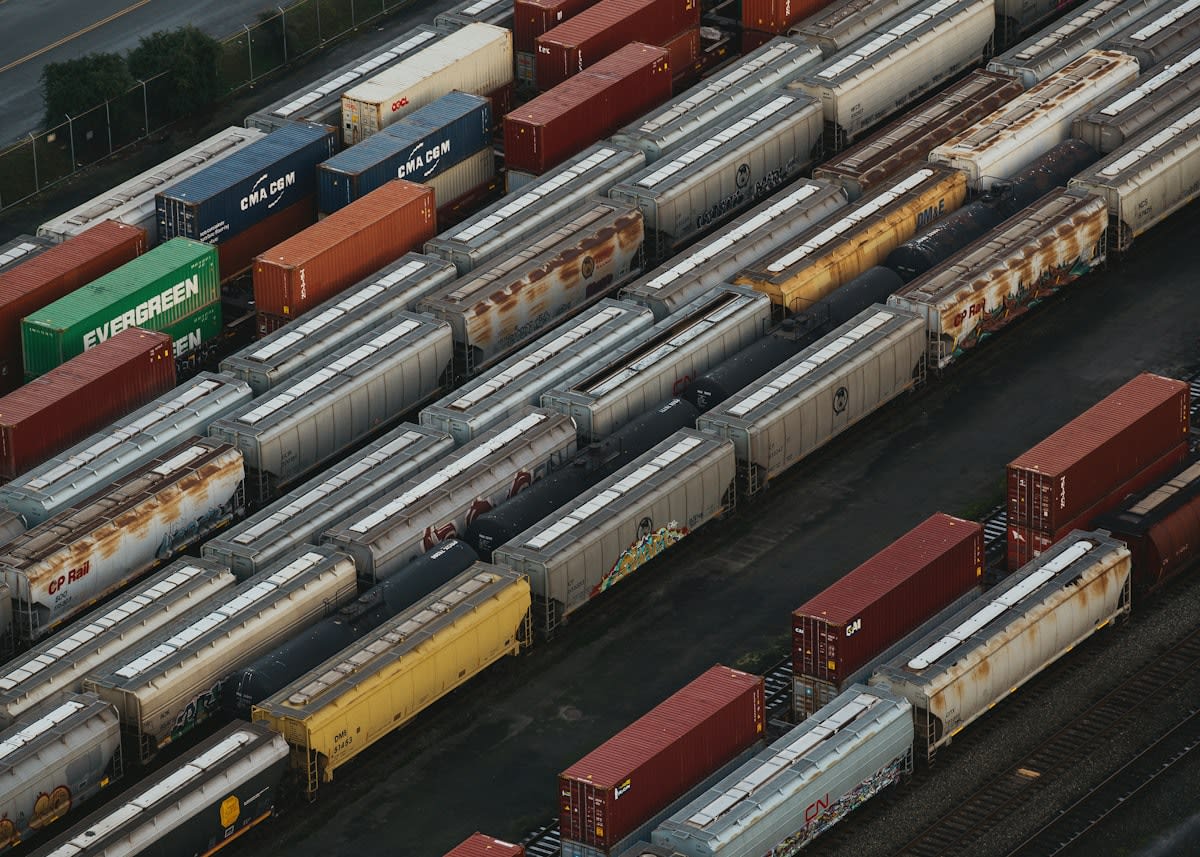
Why did the mega-port strategy fail? The answer lies in the last-mile paradox. Governments spent billions deepening harbors to accommodate Post-Panamax vessels, yet the roads and rails leading to those harbors remained stuck in the 1970s. You can bring a massive ship into port, but if the trucks cannot exit the terminal due to antiquated road networks, the port becomes a parking lot. This inefficiency creates a ceiling on growth that no amount of dredging can fix.
This bottleneck is particularly evident in the agribusiness sectors of Brazil and Argentina. For years, the reliance on a few primary exits meant that a rainy season in the interior could lead to a logistical collapse at the coast. The resulting congestion spikes shipping costs and erodes the competitive advantage of the commodities being exported. To break this, the focus has shifted to the Bioceanic Corridor, a massive transcontinental project designed to link the Atlantic and Pacific oceans via road and rail.
"The goal is no longer to build the biggest port, but to build the shortest path from the soybean field to the Asian market, bypassing the traditional chokepoints entirely."— Regional Logistics Analyst
Does this mean ports are becoming irrelevant? Hardly. But their role is changing from being the sole gatekeeper to being one of many interchangeable exit points. By diversifying the ways goods leave the continent, Latin American nations are insulating themselves against the volatility of single-point failures. This is a move toward resilience over raw capacity.
The Transit Delta
The Bioceanic Corridor aims to reduce transit times from Brazil's interior to Chinese ports by up to 14 days by utilizing Chilean ports on the Pacific coast instead of sailing around Cape Horn or through the Panama Canal.
The logic of the corridor extends beyond just speed; it is about the democratization of trade. When logistics are concentrated in one or two massive ports, the economic benefits accrue to a small coastal elite and a few shipping giants. Distributing the logistical load across inland hubs allows smaller regional economies to integrate into global value chains. It turns the 'hinterland' into a 'foreland'.
Nearshoring and the Land-Bridge Pivot
In Mexico, the abandonment of port-centricity is driven by the aggressive migration of manufacturing from Asia to North America. The 'nearshoring' phenomenon is fundamentally a land-based strategy. While ports like Manzanillo and Lázaro Cárdenas remain critical for importing components, the value-add happens in the industrial parks of Querétaro and Monterrey. The critical link is no longer the ship-to-shore crane, but the rail-to-truck transfer.
This shift requires a complete re-engineering of how cargo is handled. We are seeing a surge in investment in 'Cross-Docking' facilities—warehouses where goods are transferred directly from an incoming carrier to an outgoing one with minimal storage time. This reduces the reliance on massive port-side warehouses and distributes the inventory closer to the end consumer in the United States.
| Metric | Traditional Port Reliance | Corridor-Centric Model |
|---|---|---|
| Risk Profile | High (Single Point of Failure) | Low (Distributed Network) |
| Primary Bottleneck | Berth Availability | Intermodal Transfer Speed |
| Economic Impact | Coastal Concentration | Regional Interior Growth |
| Transit Logic | Hub-and-Spoke | Point-to-Point Mesh |
| Capex Focus | Dredging & Cranes | Rail & Dry Terminals |
The financial implications are staggering. Investment is flowing away from traditional maritime infrastructure and toward 'multimodal' projects. This includes the revitalization of old rail lines and the construction of high-capacity highways that can handle heavy-duty autonomous trucking. The goal is to create a seamless flow where the port is merely a transition point, not a destination.
Is this transition happening uniformly? No. The disparity between the 'logistical winners' and 'losers' is widening. Countries that embrace the corridor model, like Paraguay—a landlocked nation turning its geography into an advantage via river-rail links—are finding new ways to compete. Those clinging to the old port-monopoly model are finding themselves marginalized as shipping lines seek more flexible routes.

The Geopolitical Reordering of Trade
This logistical pivot is not just about efficiency; it is about geopolitical autonomy. For too long, Latin American trade has been dictated by the requirements of foreign shipping conglomerates. By developing their own inland corridors and dry ports, these nations gain more control over their export timelines and pricing. They are no longer at the mercy of the 'blank sailing' schedules of global carriers.
Furthermore, the integration of digital twins and AI-driven logistics is making this transition possible. Real-time tracking of containers across borders allows for 'just-in-time' delivery that was previously impossible in the region. When you can see a shipment's progress from a farm in Mato Grosso to a port in Antofagasta in real-time, the need for massive, stagnant stockpiles at the coast disappears.
- Reduction of customs dwell time through inland pre-clearance.
- Diversification of exit points to mitigate political and climate risks.
- Lowering of inland freight costs through rail-centric bulk movement.
- Integration of landlocked economies into the global maritime trade.
The end result is a map of Latin America that looks fundamentally different. The 'edges' of the continent are no longer the only places where value is captured. Instead, the interior is becoming a vibrant network of logistics hubs, processing centers, and distribution points. The center of gravity has shifted.
Ultimately, the abandonment of traditional port reliance is an admission that the old colonial model of 'extract and export' is dead. The new model is 'integrate and optimize'. By treating the entire geography as a single, fluid logistics machine, Latin America is finally breaking the coastal chains that have limited its economic potential for centuries.