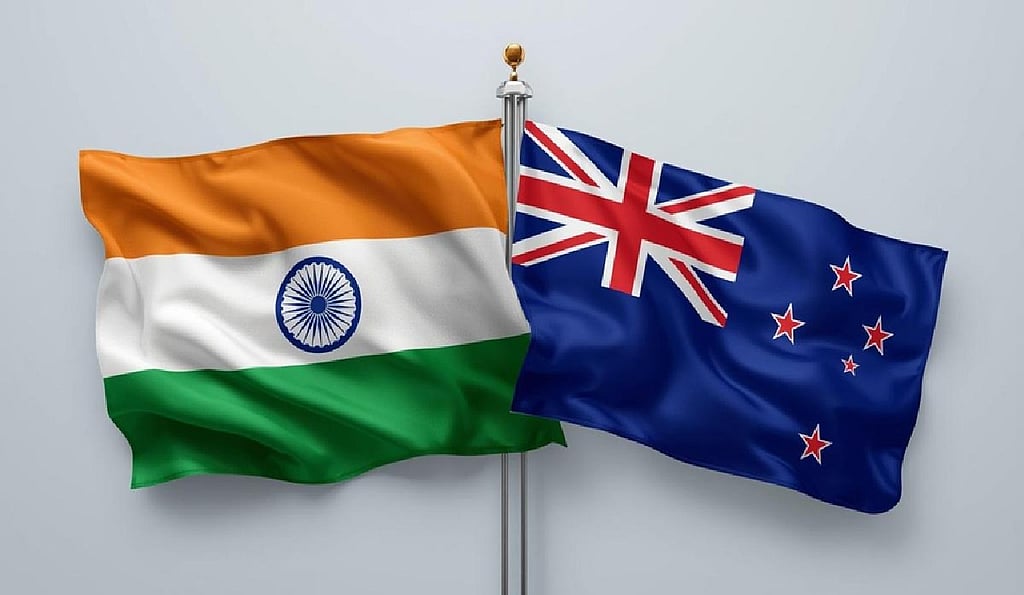
Diplomatic silence is rarely accidental. For forty years, the corridor between New Delhi and Wellington remained largely dormant, a void that speaks to a previous era of strategic indifference. The recent arrival of Prime Minister Narendra Modi in New Zealand breaks this streak, not through a sudden burst of friendship, but through a calculated necessity. This was the first time an Indian leader had stepped onto New Zealand soil in four decades. Why now? The timing was no accident, the visit came just days after China test-fired a ballistic missile into the Pacific Ocean, an event that stirred regional unease and was reportedly discussed directly by the two leaders during their talks.
The visit did not happen in a vacuum. New Zealand served as the final leg of a broader Asia-Pacific tour that included high-stakes engagements with Indonesia and Australia. This sequence suggests a deliberate layering of partnerships. By securing ties with the regional heavyweights first, the administration established a baseline of cooperation before moving to the specific, niche security capabilities that New Zealand offers. It is a strategic sequence designed to build a perimeter of stability.
Prime Minister Christopher Luxon and Prime Minister Modi focused their dialogue on elevating a relationship that had grown thin from neglect. The tone was one of pragmatic renewal. Notably, the free trade agreement between the two countries was not the headline outcome of this visit, it had already been signed in April 2026 and was, at the time of the visit, still awaiting ratification by New Zealand's parliament. Instead, the two leaders used this meeting to elevate ties to a full strategic partnership, with defence and maritime cooperation as its centrepiece. Trade was not sidelined; it was already banked. Security was the new ground being broken.
The Diplomatic Void
The 40-year gap in leadership visits is a glaring anomaly in modern diplomacy. It suggests that New Zealand was previously viewed as a peripheral actor, but is now being reintegrated into a core security architecture, a shift accelerated by China's growing military activity in the Pacific.
The centrepiece of the visit was the unveiling of the "India-New Zealand Strategic Partnership: Roadmap to 2030," which places heavy emphasis on maritime security, counter-terrorism, and cyber defence. This is not a mere formality. The two countries signed an arrangement for mutual logistics support between the Indian Navy and the New Zealand Defence Force, allowing each access to the other's bases for refuelling, repairs, and replenishment, along with a new Joint Working Group on Counter-Terrorism and an annual Maritime Security Dialogue. Maritime security, in this context, is not vague diplomatic language; it is a concrete architecture of shared naval access and intelligence coordination aimed at keeping Pacific shipping lanes open and uncontested.
Consider the contrast with other current diplomatic efforts. In the United Kingdom, the focus has been aggressively economic, with India's trade agreement there centred on tariff reductions and market access. In New Zealand, the trade groundwork was already laid months earlier in April, freeing this visit to focus almost entirely on defence and security. This divergence suggests a bifurcated strategy: trade deals negotiated on their own timelines, layered afterward with security partnerships once trust is established.
The visit was not without friction. Sikh protesters gathered outside Modi's diaspora event in Auckland, describing him as a symbol of "Hindu terror" in India, while a New Zealand preacher's inflammatory remarks about the visit were publicly condemned by the country's race relations commissioner. Separately, the trade agreement itself has drawn pushback from within Luxon's own governing coalition over its visa and immigration provisions for Indian workers and students. These tensions don't undercut the substance of the defence agreement, but they're part of the full picture of how contested — domestically as well as geopolitically — this "reset" actually is.
| Metric | New Zealand Engagement | UK Engagement |
|---|---|---|
| Primary Driver | Defence & Maritime Security | Trade & Tariff Reduction |
| Core Outcome | Defence Cooperation Deal | Import Duty Cuts (110% to 30%) |
| Strategic Timeline | First visit in 40 years | Implementation by July 2026 |
| Key Sector | Naval/Maritime Safety | Passenger Vehicles (Tata Motors/JLR) |
The inclusion of Indonesia and Australia in the same tour creates a strategic triangle. By linking these three nations, the visit effectively maps out a security corridor. Indonesia provides the geographic gateway, Australia provides regional scale, and New Zealand provides strategic depth in the South Pacific. This is not about friendship; it is about creating a network of interoperable security partners who can coordinate during a crisis.
The emphasis on maritime security is particularly timely. The Pacific is no longer a quiet backyard. With contested territorial claims rising and China's naval and missile activity increasing, the ability to coordinate security protocols is becoming a prerequisite for regional stability. When two distant powers like India and New Zealand agree to formalize logistics support and intelligence-sharing, they are signalling a shared interest in watching the same waters.
Critics might argue that the absence of a new trade breakthrough during this visit is a missed opportunity. But that view overlooks the sequencing: the trade deal was already secured in April, and using this visit to build the security relationship on top of it, rather than re-litigating trade terms, reflects a considered division of labour between the two tracks, not a demotion of trade.
The risk of the 40-year void cannot be understated. For four decades, the lack of high-level engagement allowed other powers to fill the space. This visit is a late-stage attempt to reclaim that lost ground. By elevating ties to a strategic partnership anchored in maritime security, India is signalling that it no longer intends to be a distant observer of Pacific affairs, while New Zealand, in turn, is signalling that it sees itself as more than a peripheral trading partner.
Ultimately, the visit to New Zealand is a study in sequencing rather than substitution. The administration didn't choose a navy over a tariff reduction — it had already secured the tariff reduction and used this visit to build the navy relationship next. One track is about profit; the other is about presence. Together, they represent India's clearest articulation yet of what a Pacific strategy actually requires.