Iran abused mobile networks’ vulnerabilities to locate U.S. military in the Middle East, report says
Source Entity
Lorenzo Franceschi-Bicchierai
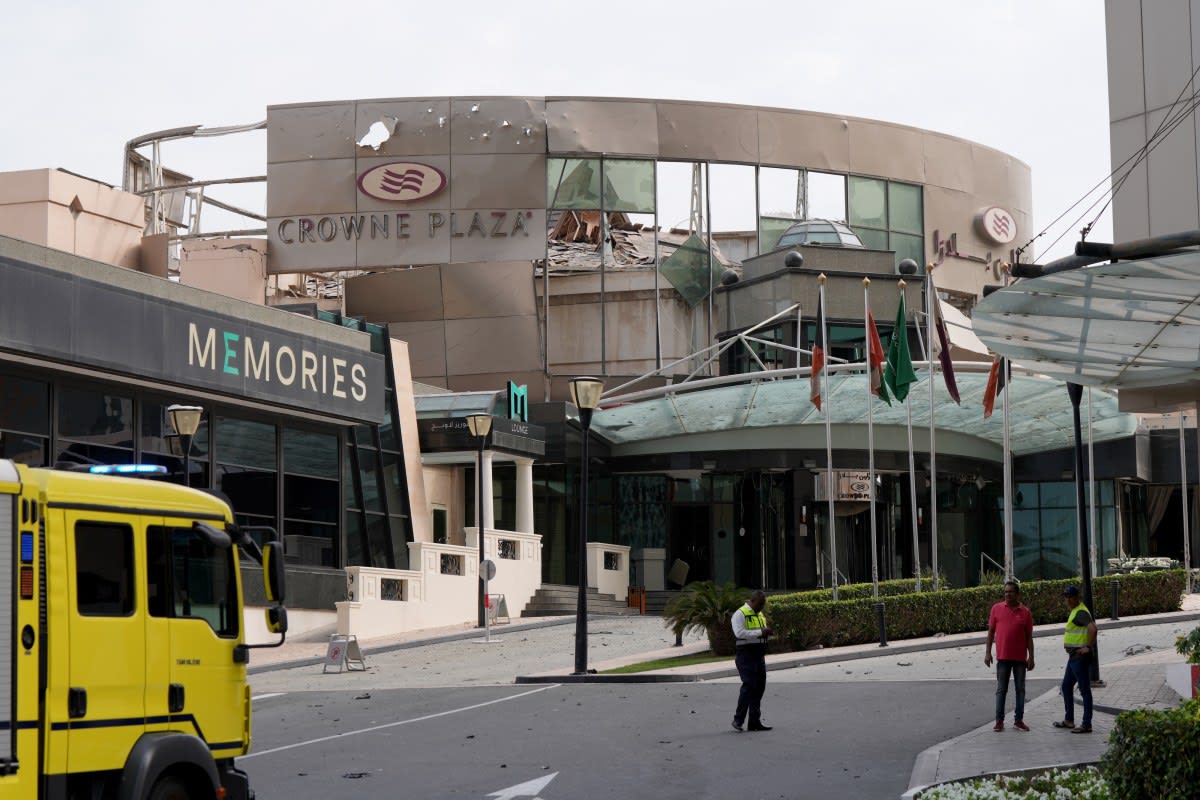
Reports indicate that the Iranian government exploited known vulnerabilities in mobile cellular networks to track the location of U.S. military personnel in the Middle East, subsequently using this intelligence to coordinate strikes.
The Digital Battlefield: Iran's Exploitation of Mobile Network Vulnerabilities
In a stark reminder of the blurred lines between cybersecurity and kinetic warfare, recent reports have revealed that the Iranian government successfully exploited systemic flaws in mobile cellular networks to pinpoint the locations of U.S. military personnel. This operation, occurring during the critical build-up and early stages of conflict in the Middle East, demonstrates a sophisticated application of signals intelligence (SIGINT) where digital vulnerabilities were directly converted into lethal targeting data. This incident underscores a terrifying reality: the very devices used for communication can become beacons for enemy forces when the underlying infrastructure is compromised.
The Mechanics of Cellular Exploitation
While the report refers to "well-known flaws," it is highly likely that these operations leveraged vulnerabilities within the Signaling System No. 7 (SS7) or the newer Diameter protocols. SS7 is a set of telephony signaling protocols developed in the 1970s that allows networks to communicate with each other to route calls and SMS. Because the protocol was designed in an era of trust, it lacks robust authentication. By gaining access to an SS7 gateway, a state actor like Iran can send requests to a home network to retrieve the current cell tower ID of a specific subscriber. This allows an adversary to track a device's location in near real-time without the user's knowledge and without needing to install malware on the device itself.
Asymmetric Warfare and Digital Intelligence
This tactic represents a core component of Iran's strategy of asymmetric warfare. Facing a U.S. military that possesses overwhelming conventional superiority in terms of aircraft, naval power, and satellite surveillance, Iran has invested heavily in low-cost, high-impact capabilities. By weaponizing the civilian telecommunications infrastructure of the region, Iran effectively turned the environment against the occupying or operating force. This approach allows a state actor to achieve strategic objectives—such as the precise targeting of high-value personnel—without needing to penetrate the highly secure, encrypted communication channels used by the U.S. military, instead targeting the less secure cellular networks personnel may use for personal or secondary communication.
The Operational Impact on Personnel Safety
The transition from location tracking to active striking indicates a streamlined "sensor-to-shooter" pipeline. When a mobile device's location is leaked via network vulnerabilities, it provides a precise coordinate that can be fed into drone strike systems or rocket artillery. This creates a precarious environment for military personnel who may believe they are operating with operational security (OPSEC) but are unknowingly leaking their position via a pocketed smartphone. The psychological impact of such attacks is significant, as it erodes the sense of safety provided by traditional camouflage and concealment, replacing it with a digital vulnerability that is invisible to the naked eye.
Broader Implications for Global Security
This event serves as a critical case study for military forces worldwide on the dangers of "digital exhaust." The ability of a regional power to exploit global telecommunications standards suggests that no military personnel are truly "off the grid" as long as they carry a cellular-enabled device. This will likely accelerate the adoption of more stringent "no-phone" policies in combat zones and drive the development of hardened, sovereign communication networks that do not rely on local civilian infrastructure. Furthermore, it puts pressure on global telecom regulators to finally modernize legacy protocols like SS7 to prevent state-sponsored espionage and targeting.
Conclusion: A New Era of Targeted Warfare
Ultimately, the exploitation of mobile networks by Iran to target U.S. forces marks a pivotal shift in how intelligence is gathered and acted upon in the Middle East. It proves that the most significant vulnerability in a modern military operation is often not a failure of tactics or weaponry, but a failure to secure the digital footprint of the individual soldier. As cellular technology evolves toward 5G and beyond, the battle for network security will become as critical as the battle for physical territory, with the ability to hide one's digital signature becoming a primary requirement for survival on the modern battlefield.