'Will replace 20% Hormuz fee with ... ': Trump says strait open for all but Iran
Source Entity
TOI WORLD DESK
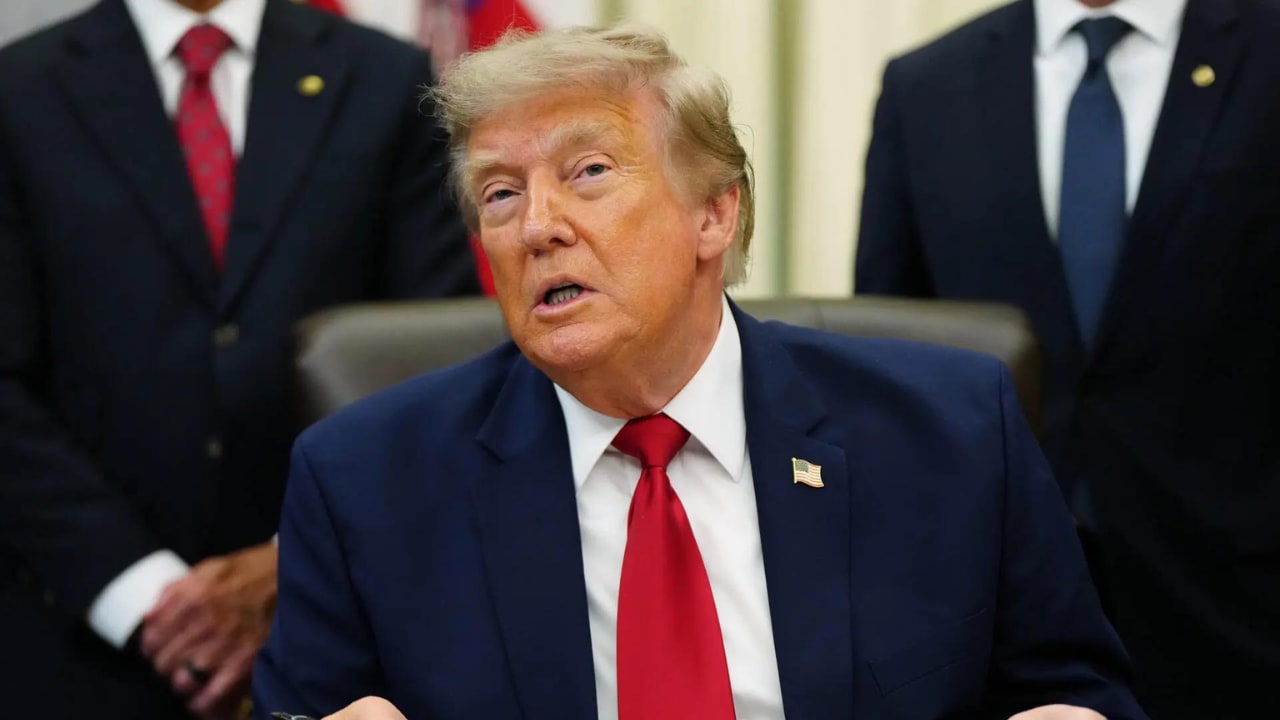
Donald Trump has proposed a policy regarding the Strait of Hormuz, suggesting the replacement of a '20% fee' and asserting that the waterway should remain open to all nations except Iran.
Analysis of Donald Trump's Proposal Regarding the Strait of Hormuz
Overview of the Statement
Former President Donald Trump has made a provocative statement concerning the governance and accessibility of the Strait of Hormuz, one of the world's most critical maritime chokepoints. His assertion that the strait should be "open for all but Iran" suggests a hardline approach to containing Iranian influence and restricting its ability to conduct maritime trade and energy exports. This rhetoric aligns with a broader strategy of utilizing economic and geographic leverage to exert pressure on the Iranian regime.
The "20% Fee" and Economic Implications
The mention of replacing a "20% Hormuz fee" is a particularly striking detail. Under current international law and the UN Convention on the Law of the Sea (UNCLOS), the Strait of Hormuz is generally treated as an international waterway ensuring transit passage. The proposal of a "fee" suggests a transition toward a more transactional or controlled regime of maritime passage. If such a financial mechanism were implemented or modified, it could introduce significant volatility into global energy markets. Given that a vast majority of the world's liquefied natural gas (LNG) and crude oil passes through this narrow corridor, any change in the cost of transit would likely result in immediate price fluctuations for global consumers.
Geopolitical Strategy and the Isolation of Iran
By explicitly stating the strait should be open for all except Iran, Trump is advocating for a policy of maximum pressure. Historically, Iran has frequently used the threat of closing the Strait of Hormuz as a deterrent against international sanctions, leveraging its geographic position to hold global oil supplies hostage. Trump's proposal effectively seeks to invert this power dynamic, suggesting that the U.S. or an international coalition should control access, thereby neutralizing Iran's primary geopolitical leverage and further isolating Tehran from the global economy.
Broader Implications for Regional Stability
Such a policy would likely be met with fierce resistance from Iran and could potentially escalate military tensions in the Persian Gulf. The enforcement of a blockade or a selective access policy would require a massive and sustained naval presence, increasing the risk of direct kinetic conflict. Furthermore, other regional powers and global trading partners might view the imposition of fees or selective access as a violation of international maritime norms, potentially complicating diplomatic relations with allies who rely on stable, predictable shipping lanes.
Conclusion
In summary, the proposal reflects a desire to weaponize the geography of the Persian Gulf to achieve political ends. While the practical implementation of a "Hormuz fee" or a selective blockade remains legally and militarily complex, the statement signals a continued commitment to a confrontational stance toward Iran. The global community would likely view such a move as a high-risk gamble with the stability of the world's energy supply.