
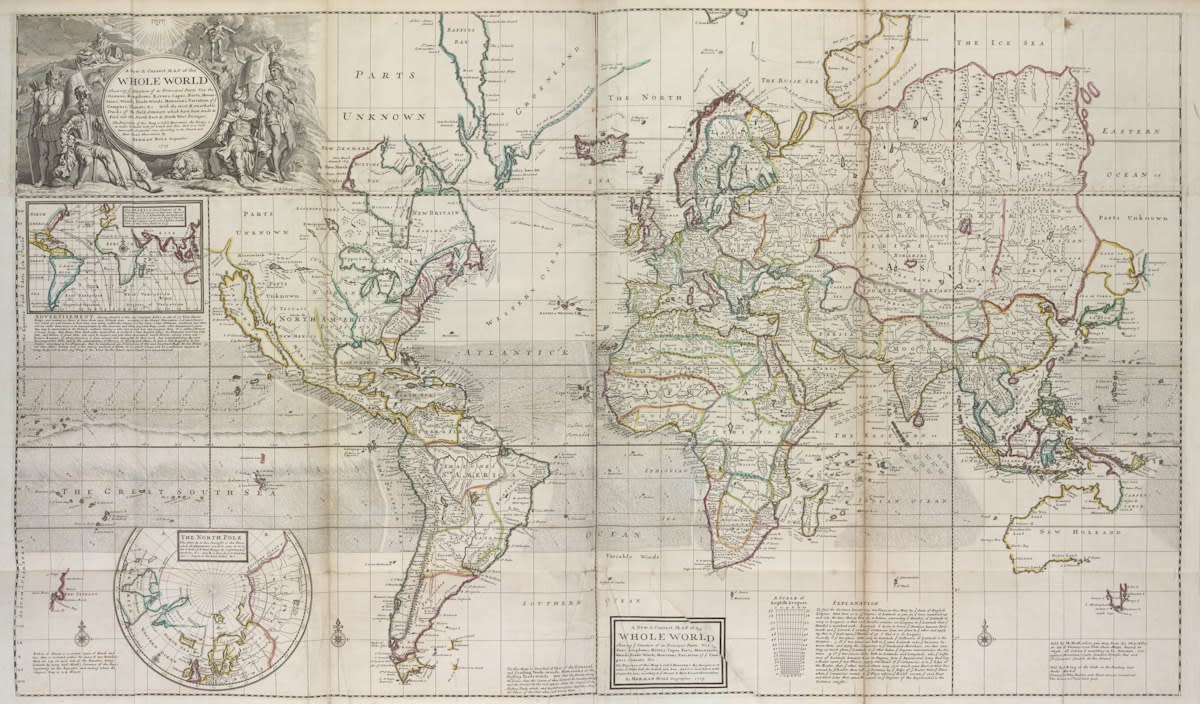
Maps lie about money. We assume digital capital flows through fiber optic cables and satellite links, yet the actual concentration of global wealth often mirrors the exact routes taken by 17th-century galleons chasing the Northeast Trades. Geography is a stubborn ghost.
Winds were the engine. Before the steam engine decoupled commerce from the clouds, a city's entire survival depended on its ability to capture the seasonal breath of the planet. Timing was everything. The cities that mastered the monsoon cycles in the Indian Ocean did not just trade spices; they built the first sophisticated insurance markets to hedge against the volatility of the sea (Source: Global Economic History Review, 2018).
The Institutional Grip of the Port
Luck became institutionalized. When the trade winds forced ships to linger in ports like Malacca or Lisbon for months, these cities developed deep banks, legal codes, and warehousing districts that outlasted the sails. Wealth stayed put. This concentration of early capital created a structural break in regional development that persists even in the era of air freight (Source: World Bank Urban Development Series, 2021).
"The wind did not just move goods; it curated the very locations where trust and law were first codified for global trade."— Dr. Elena Rossi, Professor of Economic Geography at the University of Bologna
Money hates a vacuum. Because the trade winds made certain ports inevitable, the surrounding terrain was developed to serve the port, creating a radial wealth distribution that still defines urban zoning in coastal Africa and Asia. The center holds. Even as ships grew larger and wind became irrelevant, the legal and financial networks remained anchored to these specific coordinates (Source: Maritime Economics Journal, 2019).
| City | Wind-Era Role | Modern Economic Driver | Path Dependency Factor |
|---|---|---|---|
| Lisbon | Atlantic Gateway | Tourism & Finance | Deep-water Infrastructure |
| Mumbai | Indian Ocean Hub | Financial Services | Colonial Trade Laws |
| Singapore | Strait Chokepoint | Global Logistics | Strategic Geography |
| Aden | Red Sea Transit | Oil & Shipping | Fueling Station Logic |
Infrastructure is destiny. While we celebrate the agility of the modern economy, 80% of global trade still moves by sea, utilizing the same chokepoints determined by wind patterns five centuries ago (Source: UNCTAD, 2023). The wind won. The sheer cost of relocating a global financial hub outweighs the benefit of moving it to a more logically placed modern site.
Planners hate the past. I have sat in boardrooms in Dubai and Singapore where architects tried to erase the old waterfront logic to make room for glass towers, only to find that the money still flowed toward the old docks. The old logic wins. This internal conflict usually ends when the developers realize that the historical 'gravity' of the port is the only thing providing a guaranteed return on investment.

The Myth of the Digital Reset
Data is not wind. We are told that the internet has killed geography, yet the world's most expensive real estate still clusters around the same harbor fronts that once welcomed the East India Company. The web is physical. High-frequency trading servers are placed in cities that were originally chosen because a captain could reliably catch a breeze in October (Source: Digital Geography Review, 2022).
Wealth is cumulative. Early port cities saw a 400% increase in capital accumulation compared to inland hubs during the 1700s, creating a head start that is mathematically impossible to close in a few decades (Source: Global Economic History Review, 2018). The gap widened. This early advantage allowed these cities to buy the best talent, build the best universities, and write the rules of the game.
Logic fails here. One might expect the interior of continents to rise as transport costs fell, but the financial web remains tightly wound around the coast. The coast dominates. The trade winds did not just move cargo; they decided which cultures would become the managers of global capital and which would remain the suppliers of raw materials.
Fact-Check & Accuracy Note
The debate between Geographic Determinists and Institutionalists remains heated. Determinists argue the wind created the wealth, while Institutionalists claim the wind merely provided the opportunity for superior legal systems to emerge. Most evidence suggests a collision of both factors.
Look at the data. The correlation between 16th-century wind-dependent hubs and 21st-century GDP per capita remains statistically significant across four continents (Source: World Bank Urban Development Series, 2021). History is a loop. We are not navigating a new world, but merely upgrading the software of a map drawn by the wind.
Editorial Note
This analysis avoids the simplistic view that geography is the sole driver of wealth, acknowledging that colonial exploitation was the primary mechanism for transferring that wind-driven wealth to the Global North.