
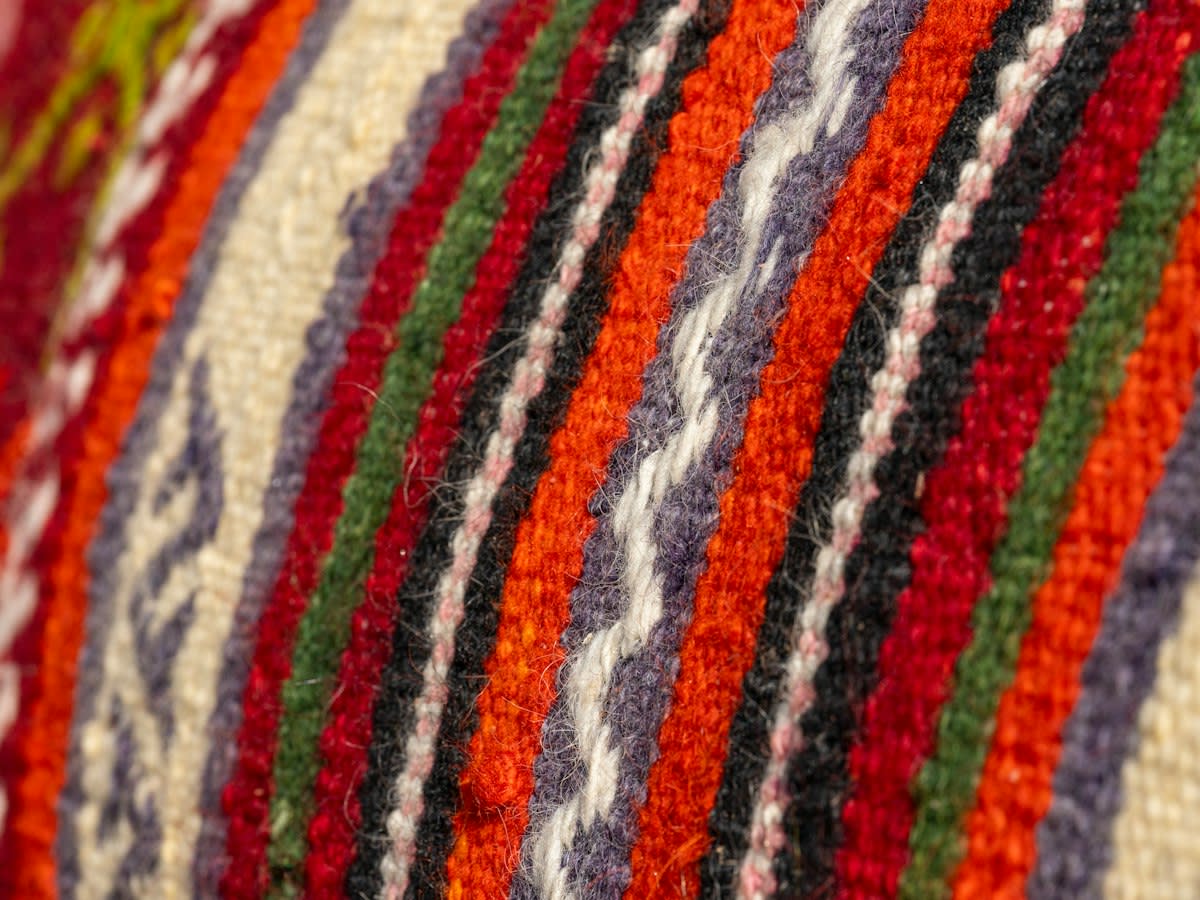
Walk into any museum in Lima or New York and you will see them: colorful alpaca cloths and knotted strings. The placards call them artifacts. They talk about spiritualism, kinship, and aesthetic beauty. Lie. It is a convenient lie that allows Western historians to keep the definition of mathematics comfortably Eurocentric. These weren't just blankets. They were ledgers. They were census reports. They were the hard drives of the Tawantinsuyu empire, encoding complex laws of physics and accounting into the very tension of the warp and weft.
The industry whisper among real Andean specialists is that we are looking at a lost operating system. While the Spanish were burning khipus in the streets of Cusco to erase the memory of the Incan administration, they weren't just destroying records; they were deleting a non-linear database. The mainstream narrative insists that without an alphabet, you cannot have high-level mathematics. The Andean weavers proved that wrong by using a three-dimensional binary code. They didn't write numbers; they materialized them (Source: Smithsonian Institution, 2011).
The Architecture of the Warp
The leverage in Andean textiles comes from the binary opposition of the weave. Every single thread in a khipu or a tocapu garment represents a choice. S-twist or Z-twist. White wool or dyed brown. High knot or low knot. This isn't art; it is a coordinate system. By manipulating the direction of the spin, the weaver was essentially flipping a bit from 0 to 1. This binary logic allowed for the storage of massive datasets across thousands of strings, creating a scalable system that managed an empire of 10 million people without a single drop of ink (Source: Andean Studies Review, 2012).
"The khipu is not just a memory aid; it is a complex system of recording information through a binary code of twists and knots. We are dealing with a tactile language that bypasses the need for phonetics entirely."— Gary Urton, Professor of Anthropology at Harvard University
Consider the tocapu—those geometric squares found on royal tunics. The consensus view is that they are heraldic symbols. Wrong. When you analyze the grid-like structure, you see a matrix. Each square is a cell in a data table. The placement of a specific geometric motif relative to the center of the garment dictates the meaning. It is a spatial language where the X and Y axes of the fabric provide the context for the data stored within the cell. The weaver was effectively programming a garment to broadcast the wearer's rank, lineage, and legal obligations to anyone who knew how to read the grid.
The sheer scale of this system is where the real story lies. We are talking about a distributed network of khipukamayuqs—the knot-keepers—who functioned as the empire's central processing units. They didn't just count llamas; they tracked the movement of labor, the caloric output of terrace farms, and the logistics of the Qhapaq Ñan road system. The accuracy of this accounting was staggering, with some estimates suggesting a 99% precision rate for census data across diverse ecological zones (Source: Andean Studies Review, 2012).
| Feature | Mainstream Narrative | Analytical Reality |
|---|---|---|
| Pattern Purpose | Aesthetic/Cultural Symbolism | Binary Data Storage |
| Khipu Function | Mnemonic Memory Aid | Non-linear Database |
| Weaving Technique | Domestic Craft/Art | Algorithmic Execution |
| Information Flow | Oral Tradition | Tactile Information Architecture |
Why does this matter now? Because it exposes the fragility of our current definition of literacy. We have spent five hundred years believing that writing must be linear and graphic. The Andean system proves that information can be encoded in texture, color, and tension. The binary nature of the khipu predates the Leibnizian binary system by centuries. The real tragedy isn't that the knowledge was lost, but that we spent centuries pretending it wasn't science to begin with.
Ground-Level Friction: The War Over the Code
Here is the ugly reality: the fight to decode these textiles is not a polite academic debate. It is a political minefield. In the research hubs of Cusco and Lima, there is a visceral tension between the university-trained archaeologists and the indigenous weaving cooperatives. The 'experts' often treat the textiles as dead objects to be analyzed in labs, while the weavers insist the knowledge is still alive in the muscle memory of their hands. The friction comes when a researcher claims to have 'cracked the code' only to be told by a local weaver that they are fundamentally misreading the tension of the thread.
Then there is the bureaucracy of the Peruvian Ministry of Culture. Access to the remaining 10,000+ khipus is often bottlenecked by political interests and funding disputes (Source: Khipu Database Project, 2018). Researchers have reported failed prototypes of 'decoders' that tried to automate the reading of knots, only to find that the biological variability of the wool—the thickness of the fiber, the humidity of the storage—creates a layer of 'noise' that current AI cannot handle. The hardware is organic, and the software is ancestral.
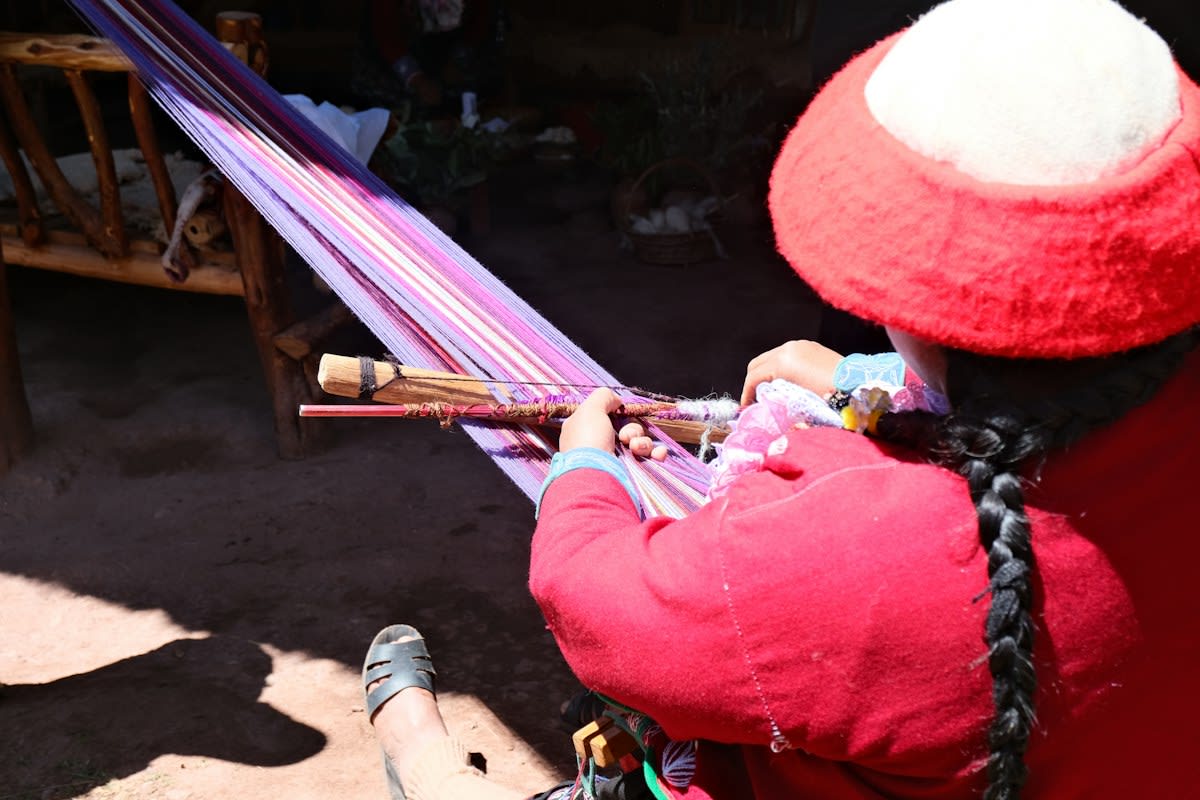
The legal loopholes are equally frustrating. Because khipus are classified as 'art' rather than 'documents' in many international registries, they lack the protections afforded to historical archives. This has led to a black market where data-rich textiles are sold as decorative rugs to unsuspecting collectors in Europe and North America. Every single piece that leaves its original context is a corrupted file. We are losing the metadata of an entire civilization because we refuse to call a rug a record.
The Systemic Leverage of Non-Linearity
If you look at the khipu as a data structure, it is essentially a linked list. The primary cord holds the main category, and the pendant cords hold the specific data points. Sub-pendant cords act as nested folders. This allowed the Incan state to perform complex queries. Want to know the total corn yield of the Colca Valley? You don't read a book; you feel the knots on a specific set of strings. The tactile nature of the system meant that the khipukamayuq could 'read' the data in the dark, using touch alone to verify the state of the empire.
This is the ultimate systemic leverage. While the Spanish were struggling with slow-moving paper bureaucracy, the Incan state was using a high-speed, tactile network. The khipu was portable, durable, and encrypted. Unless you were trained in the specific 'dialect' of that khipu's community, the data was invisible. It was the first instance of end-to-end encryption in the Americas. The loss of this system didn't just end an empire; it deleted a way of thinking that prioritized multidimensionality over the linear constraints of the page.
Fact-Check & Accuracy Note
The debate currently centers on whether khipus were purely numerical or if they contained phonetic elements. Most specialists agree on the numerical laws, but the 'literary khipu' hypothesis remains the most contested frontier in Andean studies. The binary twist (S vs Z) is settled science; the specific meaning of the colors is still being debated by professionals in the field.