
The Illusion of Eternal Stability
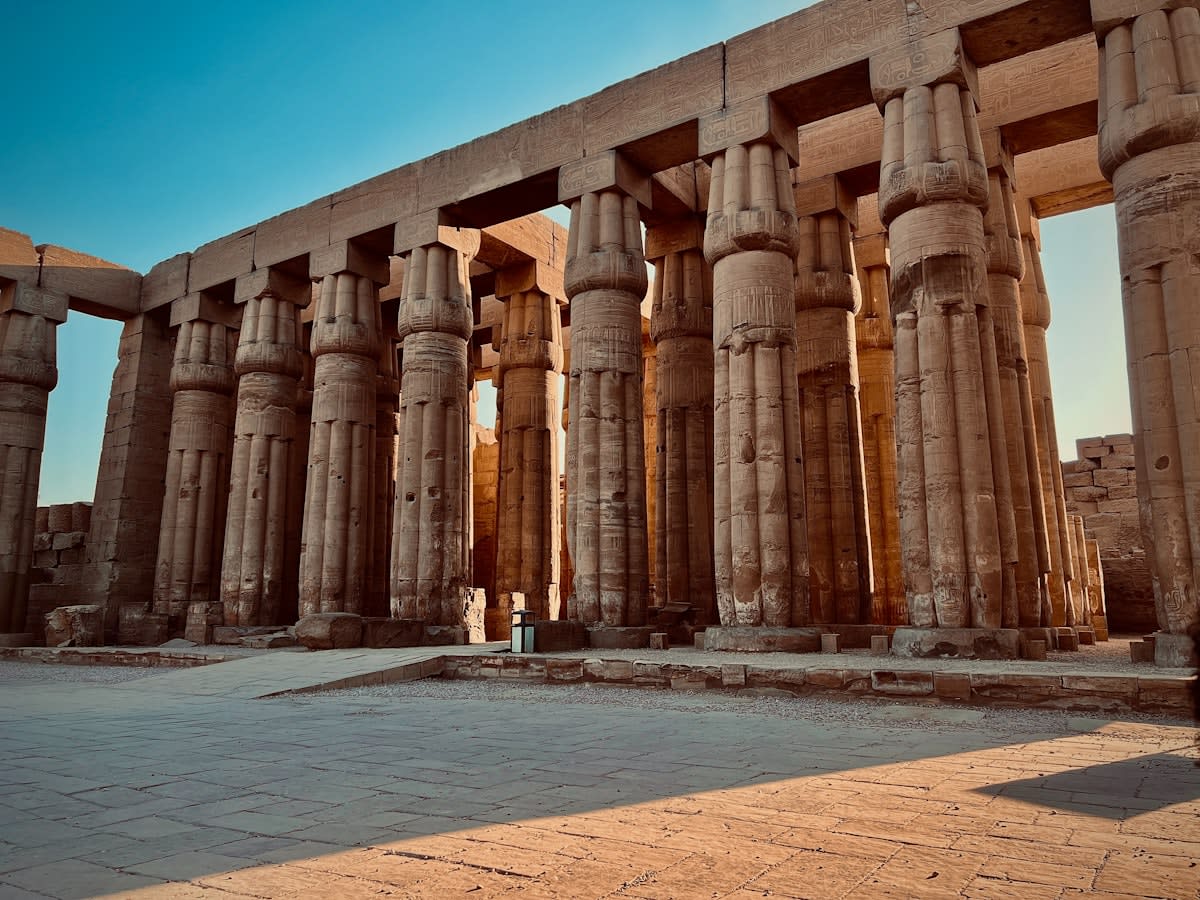
Superpowers rarely vanish overnight. Instead, they succumb to a slow, invisible process of ossification where the very systems that enabled their rise become the anchors that drag them down. The Ramesside Period of Egypt—spanning the 19th and 20th Dynasties from roughly 1292 to 1077 BC—serves as the ultimate case study in this phenomenon. On the surface, the era of Ramesses II was one of unparalleled splendor, defined by colossal monuments and an expansive diplomatic network. Yet, beneath the limestone facade, the Egyptian state was building a structure of fragility that no amount of granite could reinforce.
Why do the most successful systems fail to adapt? The answer lies in the success itself. When a state achieves total dominance, it stops innovating and starts optimizing for the status quo. In the Ramesside era, the Egyptian administration became obsessed with the preservation of its own image. The massive investment in temple complexes and royal tombs was not merely an act of piety; it was a strategic attempt to project an aura of permanence in an increasingly volatile Mediterranean world. This focus on optics over agility is a recurring theme in the collapse of global hegemonies.
Consider the cost of empire. Maintaining a presence from the borders of the Hittite Empire in the north to the gold mines of Nubia in the south required a logistical apparatus of staggering complexity. The Ramesside kings expanded their military footprint, but they did so by leveraging a centralized command structure that could not handle localized shocks. When the costs of maintaining these distant frontiers began to outweigh the tribute flowing back to Thebes, the state did not scale back. It simply increased the pressure on its internal resources, creating a pressure cooker of economic instability.
The First Crack: Systemic Failure at Deir el-Medina
The first clear signal of collapse is never a foreign invasion; it is a failure of the internal social contract. In the reign of Ramesses III, the artisans of Deir el-Medina—the elite craftsmen building the royal tombs—staged the first recorded strike in human history. They did not strike for higher wages, but for the basic delivery of grain rations that the state had failed to provide. This was not a localized labor dispute. It was a systemic failure of the state's primary function: the redistribution of resources. When the state can no longer feed the people who build its monuments, the myth of the divine, omnipotent ruler evaporates.
"The collapse of a superpower begins when the cost of maintaining the image of power exceeds the actual capacity to exercise it."— Strategic Analysis Framework
This failure was compounded by a runaway inflationary spiral. Grain prices skyrocketed as climatic shifts disrupted harvests, yet the administrative bureaucracy remained rigid, refusing to adjust its tax and distribution models. The state responded not with reform, but with denial. By ignoring the grievances of the working class and the warnings of the priesthood, the Ramesside administration ensured that when the external shocks arrived, the internal foundation was already crumbled. Does this sound familiar to any modern economy relying on quantitative easing to mask structural decline?
| Metric | Early 19th Dynasty (Peak) | Late 20th Dynasty (Collapse) |
|---|---|---|
| Resource Control | Centralized / Absolute | Fragmented / Regional |
| Border Security | Expansive / Offensive | Contained / Defensive |
| Economic Stability | Gold-backed Surplus | Grain-deficit / Inflationary |
| Social Cohesion | High State Loyalty | Widespread Labor Unrest |
The transition from the 19th to the 20th Dynasty marks a shift from an empire of growth to an empire of maintenance. In the early period, the state captured new wealth through conquest and trade. By the late period, the state was merely trying to prevent the loss of existing assets. This shift is critical. A system designed for expansion cannot easily pivot to a strategy of contraction without triggering a crisis of legitimacy. The Ramesside kings tried to maintain the lifestyle of the peak while operating on a fraction of the resources.
The Catalyst: The Sea Peoples and the Myth of the External Enemy
Historians often point to the Sea Peoples—a confederation of maritime marauders—as the primary cause of the Late Bronze Age collapse. This is a seductive narrative because it provides a clear villain. However, a strategic lens reveals that the Sea Peoples were a catalyst, not the cause. They were the storm that hit a house already riddled with termites. Egypt actually defeated many of these incursions, but the cost of those victories was ruinous. The effort required to repel the invaders drained the last of the treasury and forced the state to rely even more heavily on local governors.
What happened next was the inevitable decentralization of power. As the central government in Thebes became unable to provide security or food, local leaders began to fill the void. Power shifted from the Pharaoh to the High Priests of Amun and regional warlords. This was not a sudden fall, but a gradual migration of authority. The superpower did not disappear; it fragmented into smaller, more resilient regional entities that were better suited to the new, leaner economic reality of the Iron Age.
This pattern is mirrored across history. The Western Roman Empire did not simply vanish when the Goths arrived; it had already spent centuries devolving into localized fiefdoms because the central bureaucracy in Rome was too rigid to manage its sprawling borders. Similarly, modern corporate giants often fail not because a competitor releases a better product, but because their internal culture becomes so ossified that they can no longer pivot. They become 'too big to fail' right up until the moment they do.
The Contrarian Take: Collapse as Adaptation
We must stop viewing the end of the Ramesside Period as a tragedy. From a systemic perspective, the collapse was a necessary correction. The imperial model of the New Kingdom was an ecological and economic anomaly—a high-energy system that required constant expansion to survive. When the environment changed and trade routes shifted, the system had to break to allow for something more sustainable to emerge. The 'collapse' was actually the birth of a more flexible, regionalized Mediterranean world.
The lesson for today's global powers is that resilience is not found in the ability to resist change, but in the ability to integrate it. The Ramesside kings tried to build walls of stone to keep the world out. They should have been building bridges of trade and flexible governance to bring the new world in. When you prioritize the preservation of the structure over the health of the system, you are not building a legacy; you are building a ruin.
Strategic Insight
The Rigidity Trap occurs when a system's previous successes create a set of beliefs and processes that prevent it from adapting to new threats. The more successful the system was, the more rigid it becomes, and the more spectacular its eventual failure.
Ultimately, the architecture of collapse is built on a foundation of denial. The Ramesside elite believed their system was the only possible way to organize society. They viewed the Sea Peoples, the strikers, and the inflation as anomalies rather than signals. By the time they realized the world had changed, they no longer possessed the tools to change with it. The tragedy of the superpower is the belief that it is the exception to the laws of entropy.