History has always been a game of fragments. For decades, archaeologists relied on the shape of a pot or the script on a coin to guess where a merchant had been. But a seismic shift is occurring. We are moving from the era of typology—where we categorize by appearance—to the era of archaeometry, where the chemical composition of an object tells the truth regardless of its form. This is the 'Chemical Ghost Map,' a hidden layer of data that reveals the exact origin of materials, the diet of ancient migrants, and the industrial scale of forgotten empires.
The urgency of this shift is evident in the discoveries flooding in during the summer of 2026. We are no longer just finding 'sites'; we are reconstructing entire supply chains. Whether it is the isotopic signature of a prehistoric tooth in Mexico or the mineral composition of a shell in Tamil Nadu, the data is screaming a single truth: the ancient world was far more integrated, industrial, and mobile than the textbooks ever dared to suggest.
The Aegean Warehouse: More Than Just Pottery
Take the recent discovery off the coast of Andros Island in Greece. Divers have uncovered a shipwreck from the late 5th or early 4th century BC that is essentially a time capsule of Classical-era logistics. The wreckage contains an estimated 600 to 650 commercial amphorae. These were the shipping containers of antiquity, designed with pointed bases to optimize space in a ship's hold. While a casual observer sees clay jars, an archaeometrist sees a manifest of trade networks.
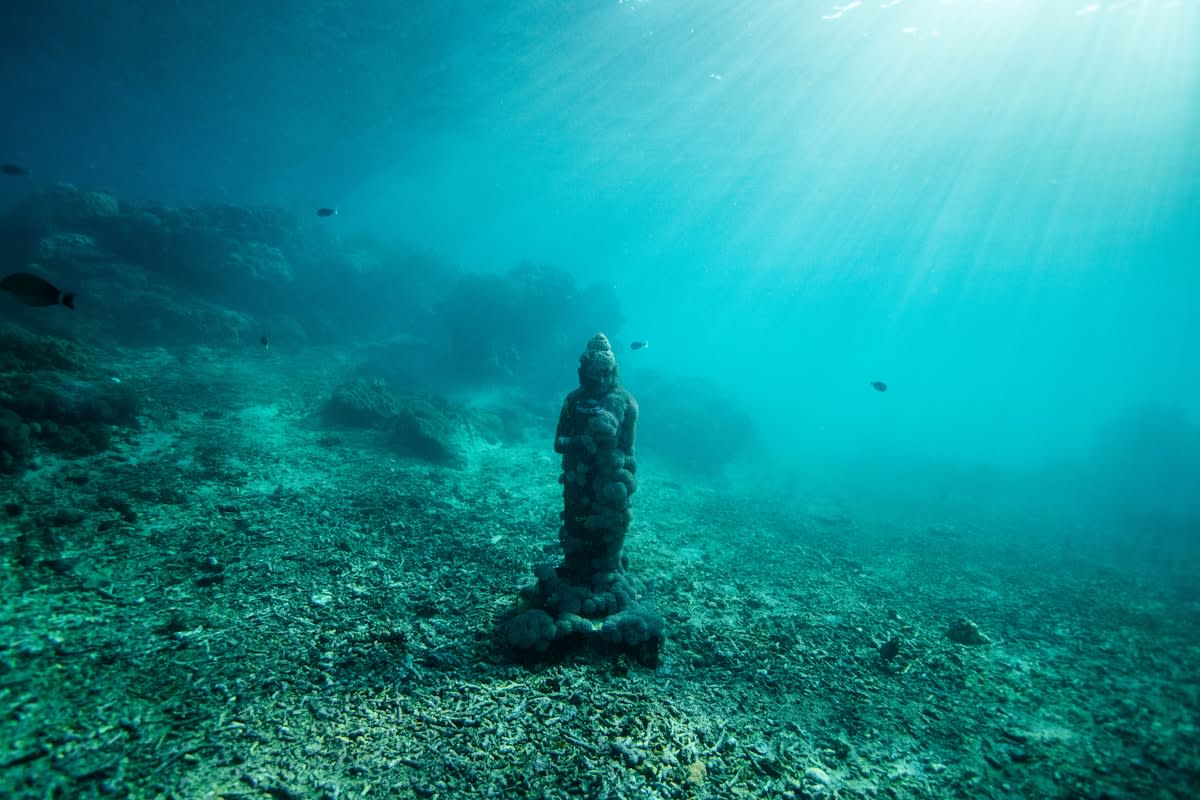
The cargo is not uniform. Experts have documented at least three distinct amphora types, including the Solokha 2 type. This diversity indicates that the ship was not a simple point-to-point courier but a hub of a complex network connecting the northern Greek islands and the Bosporus region. By analyzing the clay's chemical fingerprint, researchers can pinpoint the exact kiln where these jars were fired, mapping the commercial arteries of the Aegean with pinpoint accuracy.
"The different styles of the amphorae may also provide clues about the ship’s trading destinations and the origin of its cargo."— Greek Culture Ministry
Why does this matter now? Because we are seeing a delta in how we interpret 'wealth.' Twelve months ago, a shipwreck was a find of artifacts. Today, it is a data set. The volume of 600+ jars suggests a level of standardized commercial shipping that challenges the notion of sporadic, opportunistic trade in the late Classical period.
This transition from artifact to data is not limited to the Mediterranean. The same chemical rigor is being applied to the shores of Asia.
Industrialization in the Gulf of Mannar
In Tamil Nadu, India, the discovery at Pattanamarudur is rewriting the narrative of ancient craft. Excavations across ten different trenches have yielded a consistent pattern: this wasn't a village workshop; it was a massive industrial production center for shells. The evidence is overwhelming, with complete shells and partially cut ornaments found in every single trench, indicating a systematic, tiered manufacturing process.
But the real story lies in the imports. Alongside the shell industry, researchers recovered Chinese celadon ware. This is the smoking gun of overseas trade. When you pair celadon with the presence of Pandya and Vijayanagara coins, the site transforms from a local factory into a node in a global maritime network. The Gulf of Mannar coast emerges not as a periphery, but as a major center of commerce and craft production.
Scale Shift
The scale of Pattanamarudur is unprecedented for the region, marking it as the largest ancient shell industry site discovered anywhere in Tamil Nadu.
Does this suggest a managed economy? Likely. The systematic nature of the shell production, combined with the high-value imports from China, implies a structured trade agreement or a highly organized merchant class. We are seeing the blueprint of an industrial complex that predates modern concepts of mass production.
The bridge between these maritime hubs and the deep history of migration is found in the soil and the bone.
Isotopes: The Biological Ledger
While pottery tells us what was traded, stable isotope analysis tells us who moved and why. Geologists from Florida State University (FSU) have applied this to the migration of mammals in Mexico. By analyzing ancient soil and fossilized tooth enamel, they discovered that North American mammals mingled with South American species long before a land bridge fully connected the continents.
The key was the C4 grasses—warm-season plants like corn and sugarcane. Isotopic data revealed these grasses were present 10 million years ago and became a dominant part of early horses' diets by 5 million years ago. This isn't just biology; it is environmental forensics. It proves that the development of savanna grasslands drove migration, showing that nature's chemical shifts dictate the movement of life.
| Analysis Type | Traditional Focus | Archaeometric Shift | Example from Data |
|---|---|---|---|
| Pottery | Visual Style/Shape | Chemical Fingerprinting | Andros Amphorae (Bosporus origin) |
| Migration | Fossil Location | Stable Isotope Analysis | Mexico C4 Grasses/Horse Diet |
| Production | Tool Presence | Spatial Distribution/Scale | Tamil Nadu Shell Industry |
| Chronology | Stratigraphy | Luminescence/AI Imaging | Roman Gold Mining (Pyrenees) |
This biological ledger extends even beyond our planet. At Boston University, cosmochemist Nan Liu is using isotopic composition to analyze presolar grains from the Murchison meteorite. You cannot identify these grains by sight; you must dissolve them in acid to uncover their silicon and carbon makeup. This is the ultimate expression of the Chemical Ghost Map: using the isotopes of stardust to infer the mixing processes of a supernova.
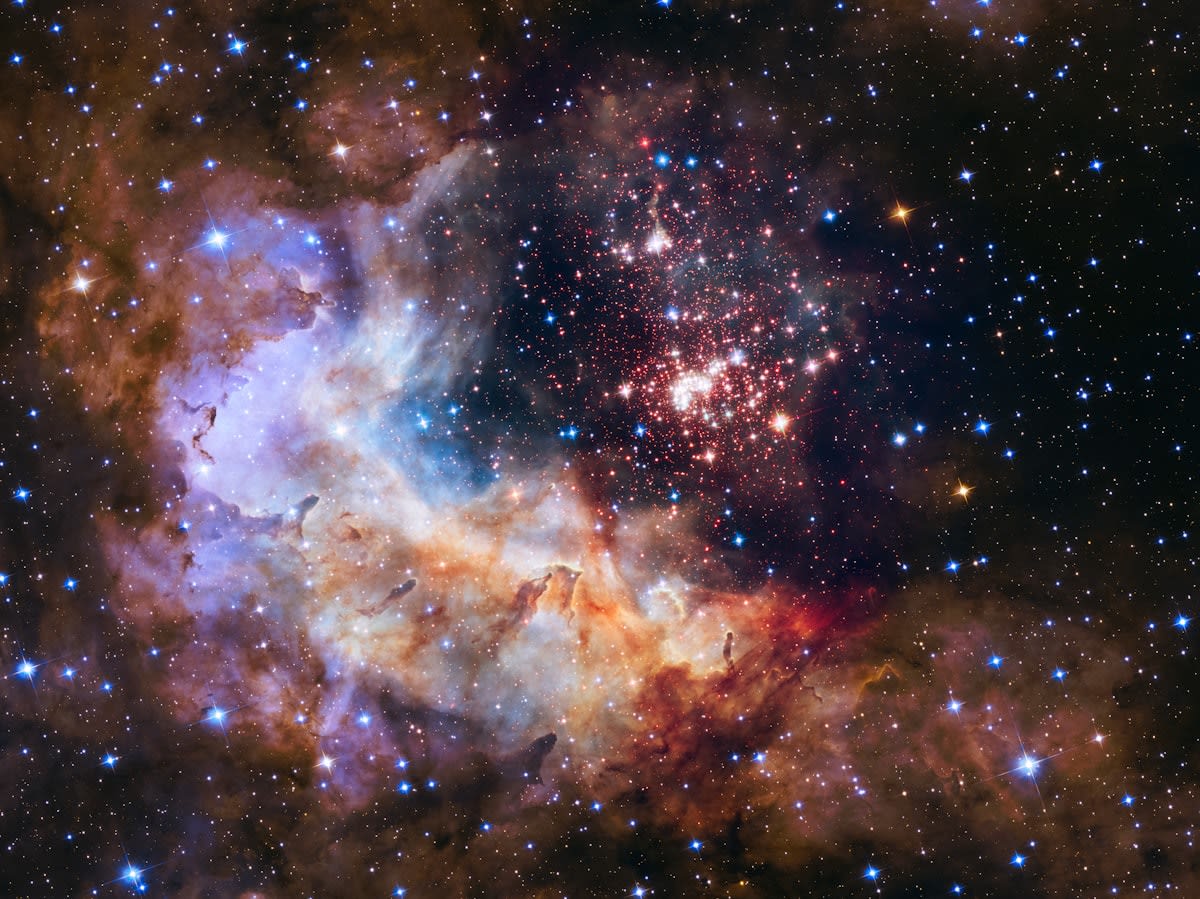
Is there a common thread here? Absolutely. Whether it is a 5-million-year-old horse in Mexico, a 2,400-year-old ship in Greece, or a presolar grain in a meteorite, the methodology is the same. We are stripping away the surface to find the chemical truth.
The AI Acceleration
The speed of these discoveries is being supercharged by Artificial Intelligence. New AI methods are making ancient stone inscriptions easier to read, while spectral imaging is improving the identification of ruins. We are seeing a convergence of chemistry and computation. Luminescence dating is now confirming Roman gold mining in the Eastern Pyrenees, providing a temporal anchor to the chemical data.
- AI-enhanced spectral imaging for ruin identification
- Luminescence dating for precise mining timelines
- Isotope studies revealing prehistoric diets in Menorca
- Genomic studies reshaping the history of Indigenous Americans
We are witnessing the end of the 'isolated find.' No object is viewed in a vacuum anymore. A coin in Tamil Nadu is now linked to a trade route in China; an amphora in the Aegean is linked to a kiln in the Bosporus. The map is no longer made of lines on paper, but of chemical signatures in the earth.
The result is a history that is less about great men and more about great systems. It is a history of grass, clay, shell, and stardust. The Chemical Ghost Map doesn't just tell us where we've been—it tells us how we were connected long before we had the words to describe it.