
The modern corporate campus is rarely about productivity. While HR brochures highlight the ergonomic chairs and free kombucha, the architectural reality is far more aggressive. We are witnessing the reconstruction of the walled city. From the sprawling complexes in Shenzhen to the manicured landscapes of Mountain View, the goal is not merely to house employees, but to eliminate the need for them to ever leave. When a company provides the gym, the grocery store, the childcare, and the healthcare, it ceases to be an employer and begins to function as a municipal government. This is not a trend in corporate wellness; it is a strategic pivot toward total environmental control.
This phenomenon mirrors the rise of the medieval city-state, where trade guilds and merchant princes created autonomous zones that operated independently of the crumbling feudal empires around them. These entities didn't just trade wool or spices; they minted their own coins, wrote their own laws, and maintained their own militias. Today's tech behemoths are following a similar blueprint. They are not fighting the state in a loud, revolutionary war; they are simply making the state irrelevant by providing a superior, private version of the social contract.
The Infrastructure of Isolation
The physical manifestation of this shift is the corporate enclave. In Singapore and across the Silicon Valley corridor, we see the emergence of 'company towns' rebranded as 'innovation hubs.' These spaces are designed to create a closed-loop existence. By integrating residential housing into the corporate footprint, firms solve the logistical problem of commuting while simultaneously capturing the employee's entire waking life. The boundary between professional duty and private existence dissolves, creating a psychological dependency that mirrors the relationship between a medieval burgher and his city-state.
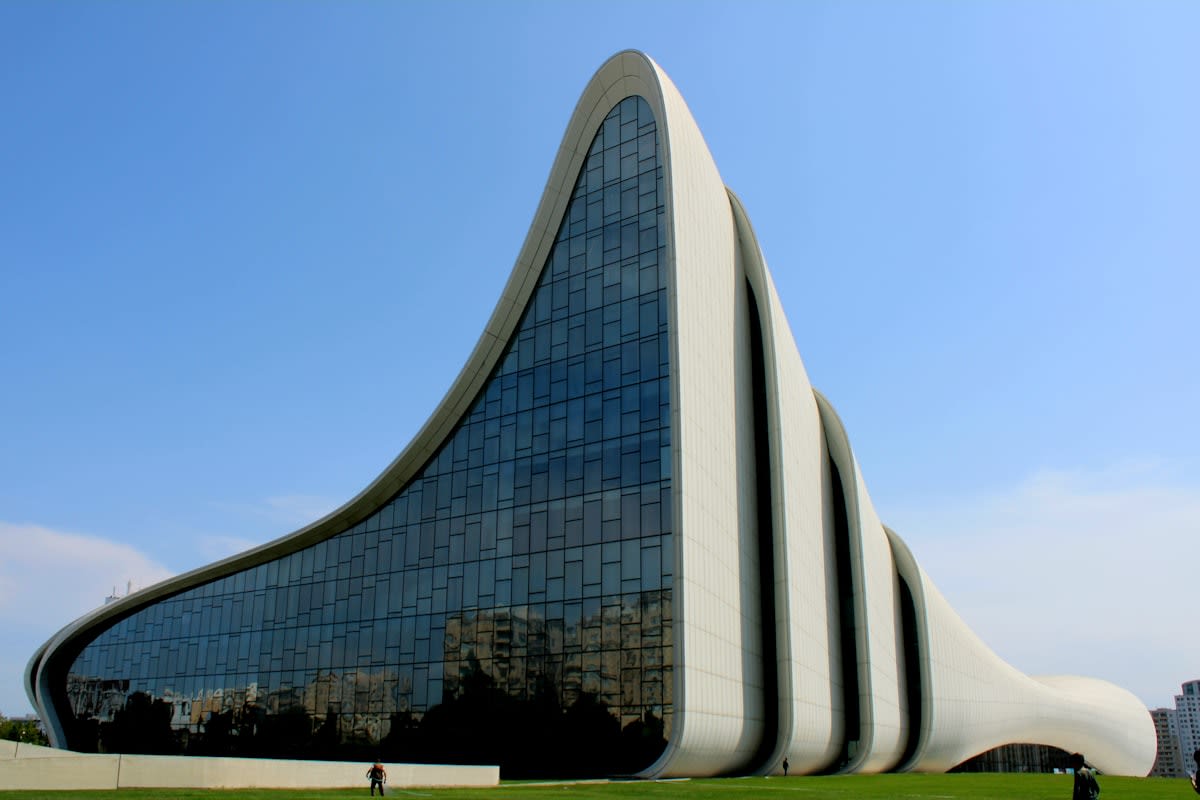
Why does this matter? Because when the provider of your housing is also the provider of your income and your health insurance, the power dynamic shifts from a contractual agreement to a sovereign relationship. You are no longer a free agent in a labor market; you are a resident of a corporate jurisdiction. If you are exiled from the company, you lose not just your salary, but your community, your home, and your access to essential services. This is the essence of the city-state model: the fusion of economic power with administrative governance.
This territorial expansion is not limited to the physical realm. The most potent version of the modern city-state exists in the cloud.
Digital Feudalism and the Cloud
If the medieval city-state controlled the ports and the roads, the modern corporation controls the APIs and the data centers. Amazon Web Services (AWS) and Microsoft Azure are the new trade routes. Most of the modern internet does not run on a neutral public web, but on private infrastructure owned by three or four entities. When a company hosts the data, the compute power, and the identity management of thousands of other businesses, it is effectively taxing the digital commerce of the 21st century.
| Feature | Medieval City-State | Modern Tech Giant |
|---|---|---|
| Primary Asset | Strategic Trade Ports | Cloud Infrastructure/Data |
| Governance | Merchant Councils | Terms of Service (ToS) |
| Currency | Local Minted Coinage | Internal Credits/Ecosystem Lock-in |
| Citizen Bond | Guild Membership | Equity/Stock Options |
| Security | City Walls/Private Guards | Cybersecurity/Private Intelligence |
The data suggests a staggering concentration of power. When the market capitalization of a single entity like Apple exceeds the GDP of nations such as Egypt or Poland, the traditional notion of corporate influence becomes obsolete. We are no longer talking about lobbying; we are talking about parallel sovereignty. These entities possess the capital to build their own satellite networks, their own payment systems, and their own internal legal frameworks, effectively bypassing the slow, bureaucratic friction of national governments.
"The transition from company to state happens the moment a corporation stops asking for permission from the government and starts providing the services the government can no longer deliver."— Strategic Analysis Memo, 2024
This shift is accelerated by the failure of the public sector to keep pace with technological acceleration. As national infrastructures crumble and social safety nets fray, the corporate 'city-state' offers a seductive alternative: a high-efficiency, high-amenity environment where the rules are clear and the services actually work. The trade-off, of course, is the surrender of political agency for administrative convenience.
The legal framework of this new sovereignty is not found in constitutions, but in the fine print of the Terms of Service.
The Privatization of Law
In a traditional state, law is a public process characterized by transparency and the right to appeal. In the corporate city-state, law is a proprietary algorithm. When a platform bans a user or a corporation terminates an employee in a 'walled garden' environment, the process is often opaque and final. The 'Terms of Service' act as a city charter, but one that can be unilaterally rewritten by the sovereign at any moment. This creates a state of permanent precariousness for the inhabitant.
Furthermore, the rise of mandatory arbitration clauses in employment and user contracts is a direct move toward privatized justice. By removing disputes from the public court system and placing them in private forums, corporations are effectively establishing their own judicial branch. They are no longer subject to the common law of the land; they are subject to the internal logic of their own corporate governance.

This legal autonomy is bolstered by the creation of private intelligence apparatuses. Modern giants do not just monitor their networks for bugs; they monitor the sentiment, movement, and associations of their 'citizens.' The level of surveillance within a corporate ecosystem far exceeds that of any democratic state. This isn't about security; it's about maintaining the stability of the ecosystem by identifying and neutralizing friction before it can evolve into organized dissent.
The final piece of the puzzle is the transformation of the employee into a dependent subject.
The New Corporate Citizenship
The 'perks' of the modern tech job are the social services of the corporate state. When a company provides free meals, on-site laundry, and subsidized housing, it is not being generous; it is reducing the employee's reliance on the outside world. This creates a 'golden handcuff' effect where the cost of leaving the company is not just a loss of income, but a total collapse of one's lifestyle. The employee becomes a citizen of the firm, whose identity and survival are inextricably linked to the corporation's health.
The Sovereignty Trade-off
The paradox of the corporate city-state is that it offers maximum individual comfort in exchange for minimum systemic agency. You get the best healthcare and the fastest internet, but you lose the right to contest the rules of the environment you inhabit.
This model is particularly potent in emerging economies where the state is weak or corrupt. In these regions, the corporate city-state is not just a preference; it is a sanctuary. When a company can provide better security, more reliable electricity, and more consistent justice than the national government, the population will naturally migrate toward the corporate sovereign. We are seeing the birth of a world where your primary loyalty is not to a flag, but to a brand.
Ultimately, the mimicry of medieval city-states is a response to the scale of modern complexity. National governments are too slow to manage the velocity of the digital economy. Corporations, with their clinical precision and vertical integration, can iterate faster. But as they assume the roles of the state, they do so without the burden of democratic accountability. The result is a fragmented global landscape of high-tech fiefdoms, where the quality of your rights depends entirely on whose ecosystem you are lucky enough to inhabit.