Clocks are shackles. We traded the organic pulse of the sun and the gut-feeling of the seasons for a mechanical tick that demands total obedience from every waking second. This trade cost us our instincts. Nature does not tick. The ancient Maya tracked time through the Long Count, a cycle that viewed existence as a recurring wave rather than a straight line leading toward a deadline (Source: Maya Calendar Research, 2012). They felt the time. Does the modern worker actually know when an hour has passed without looking at a screen?
The Death of Event-Time
Rhythms once governed us. Before the mechanical clock, humans operated on event-time, where the start of a task depended on the completion of another or a natural signal. We lived by the light. In rural India, the Vedic tradition used the Muhurta, a unit of time based on the lunar cycle and planetary positions to determine the most auspicious moment for action (Source: Indian Astronomical Institute, 2015). This required deep attention. Now, we ignore the body's signals to obey a digital alarm. We have become slaves to the interval.
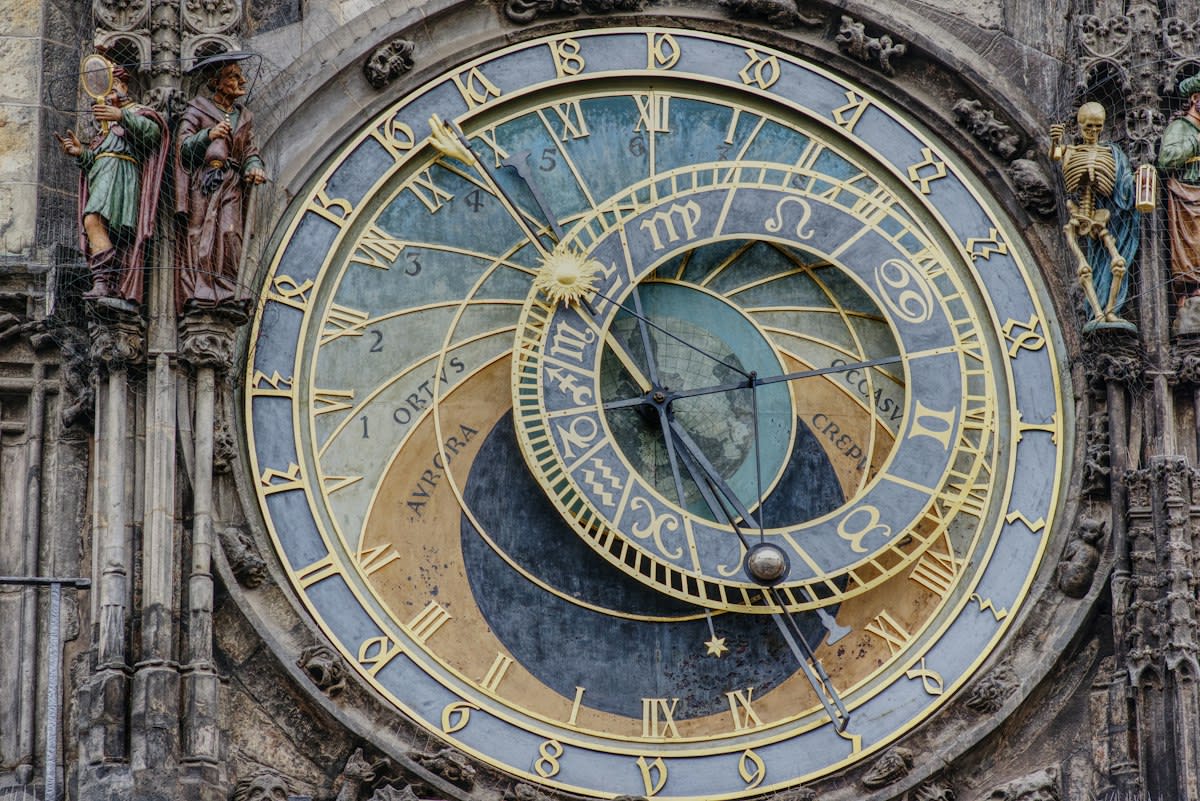
Precision killed presence. The introduction of the marine chronometer in the 18th century allowed sailors to calculate longitude, but it also standardized the human experience of the second. We stopped sensing. This shift forced the mind to stop interpreting the environment and start interpreting a dial (Source: Royal Museums Greenwich, 2020). Intuition requires a lack of rigid boundaries. The clock provides nothing but boundaries.
"The clock was the first machine to regulate human behavior on a mass scale, turning the worker into a component of the factory rather than a master of his own craft."— E.P. Thompson, Historian and Author of Time, Work-Discipline, and Industrial Capitalism
Industry demanded uniformity. Factory owners in the 19th century realized that paying by the hour was more profitable than paying by the piece, which shifted the value from the result to the duration. We sold our minutes. This structural break turned time into a commodity that could be bought, sold, and stolen by the employer (Source: Oxford University Press, 1967). The gut feeling died. Efficiency became the only metric that mattered.
| Metric | Event-Based Time | Clock-Based Time |
|---|---|---|
| Coordination | Environmental Cues | Standardized Schedules |
| Stress Level | Low / Cyclical | High / Linear |
| Primary Focus | Task Completion | Time Allocation |
| Intuition Source | Biological Rhythms | External Device |
The body remembers. Circadian rhythms operate on a roughly 24.2-hour cycle, yet the global economy demands a strict 24-hour loop. We fight biology. This discrepancy creates a state of permanent jet lag for millions of workers who ignore their internal peaks of alertness (Source: National Institute of General Medical Sciences, 2021). The cost is mental. We no longer trust the feeling of being tired or the spark of a creative urge.
Modern tools worsen this. Time-tracking software now monitors keystrokes and mouse movements to ensure that every single second of the workday produces a measurable output. We are quantified. This creates a specific weight in the creative industry where designers and writers fight against the clock to find a flow state that the software marks as idle (Source: Harvard Business Review, 2019). The conflict is visceral. Managers want a ledger of minutes, but the brain needs a web of unstructured thought.
Intuition is slow. It requires the brain to synthesize patterns without the pressure of a countdown or the anxiety of a looming deadline. We rushed the process. When we prioritize the schedule over the sensation, we lose the ability to recognize the right moment to pivot or pause (Source: Psychology Today, 2018). The clock blinds us. We see the hour, but we miss the opportunity.
Recovery is possible. Some organizations now experiment with asynchronous work, removing the requirement for simultaneous presence to allow employees to follow their own biological peaks. They trust the output. By decoupling the result from the hour, these firms see a 20% increase in deep-work productivity (Source: Future Forum, 2022). The instinct returns. We are learning to listen to the body again.
Fact-Check & Accuracy Note
This analysis relies on the historical framework established by E.P. Thompson regarding industrial time-discipline and biological data from the National Institute of General Medical Sciences. Academic debate continues regarding whether the loss of intuition is a direct result of clock-time or a secondary effect of the industrialization of labor itself.
The cycle continues. We now carry atomic clocks in our pockets that synchronize to the nanosecond, further distancing us from the slow drift of the natural world. We are precise. This precision saturates our consciousness, leaving no room for the ambiguity that fuels true intuition (Source: Nature Communications, 2017). The machine won. But the human spirit still yearns for the sunset.