
Maps are lying to us. For centuries, the definition of a nation was tied to the physical friction of borders—rivers, mountains, and walls that dictated where one jurisdiction ended and another began. This Westphalian certainty provided the bedrock for traditional diplomacy: ambassadors met in gilded rooms to negotiate treaties that governed land and sea. But while the physical border remains a site of theatrical security, the actual leverage has migrated. The real diplomacy is now happening in the opaque layers of the network stack, where the terms of existence for a state are written in code rather than ink.
We are witnessing a fundamental reallocation of power toward digital borderlands. These are not geographic zones but jurisdictional gray areas created by the intersection of global cloud infrastructure and national law. When a government hosts its citizen data on a server owned by a foreign corporation, it has effectively outsourced a portion of its sovereignty. The embassy is no longer the primary node of influence; the data center is. The ability to dictate the flow of information, the parameters of speech, and the access to compute has become the primary currency of international relations.
The Protocol as the New Treaty
Treaties are notoriously slow, often taking years to ratify and decades to evolve. In contrast, a change to a Terms of Service agreement or a modification of an API endpoint can alter the legal and economic reality of millions of people in milliseconds. This is the essence of algorithmic diplomacy. When a platform decides to shadow-ban a political movement or restrict access to financial tools in a specific region, it is exercising a form of governance that bypasses the state entirely. The protocol does not negotiate; it enforces.
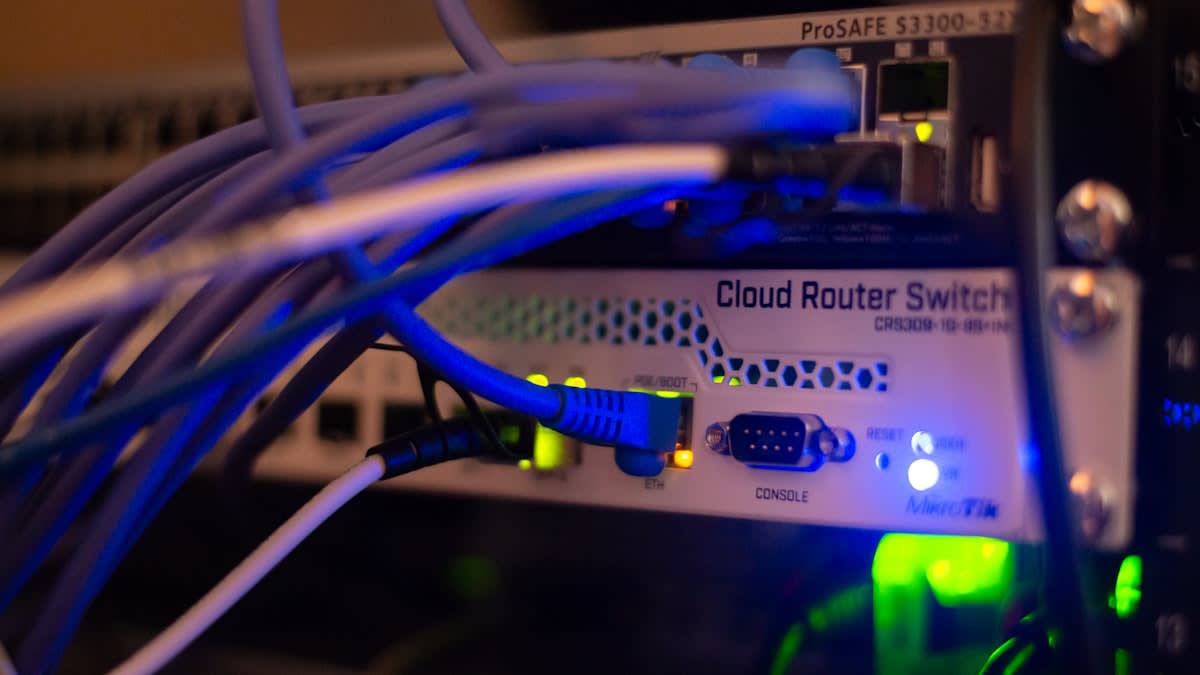
Consider the rise of sovereign clouds. Nations are no longer content to be mere tenants in a foreign digital empire. From Kazakhstan to the Gulf states, governments are investing billions to build localized infrastructure that ensures data residency and operational autonomy. This is not merely a technical preference; it is a defensive diplomatic maneuver. By controlling the hardware and the hypervisor, a state attempts to reclaim the sovereignty it lost during the first wave of cloud adoption. They are building digital fortresses to prevent their internal governance from becoming a subsidiary of a Silicon Valley or Shenzhen boardroom.
| Dimension | Westphalian Diplomacy | Algorithmic Diplomacy |
|---|---|---|
| Primary Asset | Territory and Landmass | Compute and Data Flow |
| Enforcement Mechanism | Treaties and Sanctions | Terms of Service and API Access |
| Temporal Scale | Decadal / Generational | Real-time / Continuous Deployment |
| Primary Negotiator | Ambassador / Head of State | CTO / Infrastructure Provider |
| Boundary Definition | Physical Geography | Network Latency and Jurisdiction |
The shift is most visible in how non-superpowers navigate the global stage. For a mid-sized economy, the ability to attract a regional data hub is now as strategically significant as securing a trade agreement. If a country becomes the landing point for subsea cables or the host for a regional cloud zone, it gains a structural advantage in the digital borderlands. It becomes a gatekeeper of the packets, allowing it to exert influence over its neighbors not through military threats, but through the management of latency and connectivity.
"The most powerful borders of the twenty-first century are not made of concrete, but of permissions. To be denied an API key is to be exiled from the modern economy."— Strategic Analysis of Digital Sovereignty
This transition does not mean the state is disappearing; rather, it is mutating. We are seeing the emergence of the Tech-Diplomat—officials who spend less time studying international law and more time studying the architecture of distributed systems. The goal is no longer just to maintain a relationship with another country, but to maintain a functional relationship with the platforms that mediate that country's existence. When a state's critical infrastructure runs on a proprietary stack, the vendor's support ticket becomes a diplomatic channel.
The Core Concept
Protocol Sovereignty occurs when a state can define the rules of data exchange and identity verification within its borders, independent of external corporate or foreign government standards.
The economic implications are staggering. The global cloud market, valued at over 1.2 trillion dollars, is not just a commercial sector; it is the new geography of power. As governments move an estimated 40% of their core data to hybrid cloud environments, they are effectively redrawing their borders. Each migration is a gamble. Does the efficiency of the cloud outweigh the risk of jurisdictional capture? For many in the Global South, the choice is an illusion, as the lack of domestic alternatives forces a reliance on foreign stacks, creating a new form of digital dependency that mirrors the colonial patterns of the past.

This is not a crisis of diplomacy, but a maturation of it. The old world relied on the assumption that the state held a monopoly on legitimate force. In the digital borderlands, force is redefined as the ability to disconnect. The threat of a 'digital blackout' or the revocation of cloud credits is a more immediate and potent tool of coercion than a distant naval blockade. We are moving toward a world of fragmented 'splinternets,' where diplomatic alignment is signaled by which tech stack a nation adopts.
Ultimately, the struggle for sovereignty in the twenty-first century will be fought over the ownership of the underlying layers. Whether it is the fight over 5G infrastructure or the race for domestic Large Language Models, the objective is the same: to stop being a consumer of another's protocol and to start being the author of one's own. The nations that succeed will be those that realize that the server room is the only embassy that truly matters in a world governed by bits.