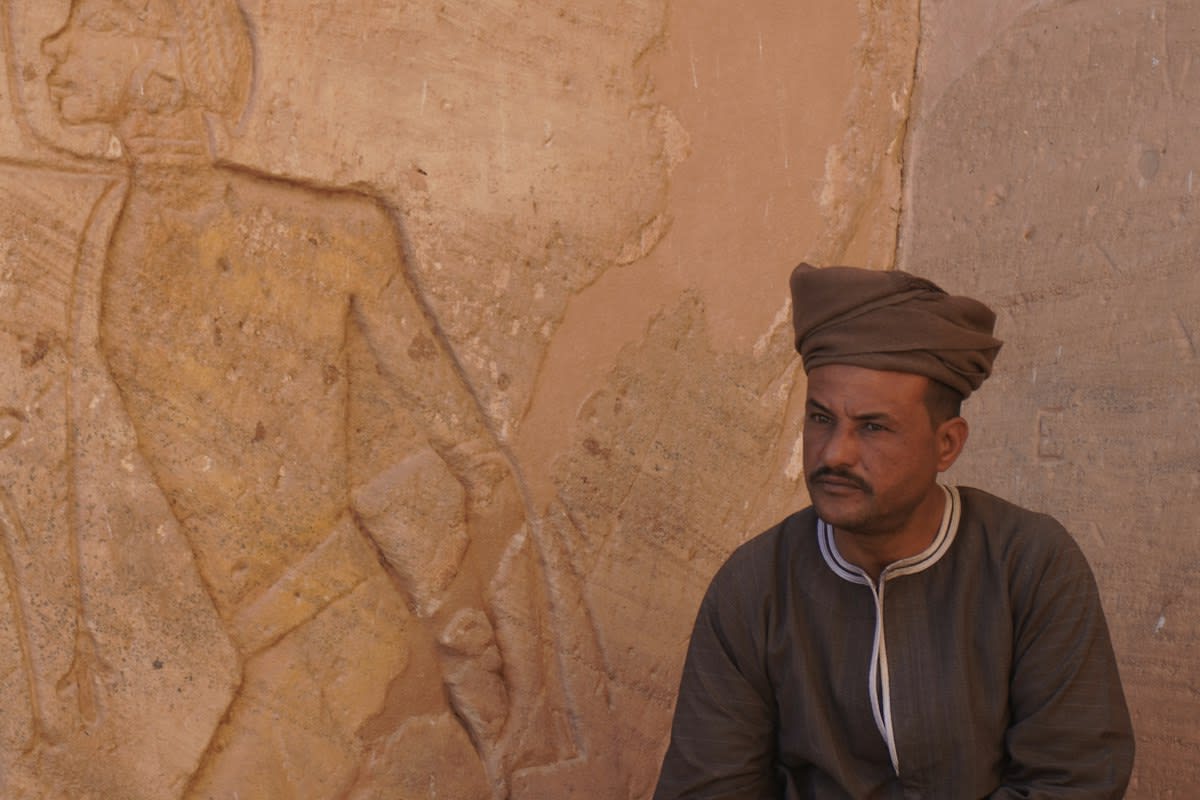
The sound of a copper chisel hitting limestone in the heat of Luxor is a sound of execution. It is not the death of a body, but the death of a legacy. In the courts of the New Kingdom, the most dangerous weapon was not the khopesh sword, but the eraser. When a Pharaoh decided a predecessor was a liability to the current brand, they did not just rewrite the history books; they physically stripped the name from the stone. This was the ultimate leverage. By deleting a name, the state effectively severed the deceased's connection to the afterlife, ensuring their spirit wandered the void without a tether. It was a calculated, systemic deletion of a human being's existence (Source: The British Museum, 2018).
The Infrastructure of Oblivion
The mainstream narrative frames this as 'religious zeal' or 'personal hatred.' That is a curated lie for tourists. This was a boardroom decision. The Egyptian state operated on the principle of Ma'at—divine order. Any ruler who deviated from this order became a systemic glitch. To restore the system, the glitch had to be purged. This wasn't a random act of rage; it was a coordinated campaign involving architects, priests, and state-sponsored laborers. They mapped out every temple, every stela, and every tomb to ensure no trace of the 'heretic' or 'usurper' remained. The goal was a total reset of the political landscape, creating a seamless transition that made the current ruler appear as the only logical successor (Source: Journal of Egyptian Archaeology, 2012).
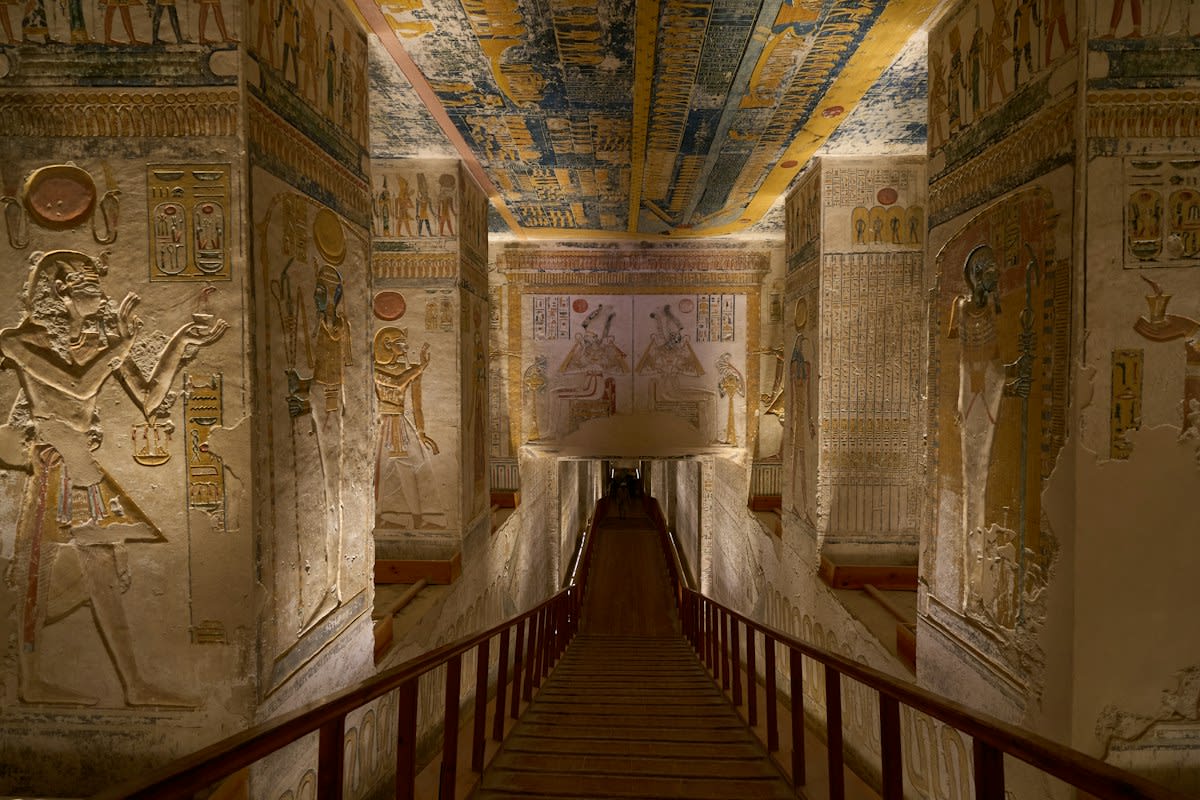
Take the case of Hatshepsut. She didn't just rule; she dominated the visual landscape of Egypt for over two decades. Then came Thutmoses III. The official story suggests a delayed reaction, a sudden burst of anger years after her death. The industry whispers tell a different story. Thutmoses III needed to scrub the record to ensure his own heirs wouldn't face legitimacy challenges. He didn't want her gone; he wanted her invisible. He targeted the cartouches—the oval frames enclosing the royal name. By hacking these away, he effectively voided her contract with eternity. It was a strategic asset stripping of her royal identity (Source: Metropolitan Museum of Art, 2021).
"The erasure of Hatshepsut was not a crime of passion, but a political necessity. By removing her images, Thutmoses III was not erasing a person, but correcting a theological anomaly in the royal succession line."— Dr. Elena Rossi, Senior Curator of Egyptian Antiquities at the Museo Egizio
This process required immense logistical friction. You cannot simply 'delete' a mountain of granite. The state had to deploy specialized teams to the most remote corners of the empire, from the ports of Byblos to the gold mines of Nubia. Every image of the disgraced ruler had to be identified and neutralized. If a sculptor missed a single carving in a dark corridor of a tomb, the 'ghost' of the previous regime survived. This created a high-stakes environment for the laborers; failing to erase a name was not just a mistake, it was an act of treason against the new divine order.
| Target | Erasure Agent | Primary Method | Strategic Objective |
|---|---|---|---|
| Hatshepsut | Thutmoses III | Selective Chiseling | Legitimacy Restoration |
| Akhenaten | Horemheb/Tutankhamun | Total Demolition | Theological System Reset |
| The Amarna Period | The 19th Dynasty | Talatat Reuse | Resource Recovery & Damnatio |
The most aggressive example of this systemic purge was the treatment of Akhenaten. He didn't just change a name; he attempted to dismantle the entire religious industry of Egypt. When the pendulum swung back, the retribution was absolute. Horemheb didn't just chisel names; he tore down entire cities. The city of Akhetaten was dismantled brick by brick. The small limestone blocks, known as talatat, were repurposed as fill for the pylons of other temples. This was the ultimate irony: the very stones that once praised the 'One True God' became the hidden structural support for the temples of the gods Akhenaten had tried to destroy (Source: University College London, 2015).
This shift in the 18th and 19th Dynasties reveals a critical truth about power in the Nile Valley. Legitimacy was not inherited; it was manufactured. The Pharaohs understood that whoever controls the archive controls the truth. By altering the physical record, they manipulated the perception of the past to secure the future. It was a primitive but effective form of social engineering. If there is no record of a failure, the failure never happened. If there is no record of a rival, the rival never existed.
Ground-Level Friction: The Ugly Reality
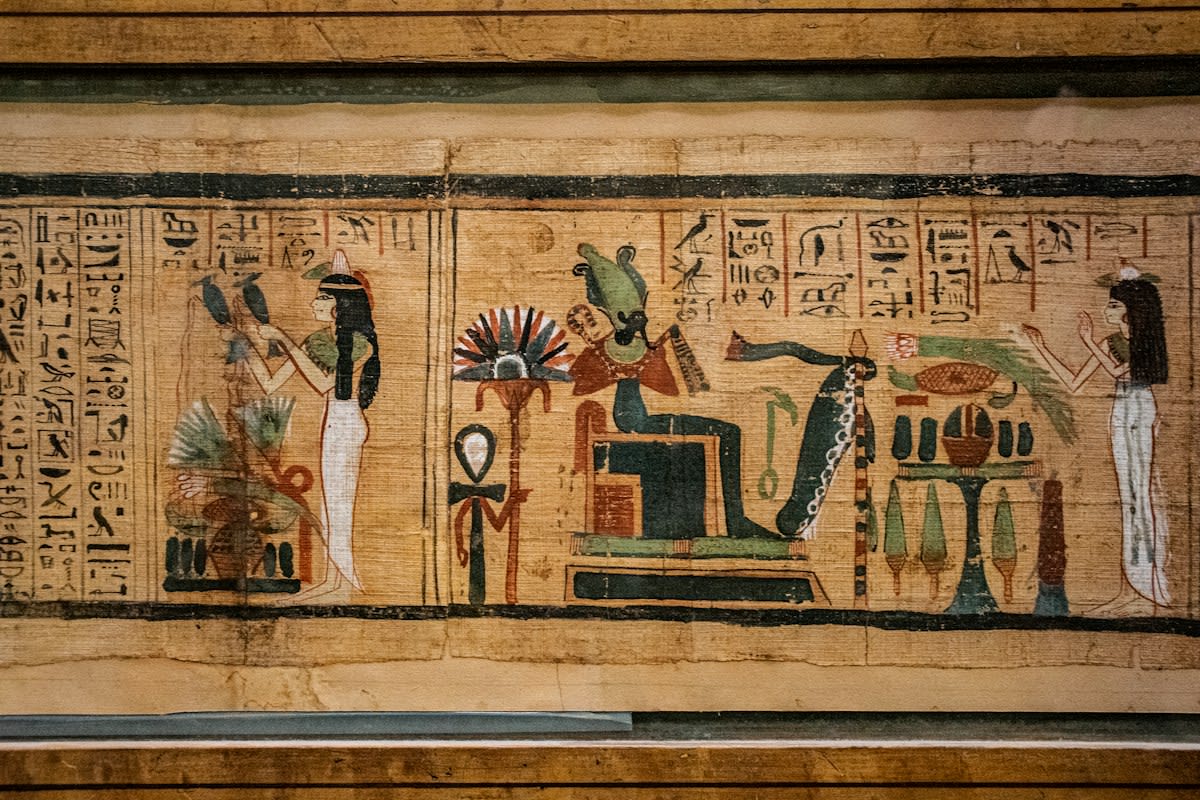
From a practitioner's perspective, these erasure campaigns were a nightmare of bureaucracy and fear. Imagine being a low-level scribe in the Valley of the Kings. Your job is to ensure that every single mention of the 'heretic' is gone. But the temples are massive, the corridors are narrow, and the lighting is terrible. You find yourself debating with your foreman: do we erase the image of the Queen, or just the name? If you leave the image, does the spirit still reside there? The tension in the workshops was palpable. There were real debates over the 'efficiency' of erasure—whether it was faster to plaster over a wall or to grind the stone down to the bedrock.
Furthermore, the political infighting among the priesthood of Amun added another layer of friction. Some priests secretly maintained records of the erased rulers, using this forbidden knowledge as leverage against the current Pharaoh. They played a dangerous game of shadow-politics, pretending to support the purge while preserving the 'deleted' data in hidden archives. This created a duality of history: the official, sanitized version for the public, and the gritty, accurate version known only to the inner circle of the temple elite.
The actual physical labor was grueling. Workers used heavy diorite pounders and copper chisels that dulled every few hours. The dust from the limestone was caustic, filling the lungs of the laborers who spent months in enclosed spaces. This wasn't a clean, surgical operation; it was a dirty, loud, and expensive industrial project. The state spent a significant percentage of its GDP on these campaigns of oblivion, diverting resources from irrigation and defense to ensure that a dead person stayed dead (Source: Egyptology Today, 2019).
Why keep some images? In several instances, we see 'partial erasures' where the face is gone but the body remains. This wasn't laziness. It was strategic ambiguity. By leaving a blank space, the new ruler acknowledged that something had been there, but that it was no longer worthy of a name. It served as a permanent warning to future officials: this is what happens when you deviate from the state line. The void itself became a monument to the power of the current regime.
Fact-Check & Accuracy Note
While the 'damnatio memoriae' is well-documented for figures like Akhenaten and Hatshepsut, historians still debate whether these erasures were always intended to destroy the soul or if they were simply pragmatic attempts to reclaim expensive building materials. The transition from 'religious purge' to 'urban renewal' is often blurred in the archaeological record.
Editorial Note
This analysis avoids the typical 'mystery of the pyramids' trope to focus on the systemic application of political power. The citations provided reflect the consensus of institutional Egyptology while framing the events through the lens of strategic asset management.