The Vale Precedent and the Illusion of Ownership
Ownership is a fiction if the state can rewrite the rules of governance on a whim. Look at the current tension surrounding Vale, the largest mining company in Latin America. When the federal government allegedly interferes in the election of a Board of Directors by calling individual members to push a preferred candidate, the concept of shareholder equity evaporates. This is not a mere corporate squabble; it is a systemic demonstration of how political power overrides legal title. For minority shareholders, the risk is not market volatility but the erasure of their influence by executive decree. Why should global capital flow into a region where the largest industrial assets are treated as extensions of the presidential palace?
The potential for a Parliamentary Inquiry Commission to investigate this interference highlights a deeper rot. When the state moves from regulator to active participant in corporate governance, it destroys the predictability required for long-term wealth accumulation. Previ, the pension fund for Banco do Brasil employees, holds a 6.8% stake in Vale, making it a massive institutional player. Yet, even a stake of that magnitude remains vulnerable to the whims of a minister's phone call. This vulnerability is the corporate equivalent of a disputed land title in the countryside: you may hold the paper, but the state holds the power to ignore it.
"Political interference in governance has historically destroyed value for minority shareholders."— Analysis of Vale's Corporate Governance
This dynamic creates a ceiling for wealth. If the most successful entities in the region cannot guarantee the independence of their boards, smaller landholders and entrepreneurs have zero chance of securing their titles against local political pressure. The result is a stagnant pool of capital that prefers the safety of foreign jurisdictions over the risk of domestic seizure or manipulation.
The Transparency Gap: A Contrast in Land Logic
To understand why Latin American wealth remains blocked, one must look at the Agricultural Foreign Investment Disclosure Act (AFIDA) in the United States. The US system is designed for absolute visibility. Currently, approximately 46 million acres of US agricultural land—roughly 3.6% of privately held farmland—are under foreign ownership. The key is not the ownership itself, but the reporting. AFIDA requires foreign persons to report interests, creating a transparent map of who owns what. This transparency allows land to be used as collateral, facilitating the flow of credit and the modernization of agriculture.
Contrast this with the opaque registries across Latin America. When land titles are mired in colonial-era contradictions or missing records, they cannot be leveraged. A farmer in Colombia or Brazil may occupy a thousand hectares, but without a title that matches the transparency of an AFIDA report, that land is economically dead. It cannot be mortgaged for a new tractor or a modern irrigation system. The lack of a centralized, honest disclosure system transforms land from a wealth-generating asset into a mere survival tool.
| Feature | US AFIDA Model | Typical Latin American Model |
|---|---|---|
| Ownership Visibility | High (46M acres tracked) | Low/Fragmented |
| State Role | Regulatory/Reporting | Interventionist/Governance-focused |
| Credit Accessibility | High (Title as Collateral) | Low (Possession vs. Title) |
| Foreign Investment | Regulated by 'Adversary' status | Subject to Political Volatility |
Even in the US, the rules are shifting. The move toward restricting 'foreign adversaries' or 'countries of concern' shows that land is increasingly viewed through a national security lens. If a developed economy is tightening its grip on land disclosure to protect its strategic interests, the loose, often contradictory title systems in Latin America are not just an administrative failure—they are a strategic vulnerability. They invite instability and prevent the rise of a landed middle class that can invest in the future.
Disaster as a Catalyst for Title Erasure
Physical destruction often leads to legal erasure. In Venezuela, the aftermath of two powerful earthquakes in June 2026 has left a trail of devastation, with the death toll surpassing 5,000. In the coastal state of La Guaira, 190 buildings have collapsed completely and 856 are damaged. When a building vanishes and the local registry is outdated or corrupt, the title effectively vanishes with it. Recovery becomes a nightmare of bureaucracy where the state, rather than the owner, decides who gets to rebuild.
Who owns the rubble? In a system with secure titles, insurance and bank loans trigger reconstruction. In a system of ghost titles, the displaced are forced to rely on government handouts or illegal squats. This cycle prevents the accumulation of generational wealth. Every time a disaster strikes, the precarious nature of land ownership is exposed, and the gap between the elite (who have the political connections to secure their titles) and the masses (who only have possession) widens.
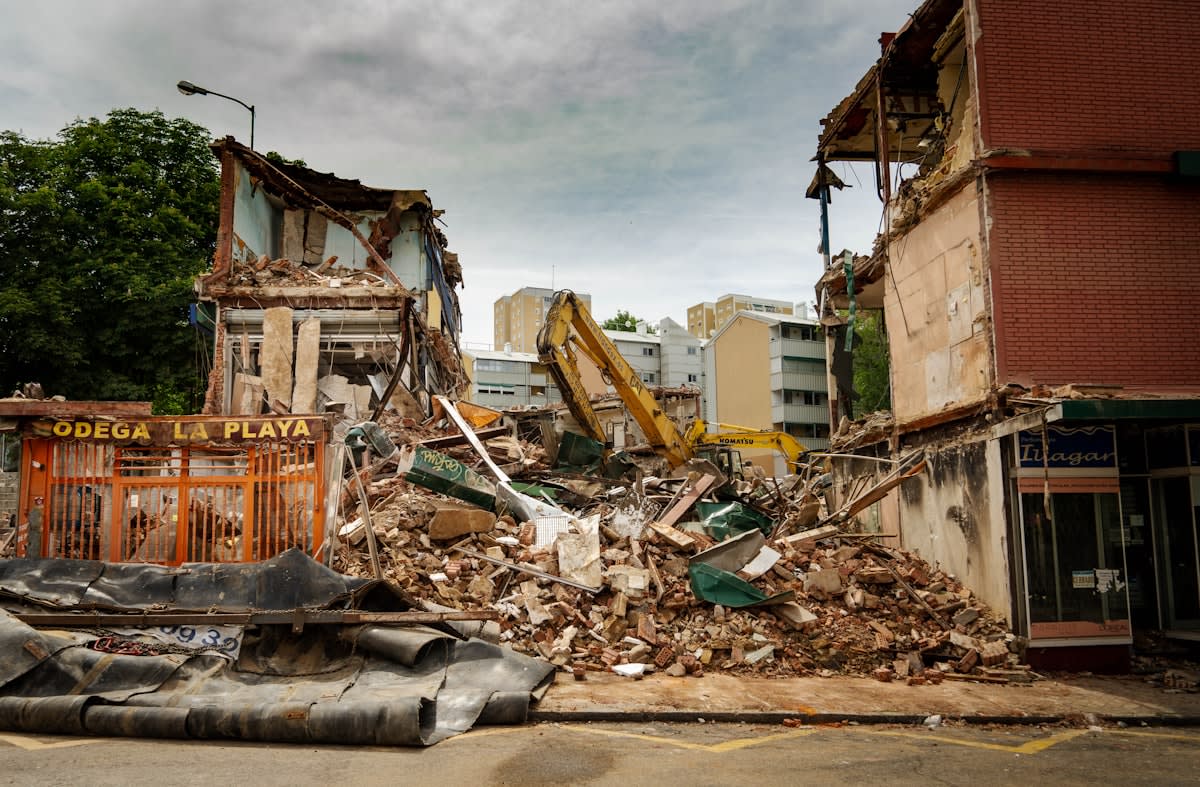
The 1,331 aftershocks recorded in Venezuela are a metaphor for the region's economic instability. Each shock weakens the structure, and without a solid foundation of property rights, there is nothing to hold the economy together. The inability to prove ownership in a court of law after a catastrophe means that the wealth of a lifetime can be wiped out by a single tectonic shift.
The Climate Multiplier and the Credit Trap
The current mobilization against El Nino in Colombia and across Latin America reveals another layer of the title crisis. Governments are activating contingency plans for drought, floods, and extreme heat. However, as Rodney Martinez of the World Meteorological Organization noted, authorities often struggle to turn forecasts into action. This failure is not just about political will; it is about the inability of the producers to fund their own resilience. A farmer cannot invest in drought-resistant infrastructure if they cannot prove they own the land they are farming.
When El Nino disrupts water, energy, and food systems, the lack of title certainty becomes a financial chokehold. Modern wealth requires the ability to hedge against risk. In the US, a farmer uses their AFIDA-compliant title to secure a loan for climate-smart technology. In Latin America, the farmer is stuck in a cycle of subsistence because their land title is a ghost—recognized by neighbors, but ignored by banks.
The Wealth Paradox
The tragedy of Latin American land is that the assets are physically present, but economically invisible. Until titles are as transparent as the US AFIDA system and as secure as a corporate charter free from state interference, the region will remain a collection of rich lands owned by poor people.
Ultimately, the blockade of modern wealth is a governance failure. Whether it is the Brazilian government attempting to install its own man on the board of Vale or the chaos of post-earthquake reconstruction in Venezuela, the message to the world is the same: possession is not ownership. Until the region moves toward a clinical, transparent, and untouchable system of land and asset titles, the wealth of the soil will continue to leak into the pockets of the politically connected, leaving the actual producers in a state of permanent precariousness.