Who decided that literacy requires a pen? We assume a written record needs a flat surface and a staining agent. This is a Western bias. The Inca Empire tore that assumption apart. They governed a vast, vertical terrain not with books, but with string. It was a grip of fiber and tension.
These devices, known as quipu or khipu—Quechua for knot—were not mere reminders. They were sophisticated databases. Using cotton or camelid fiber, the Inca recorded everything from grain stores to the exact number of citizens in a remote valley (Source: Harry Chuck, [No Date]). The precision was absolute. A single misplaced knot could mean the difference between a fed village and a famine.
The Mechanics of the Knot
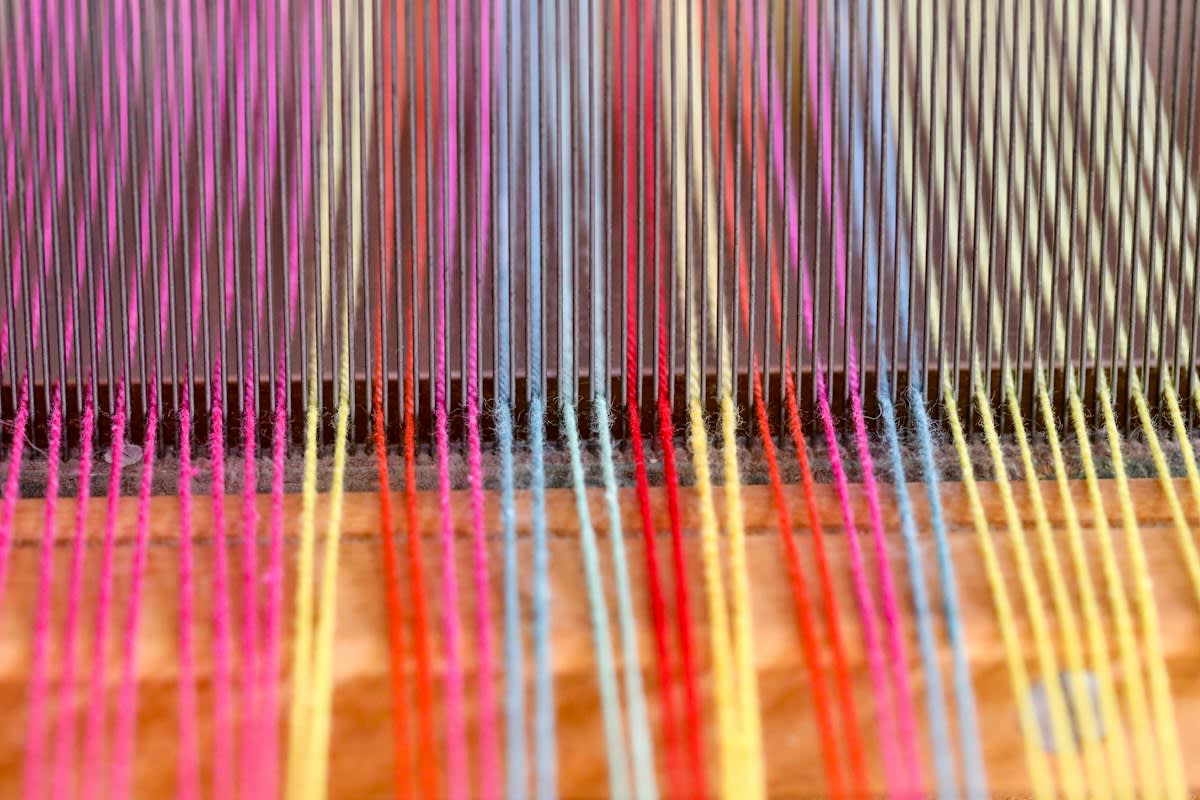
The khipu functioned through a combination of variables. Color was the first filter. A red string might denote war; a yellow one, gold. Then came the twist of the fiber. The direction of the ply mattered. Finally, the knots themselves provided the numerical value. This was not a simple tally. It was a multi-dimensional array of information (Source: Historyadd, [No Date]).
- Material: Cotton or camelid fiber for durability and texture (Source: Harry Chuck, [No Date]).
- Coding: Differently colored strings to categorize data types (Source: Historyadd, [No Date]).
- Structure: Main cords with pendant strings that held the primary data points.
- Function: Census tracking, tax collection, and historical narratives.
Why does this matter now? For decades, the khipu was treated as a primitive calculator. But a hard turn in research is occurring. We are moving from seeing them as simple counting tools to recognizing them as 'etno-categorías'—state-level ethnic and social categories (Source: J.V. Murra, 1975). The data is no longer seen as just numbers; it is seen as a social map.
"The function of weaving in various social and political contexts allows us to understand the khipu not just as a tool, but as an instrument of state power."— J.V. Murra, Researcher cited in Routledge/Taylor & Francis (2004)
The delta between 1975 and today is stark. Earlier interpretations focused on the 'what'—the number of llamas or bushels of corn. Modern analysis focuses on the 'who'. By examining the 'etno-categorías de un khipu estatal', researchers are uncovering how the Inca categorized diverse populations to maintain grip over their territories (Source: Routledge, 2004).
| Khipu Element | Data Function | Administrative Purpose |
|---|---|---|
| Color | Categorical Filter | Identifying the commodity or group |
| Knot Type | Numerical Value | Census counts and inventory |
| Fiber Type | Material Status | Distinguishing state vs. local records |
This is where the work frays. Within the field, a silent war rages between the 'literacy' camp and the 'mnemonic' camp. The former believes khipus are a true writing system with a grammar. The latter argues they are merely cues for a spoken tradition. This friction is not academic vanity. It changes how we define human intelligence and civilization.
Practitioners know the real struggle is the fragility of the medium. Organic fibers rot. The strings that once held the census of an entire province now crumble at a touch. When a cord snaps, a piece of history vanishes. This mechanical failure of the archive makes every successful decipherment a victory against time.
From Knots to Digital Data
We are seeing a collision of ancient tech and modern computation. Researchers are now using algorithmic analysis to find patterns in khipu clusters that the human eye misses. They are looking for the 'grammar' of the knot. If they find it, the khipu ceases to be an artifact and becomes a readable book.
The staying power of the khipu lies in its efficiency. It was portable. It was durable. It was encrypted. Only the 'khipukamayuq'—the knot-keepers—could read the data. This created a specialized class of bureaucrats who held the empire's secrets in their hands. The state did not just control the people; it controlled the data.
Fact-Check & Accuracy Note
The primary academic debate centers on whether the khipu is a glottographic system (representing spoken language) or a semasiographic system (representing concepts directly). Sources like J.V. Murra (1975) provide the foundation for understanding the state's use of categories, but a universal 'key' to the khipu remains elusive (Source: Routledge, 2004).
Ultimately, the khipu reminds us that information is not tied to the alphabet. The Inca built an empire on the weight of a string. They proved that you can count a million people without writing a single word. The knots are talking. We are finally learning how to listen.