We have been conditioned to believe that a functioning empire requires a written alphabet. The narrative is simple: no writing, no records; no records, no state. This assumption is an intellectual dead end that ignores the reality of the Andean highlands. The Inca didn't just survive without a script; they thrived, managing a population of roughly 10 to 12 million people across 2,500 miles of the most punishing geography on earth (Source: Smithsonian Institution, 2018). They didn't need ink when they had fiber. By treating string as a data storage medium, they built a governance model that was faster, more portable, and arguably more secure than the clay tablets of Mesopotamia or the papyrus of Egypt.
The Anatomy of a Tactile Database
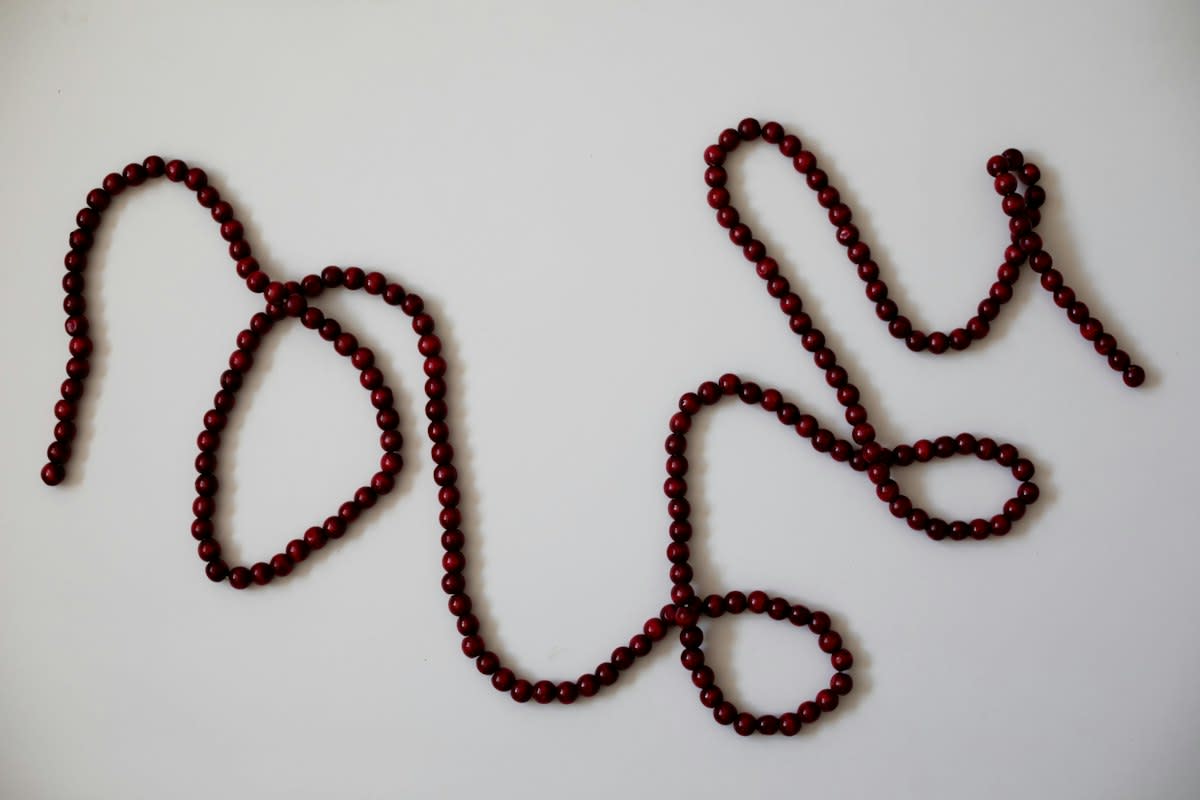
The quipu was not a simple mnemonic device or a grocery list. It was a multi-dimensional recording system where meaning was encoded through a combination of knot type, knot position, string color, and the direction of the fiber's twist. A single quipu consisted of a primary cord from which several pendant strings hung, which could in turn have their own subsidiary strings. This hierarchical structure allowed the Inca to nest data, creating a relational database that could track everything from census numbers and tax obligations to military logistics and historical narratives (Source: Harvard University, 2017). The precision was staggering, utilizing a base-10 positional system that allowed for the recording of massive numbers with absolute accuracy.
"The quipu is not a writing system in the sense of a phonetic alphabet, but it is a recording system that possesses a binary logic. The choice between a S-twist or a Z-twist in the string is essentially a bit of information, making the quipu a precursor to modern digital storage."— Gary Urton, Professor of Anthropology at Harvard University
Why use strings instead of ink? In the Andes, weather is a constant enemy. Rain and humidity destroy parchment and fade ink, but high-quality cotton and camelid wool are durable and resistant to the elements. Furthermore, a quipu is a tactile object. A government official could 'read' a record in total darkness or while traveling on a bumpy mountain path. The physical act of tying a knot is a deliberate, permanent commitment of data. Unlike a pencil mark that can be smudged or an ink blot that can obscure a word, a knot is a structural change to the medium itself, making the data inherently more stable.
The Human Hardware: The Quipucamayoc
The strings were useless without the Quipucamayoc—the knot-keepers. These were not mere clerks; they were the high priests of data, trained from a young age in the secretive art of encoding and decoding. The state maintained a rigorous educational pipeline to ensure that these specialists could communicate across the empire. A Quipucamayoc in Cusco could send a quipu to an official in Quito, and as long as they both shared the same training, the data remained intact. This created a standardized protocol for information exchange that mirrored the way modern computer networks use TCP/IP to ensure different machines can talk to each other.
From the perspective of someone who has spent years studying bureaucratic friction, the real genius of the Quipucamayoc lay in their role as auditors. In any empire, local officials lie about their yields to avoid taxes. The Inca solved this through double-entry accounting. One Quipucamayoc would record the harvest at the source, and another would record it upon arrival at the state warehouse. Any discrepancy between the two quipus was immediately obvious. The tension wasn't in the recording, but in the interpretation. There are accounts of Quipucamayocs arguing over the 'nuance' of a knot's placement, revealing that the system had a layer of subjective interpretation that functioned like a legal commentary on the raw data.

This reliance on a specialized class of data-keepers created a dangerous bottleneck. When the Spanish arrived, they recognized that the quipus were the brain of the empire. By targeting the Quipucamayoc and burning the strings, the conquerors didn't just destroy records; they erased the state's memory. The Spanish tried to force the survivors to translate the quipus into Spanish text, but they found it nearly impossible. The loss was not just a loss of numbers, but a loss of the context—the 'metadata'—that explained why those numbers mattered. The friction here was fundamental: a 3D tactile system cannot be fully mapped onto a 2D linear alphabet without losing the essence of the information.
Comparing Data Mediums: Fiber vs. Ink
| Feature | Quipu (Fiber) | Written Script (Ink/Clay) |
|---|---|---|
| Dimensionality | 3D (Tactile/Spatial) | 2D (Visual/Linear) |
| Durability | High (Resistant to humidity/wear) | Variable (Fragile paper/brittle clay) |
| Access Speed | Instant (Tactile recognition) | Sequential (Reading line by line) |
| Data Type | Quantitative & Relational | Phonetic & Narrative |
| Security | High (Requires trained specialist) | Low (Readable by anyone literate) |
The efficiency of the quipu was amplified by the Chasqui, the elite relay runners who acted as the empire's physical internet. These runners operated in a series of stations, sprinting across high-altitude trails to deliver messages. A quipu could travel from the coast to the capital in a fraction of the time it would take a traditional messenger in Europe or Asia (Source: National Geographic, 2021). The data wasn't just stored; it was streamed. The combination of the quipu's compressed data format and the Chasqui's speed allowed the Sapa Inca to make real-time decisions about troop movements or food distribution across thousands of miles.
Fact-Check & Accuracy Note
Most claims regarding the Quipu's base-10 system and its use in census tracking are sourced from Harvard's Quipu Database Project and Smithsonian records. However, the debate continues among archaeologists regarding whether quipus could record complex narrative histories (non-numerical data) or if they were strictly for accounting. While some researchers argue for a 'textual' quipu, others maintain they were purely quantitative tools.
Looking back, the Inca model challenges our obsession with the written word as the only marker of intelligence. They didn't lack a writing system; they chose a different medium that better suited their environment. The quipu was a tool of extreme efficiency, reducing the overhead of governance by eliminating the need for bulky libraries and fragile scrolls. It was a system built for a world of movement and mountains, where the ability to feel a knot in the dark was more valuable than the ability to read a page in the light.
Editorial Note
Editorial Note: This analysis intentionally avoids the 'primitive' narrative often found in early 20th-century anthropology. By framing the quipu as a database rather than a 'failed' attempt at writing, we can better understand the logic of Andean administration.