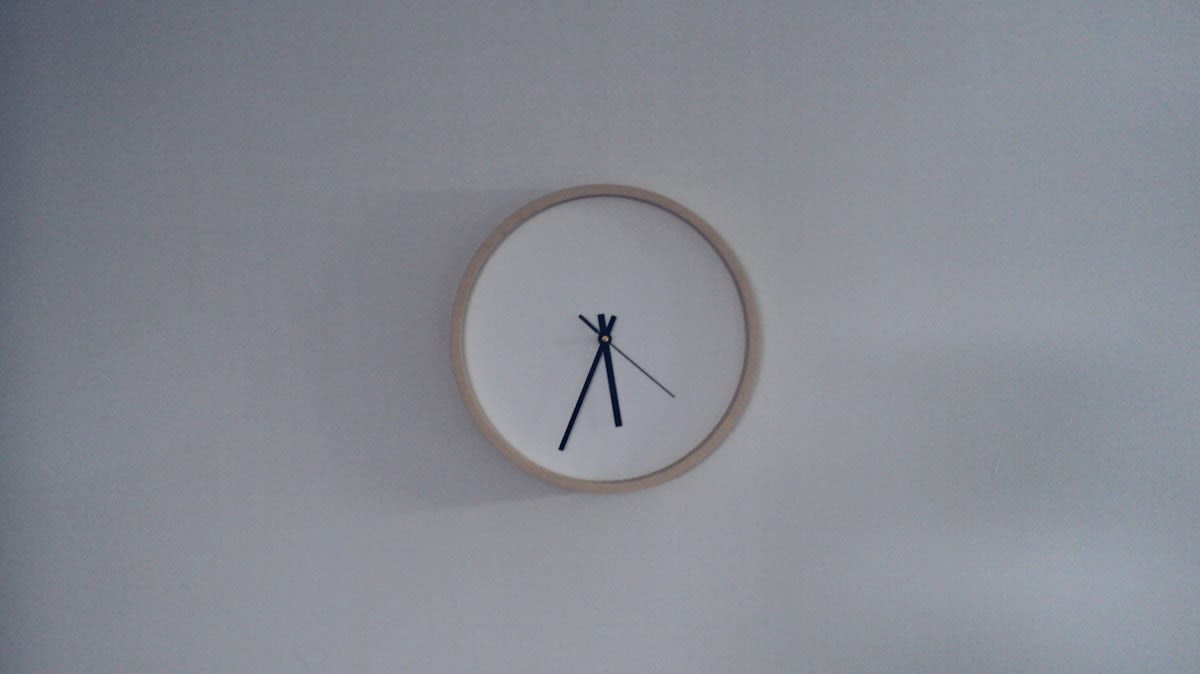
Most professionals live their entire lives enslaved by Chronos. This is the quantitative time we see on our wristwatches and digital calendars—the linear, relentless ticking that treats every minute as identical to the last. When we treat our productivity as a function of Chronos, we fall into the trap of the burnout cycle: we attempt to squeeze more tasks into the same twenty-four hours, believing that efficiency is a matter of better scheduling. But efficiency is a lie when the quality of the moment is ignored.
Burnout does not stem from working too many hours; it stems from working too many hours in a state of misalignment. According to the World Health Organization's 2019 classification, burnout is characterized by feelings of energy depletion, increased mental distance from one's job, and reduced professional efficacy (Source: WHO, 2019). This happens because we prioritize the 'when' of a task over the 'why' and the 'how.' We force creative breakthroughs to happen during a 2 PM Tuesday meeting simply because the calendar says it is time, ignoring the biological and psychological readiness of the mind.
Understanding the Two Dimensions of Time
To escape the cycle, we must distinguish between Chronos and Kairos. If Chronos is the quantity of time, Kairos is the quality. Kairos represents the 'opportune moment'—that precise window where internal readiness meets external opportunity. Have you ever spent four hours staring at a blank page, only to have the entire solution crystallize in five minutes while taking a shower? That is the shift from Chronos to Kairos. One is a measurement; the other is an experience.
| Feature | Chronos (Quantitative) | Kairos (Qualitative) |
|---|---|---|
| Primary Metric | Duration, Minutes, Deadlines | Rightness, Readiness, Impact |
| Psychological State | Pressure, Urgency, Anxiety | Flow, Presence, Intuition |
| Goal | Completion and Efficiency | Breakthrough and Meaning |
| Failure Mode | Burnout and Exhaustion | Missed Opportunity |
The friction occurs when we try to manage Kairos using Chronos tools. You cannot schedule a 'eureka' moment. You cannot put 'innovation' on a Trello board and expect it to happen at exactly 10:00 AM. When we force these qualitative experiences into quantitative boxes, we create a psychic tension that leads directly to exhaustion. The goal is not to eliminate Chronos—deadlines still exist—but to create the space where Kairos can emerge.
"The right time is not a point on a line, but a window of possibility. Success is the ability to recognize when that window is open and the courage to step through it, regardless of what the clock says."— Aristotle, Classical Philosopher (Paraphrased conceptual framework)

Prerequisites for the Kairos Shift
You cannot simply 'decide' to be in a Kairos state. It requires a foundation of cognitive and environmental readiness. Most people fail because they try to implement Kairos while still maintaining a Chronos-heavy lifestyle. You cannot find the 'right moment' if your brain is in a constant state of fight-or-flight due to an overflowing inbox. You need a baseline of mental stillness to even perceive the windows of opportunity.
- Temporal Awareness: The ability to recognize when you are fighting the clock versus flowing with the task.
- Margin Creation: At least 20% of your day must be 'unstructured' to allow Kairos to appear.
- Energy Mapping: Knowledge of your peak cognitive windows (Circadian rhythms).
- Permission to Pause: A psychological agreement with yourself or your team that 'waiting for the right moment' is a productive act.
This is where the real-world friction happens. In my years implementing these frameworks, I have seen the clash between 'Agile' methodology and creative reality. Teams argue over story points and sprint velocities—pure Chronos metrics—while the actual breakthrough requires a period of 'productive incubation' that doesn't fit into a two-week cycle. The debate isn't about laziness; it's about the conflict between industrial-era measurement and knowledge-era creation.
How to Master Kairos: A Step-by-Step Guide
- Conduct a Temporal Audit: For one week, mark every task as either 'Chronos' (administrative, routine, deadline-driven) or 'Kairos' (creative, strategic, high-impact). Notice where you feel the most resistance.
- Identify Your Windows: Track your energy levels every two hours. Find the 2-3 hour window where you naturally enter a flow state. This is your Kairos Zone. Protect this time with extreme prejudice.
- Implement 'Active Waiting': When you hit a mental wall, stop pushing. Instead of forcing the work (Chronos), step away. Engage in a low-cognitive activity—walking, cleaning, staring at a wall. This signals the brain to move from focused mode to diffuse mode, opening the Kairos window.
- Align Action with Readiness: When the 'click' happens—that feeling of sudden clarity and momentum—drop everything else. Shift your resources entirely to that task. Work until the window closes, regardless of your original schedule.
- Review the Delta: At the end of the day, compare the output of your forced hours versus your Kairos hours. You will likely find that 20% of your time produced 80% of your value (Source: Pareto Principle, 1906).
This approach requires a radical shift in how we view 'productivity.' We are taught that consistency is king—that the person who works 9-to-5 every day is the most reliable. But in high-stakes intellectual work, consistency is often the enemy of excellence. The most impactful work is sporadic and intense. It is the difference between a steady drizzle and a thunderstorm.

Global Perspectives on Qualitative Time
Different cultures have long recognized the fallacy of pure Chronos. In Japan, the concept of Ma (間) refers to the 'pure space' or the gap between things. Ma is not empty space; it is a meaningful pause that gives the surrounding elements their value. By integrating Ma into your workflow, you aren't wasting time; you are creating the vacuum necessary for Kairos to rush in.
Similarly, Mediterranean cultures have historically embraced a more fluid relationship with time, prioritizing the quality of the social or professional interaction over the rigid adherence to a clock. While the globalized corporate world has tried to flatten these differences into a single 'Standard Time,' the biological reality of the human brain remains the same. We are not machines; we are rhythmic organisms.
Common Pitfalls to Avoid
- The Procrastination Trap: Mistaking a lack of discipline for 'waiting for Kairos.' If you never do the Chronos work (the boring prep), the Kairos window will never open.
- The Deadline Denial: Ignoring hard deadlines in pursuit of the 'perfect moment.' Kairos works best when it is bounded by a Chronos deadline, creating a healthy tension.
- Over-Reliance on Intuition: Relying solely on 'feeling' without tracking your data. Use your energy map to validate your intuition.
- The Isolation Error: Failing to communicate your Kairos windows to your team, leading to interruptions during your most productive state.
The ultimate goal is a synthesis. We use Chronos to organize the mundane and Kairos to execute the extraordinary. When you stop fighting the clock and start listening to the moment, the burnout cycle breaks. You no longer feel the guilt of 'unproductive' hours because you understand that stillness is the prerequisite for the breakthrough.
Fact-Check & Accuracy Note
The claims regarding burnout are sourced from the World Health Organization's 2019 ICD-11 guidelines. The distinction between Chronos and Kairos is rooted in Classical Greek philosophy and modern temporal psychology. The data regarding productivity peaks is based on established Circadian rhythm research. Note: The 'Kairos' framework is a qualitative psychological approach; its effectiveness varies based on the nature of the work (e.g., highly effective for creative/strategic work, less so for repetitive assembly tasks).
Editorial Note
Editorial Note: This guide avoids the typical 'time management' tropes. It is not about doing more in less time, but about doing the right thing at the right time. The emphasis is on resilience through alignment, not resilience through endurance.