Learn to shun hate, stop vote manipulations: Sibal's swipe at PM
Source Entity
India Latest News: Top National Headlines Today & Breaking News | The Hindu
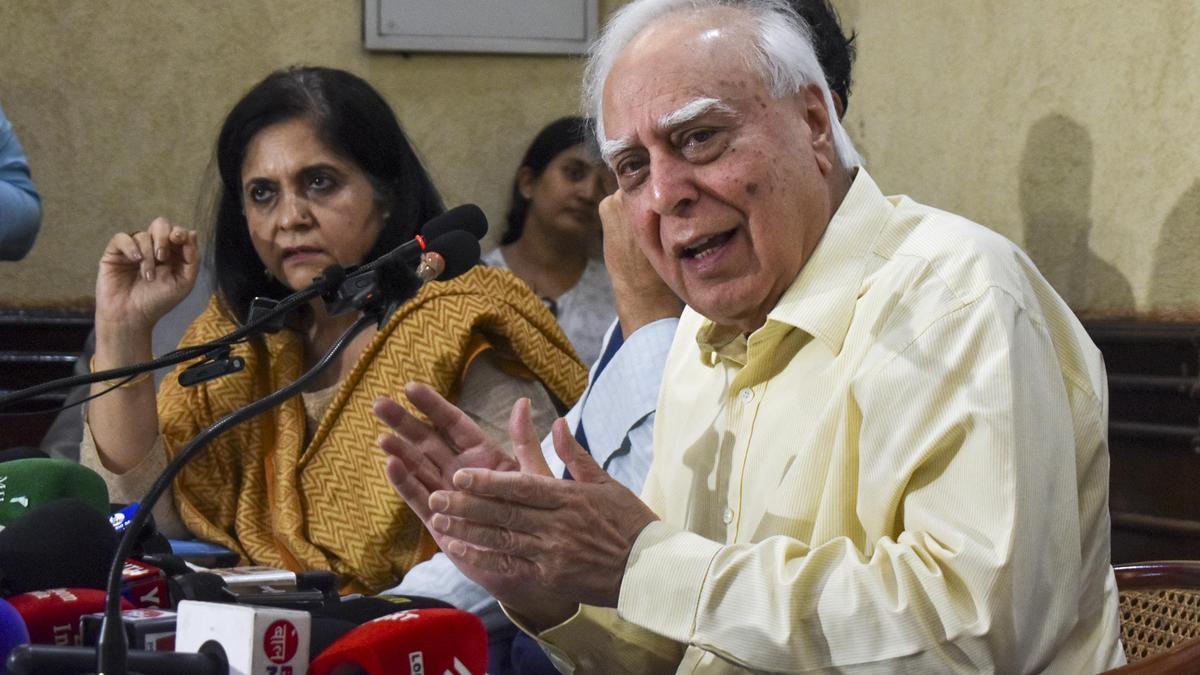
Rajya Sabha MP Kapil Sibal has criticized Prime Minister Narendra Modi's recent call for continuous learning, urging him to instead prioritize democratic values. Sibal’s remarks follow the PM's speech commemorating his 25-year tenure in executive office.
The Clash of Ideologies: Sibal Challenges Modi's Learning Mantra
On October 8, 2026, Rajya Sabha MP Kapil Sibal launched a sharp political critique against Prime Minister Narendra Modi, responding to the Prime Minister's recent reflections on his quarter-century tenure as a head of government. During the 'Viksit Bharat Sankalp Sabha,' the Prime Minister expressed a desire to maintain his 'power to learn,' framing himself as a perpetual student of governance. Sibal, representing the opposition, utilized this statement as a rhetorical pivot to challenge the Prime Minister’s track record, suggesting that the focus on personal learning should be redirected toward addressing systemic democratic concerns.
The Context of the 'Viksit Bharat Sankalp Sabha'
The 'Viksit Bharat Sankalp Sabha' serves as a significant milestone, marking 25 years of Narendra Modi’s executive leadership, spanning his tenure as Chief Minister of Gujarat and his subsequent years as Prime Minister. This celebration of longevity in power is often used by the current administration to highlight stability and developmental progress. However, for political opponents like Sibal, this anniversary provides a platform to contrast the government’s narrative of progress with allegations of eroding democratic norms, particularly regarding electoral integrity and social cohesion.
Sibal's Critique: A Call for Democratic Correction
Sibal’s response on the social media platform X was direct, juxtaposing the Prime Minister’s stated desire to 'learn' with a list of urgent national imperatives. He explicitly called for the administration to 'shun hate,' 'stop vote manipulation,' and 'respect the fundamentals of democracy.' By framing these issues as things the government must 'learn' to do, Sibal effectively reframes the Prime Minister's personal philosophical reflection as a failure to uphold essential constitutional duties. This highlights the deep polarization between the ruling establishment and the opposition regarding the current state of Indian democracy.
Understanding the Rhetorical Divide
The exchange underscores a recurring theme in contemporary Indian politics: the battle over the interpretation of the nation's democratic health. When the Prime Minister speaks of learning, he often refers to adaptive governance and public service. Conversely, Sibal’s critique suggests that the 'learning' the nation requires is not personal growth for the leader, but an institutional commitment to inclusivity and electoral transparency. This dialogue reflects the broader tension between the government’s focus on long-term developmental targets and the opposition's focus on civil liberties and institutional integrity.
Broader Implications and Future Trends
As the political discourse continues to intensify, such exchanges set the tone for future legislative sessions and public debate. Sibal’s emphasis on listening to 'youth, farmers, and adivasis' suggests that the opposition intends to focus its narrative on the grievances of these specific demographics in the coming months. This strategy aims to challenge the government’s ‘Viksit Bharat’ (Developed India) vision by questioning who is being included in that vision and who is being left behind. The persistence of these critiques indicates that electoral integrity and social harmony will remain central, highly contested topics in the Indian political landscape for the foreseeable future.
Verification Required?