40 years ago October 8, 1986: Probe into assassination bid
Source Entity
The Indian Express
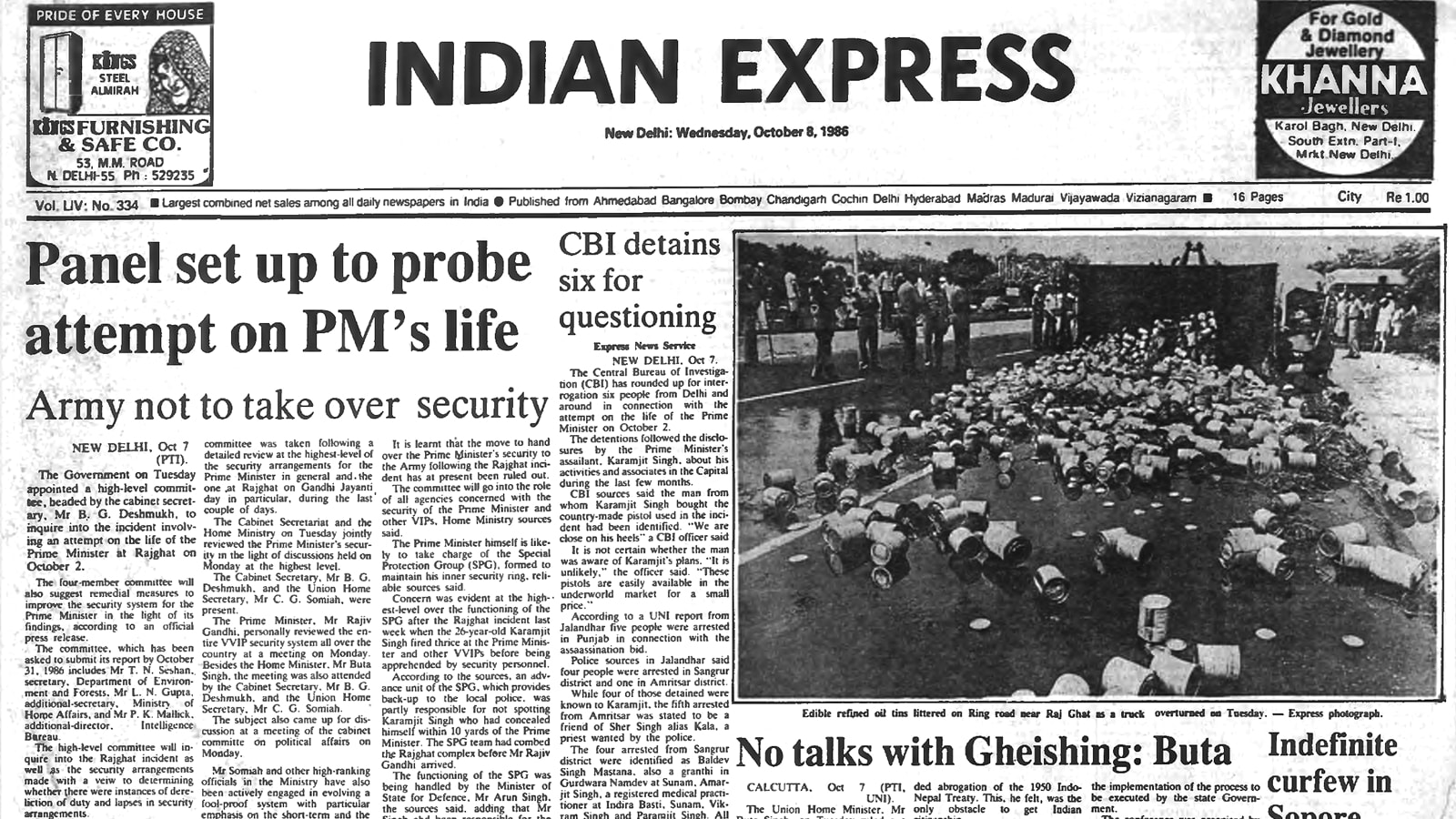
In October 1986, the Indian government launched a high-level probe into an assassination attempt on the Prime Minister at Rajghat. The investigation, led by B.G. Deshmukh, focused on security failures while the CBI detained several suspects linked to the gunman, Karamjit Singh.
The 1986 Rajghat Security Crisis: A Turning Point in Protection
On October 8, 1986, the Indian government took decisive action following a grave security breach that occurred just days prior. On October 2, an attempt was made on the Prime Minister’s life at the hallowed grounds of Rajghat. In response, the administration constituted a high-level, four-member committee chaired by Cabinet Secretary B.G. Deshmukh. This body was tasked with not only investigating the specific lapses that allowed such an event to occur but also proposing comprehensive remedial measures to overhaul the Prime Minister’s security apparatus.
The Investigation and Institutional Response
The appointment of B.G. Deshmukh, a seasoned bureaucrat, signaled the gravity with which the state viewed the incident. By focusing on the systemic failures at Rajghat, the committee aimed to address the vulnerabilities inherent in high-profile public appearances. The inclusion of a four-member panel suggests a multi-faceted approach, likely examining coordination between local police, intelligence agencies, and the specialized protection units responsible for the Prime Minister’s safety.
CBI Operations and Detentions
Parallel to the administrative committee, the Central Bureau of Investigation (CBI) initiated an aggressive criminal investigation. Following the apprehension of the assailant, identified as Karamjit Singh, the agency moved to dismantle the network supporting him. The detention of six individuals in and around Delhi highlights the collaborative nature of the plot. These interrogations were pivotal in mapping out the logistical support, including how the perpetrator moved through the capital in the months leading up to the attack.
Tracing the Weaponry and Network
A critical development in the CBI's probe was the identification of the source of the country-made pistol used in the attempt. By tracing the provenance of the weapon, investigators moved closer to identifying the broader supply chain or arms-trafficking element involved. As a CBI officer noted, the agency was "close on the heels" of the supplier, indicating that the investigation was shifting from the immediate attacker to the enablers who provided the means for the assassination attempt.
Broader Implications for National Security
This incident served as a wake-up call for Indian internal security. The attempt on the Prime Minister’s life at such a symbolic location as Rajghat necessitated a fundamental rethink of how security perimeters were established and maintained. The subsequent recommendations for "remedial measures" likely influenced the modernization of the Special Protection Group (SPG) and other security protocols, setting a precedent for the rigorous, layered security detail that has since become standard for the highest offices of the Indian state.
Conclusion
The 1986 Rajghat incident remains a significant chapter in India's political history. By combining a high-level administrative inquiry under B.G. Deshmukh with a focused criminal investigation by the CBI, the government sought to ensure both accountability and the prevention of future threats. The swift detention of associates and the tracking of the weapon underscored a commitment to neutralizing internal security threats, ultimately refining the nation's approach to protecting its leadership.