Delhi Police likely to file FIR over alleged assault on police during Congress protest
Source Entity
YASHASVI VASISTHA
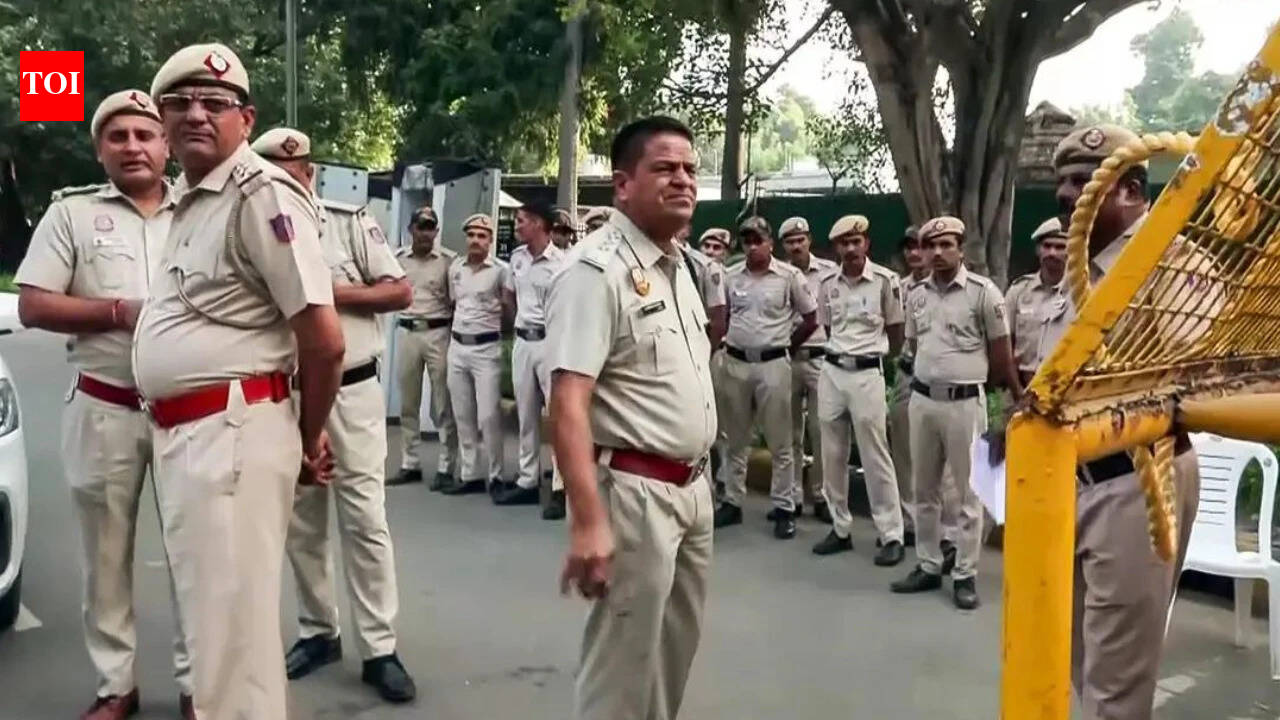
INDIA bloc MPs, led by Rahul and Priyanka Gandhi, staged a protest march toward the Election Commission of India to demand the resignation of CEC Gyanesh Kumar. The demonstration, centered on concerns over the Special Intensive Revision (SIR) exercise, resulted in a police standoff and the eventual detention of opposition leaders.
Opposition Confrontation: The INDIA Bloc March to the ECI
On a Tuesday marked by high political tension, leaders from the INDIA bloc, including Leader of the Opposition Rahul Gandhi and Congress MP Priyanka Gandhi Vadra, organized a protest march from the Parliament House complex toward the Election Commission of India (ECI) headquarters. The demonstration was aimed at expressing deep-seated grievances regarding the electoral process, specifically focusing on the Special Intensive Revision (SIR) exercise, which the opposition claims lacks transparency and fairness.
Security Measures and Standoff
The protest encountered significant resistance before it could reach its destination. Heavy security cordons and extensive barricading were deployed in and around the Parliament and the ECI headquarters. Police forces stopped the marching delegation on Parliament Street, in the stretch between the NITI Aayog office and Akashvani Bhavan. This forced the opposition leaders to transition from a march into a sit-in (dharna) directly on the road, signaling a escalation in the ongoing friction between the legislative opposition and the constitutional body.
Allegations and Rhetoric
The protest was characterized by sharp personal and ideological critiques directed at Chief Election Commissioner (CEC) Gyanesh Kumar. Opposition MPs utilized visual props, including cutouts portraying the CEC in an RSS uniform, to allege a partisan bias within the electoral body. Slogans such as “BJP hai CEC hai” and “Democracy not for sale” were chanted, reflecting the opposition's firm belief that the current leadership of the ECI is not functioning with the required neutrality. Rahul Gandhi’s public social media post, directed at the CEC, further underscored the confrontational nature of the event.
The SIR Controversy and Electoral Integrity
At the core of the agitation is the Special Intensive Revision (SIR) exercise. The opposition views this administrative process as a potential mechanism to manipulate electoral rolls or disenfranchise voters. By marching to the ECI, the INDIA bloc sought to challenge the procedural integrity of the SIR, framing their protest as a defense of democratic institutions. This move highlights the growing reliance of the opposition on public demonstrations to exert pressure on independent agencies when legislative debate fails to address their concerns.
Implications for Democratic Discourse
The detention of opposition legislators by the Delhi Police following the protest marks a significant moment in the current parliamentary session. This event reflects a broader trend of diminishing trust between the ruling coalition and the opposition regarding the neutrality of constitutional bodies. The demand for the resignation of a high-ranking official like the CEC indicates that the opposition is prepared to challenge the legitimacy of institutional leadership to galvanize their base and international attention.
Future Trends and Outlook
Looking forward, this event suggests that the INDIA bloc will continue to utilize street-level activism to challenge the ECI’s administrative decisions. The effectiveness of these protests remains a point of debate, as the government continues to rely on security apparatuses to manage dissent. Whether this pressure leads to a modification of the SIR process or further polarization of the Indian political landscape remains to be seen. The coming months will likely see continued legislative friction as the opposition seeks to maintain scrutiny over the ECI's operations leading up to future electoral cycles.
Multiple Citing Sources