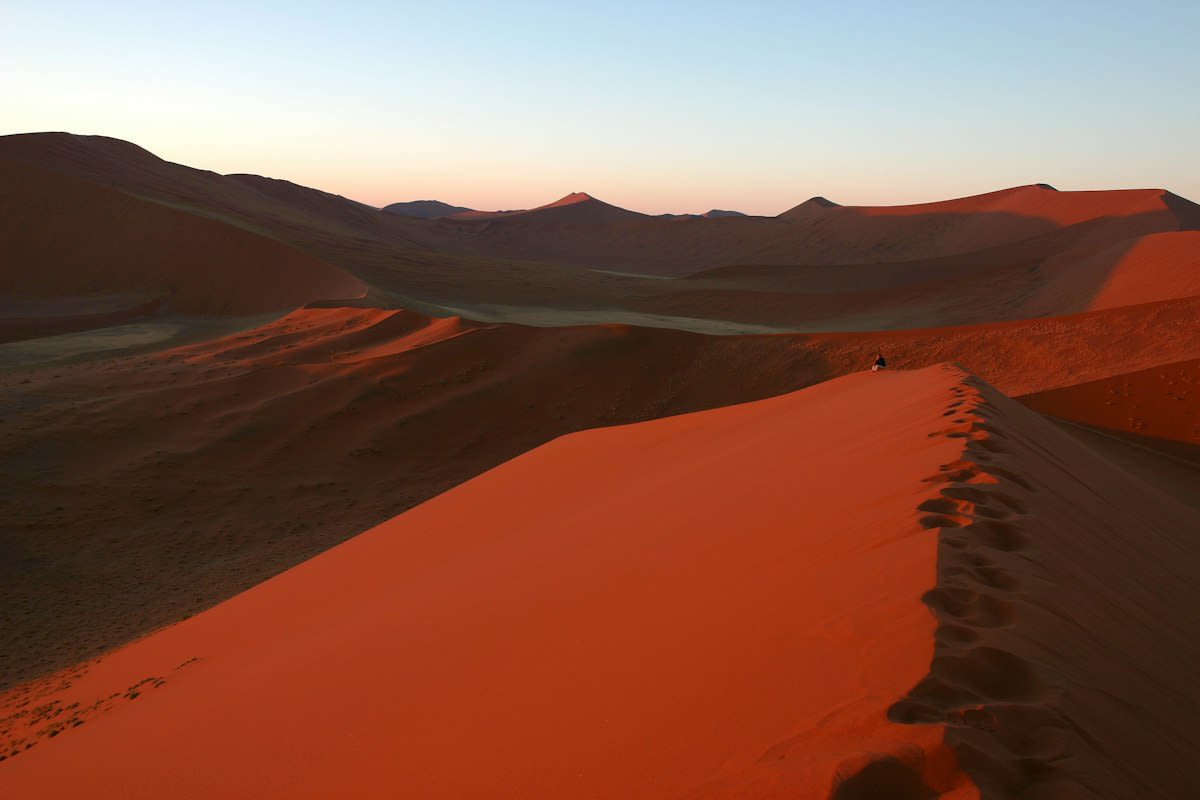
Most people see the Namib Desert as a void. They see red dunes and salt pans and assume the terrain is dead. They are wrong. The Namib is not dry; it is merely missing liquid rain. The water is there, suspended in a thick, saline fog that rolls off the Atlantic. If you want to survive here, you stop looking at the sky for clouds and start looking at the beetles.
Prerequisites for Fog Capture
You cannot simply throw a net in the sand. Success requires a specific intersection of geography and biology. First, you need coastal proximity where the cold Benguela Current meets the warm air of the interior. Without this collision, there is no fog. Second, you need an understanding of endemic biology. The Welwitschia mirabilis and the Darkling Beetle have already solved the problem of hydration in this brittle environment (Source: Bradt Guides, 2026). Third, you need a willingness to discard the 'expert' mindset in favor of local observation.
- Access to coastal fog corridors
- Mesh materials that mimic the hydrophobic/hydrophilic properties of the Darkling Beetle
- Storage vessels capable of resisting salt corrosion
- Community trust and a two-way communication channel with local knowledge holders
The Execution: Step-by-Step Extraction
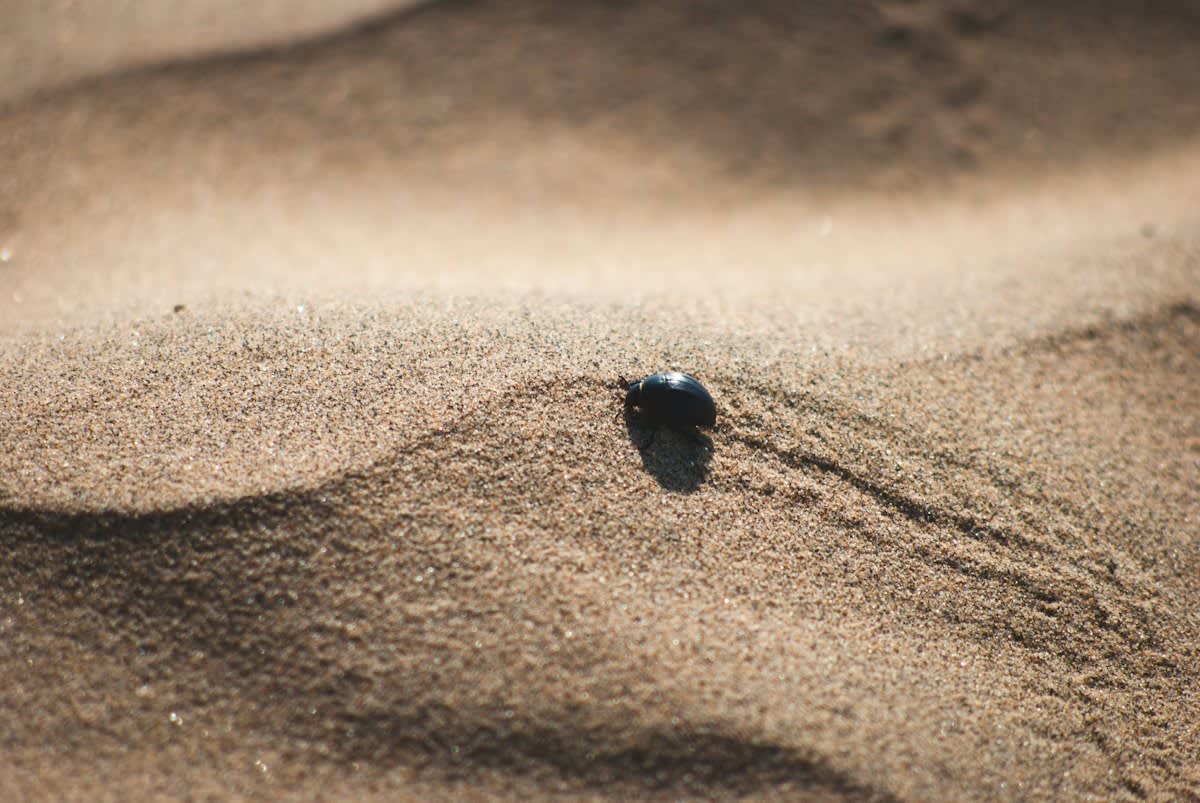
Extracting water from air is a mechanical game. It is about surface area and gravity. The goal is to force the fog to condense into droplets large enough to fall. This process mimics the Darkling Beetle's method of harvesting water from the air, a biological feat of engineering that allows it to thrive in an otherwise inhospitable environment (Source: Facebook/Power of Africa, n.d.).
- Identify the Fog Path: Map the movement of the fog from the coast toward the interior dunes. The water is heaviest where the terrain forces the fog to rise and cool.
- Deploy the Mesh: Install vertical screens. These act as the 'back' of the beetle. The mesh must be fine enough to catch micro-droplets but open enough to let wind pass through without knocking the structure over.
- Suture the Collection Web: Attach a gutter system to the base of the mesh. This prevents the water from simply soaking into the sand. The water must be guided via gravity into a sealed cistern.
- Filter the Brine: Fog water is often laden with salt and dust. Use a basic sediment filter to remove the grit before the water enters the drinking supply.
- Iterate based on Local Input: Work with the people who have lived on this terrain for generations. Their knowledge of wind shifts is more accurate than any satellite map.
Does the mesh always work? No. Mechanical failure is common. High winds can shred the screens, and salt buildup can create a crust that prevents condensation. The grip of the salt on the mesh is a constant battle. You must rinse the screens periodically or the water yield will drop to zero.
The Invisible Friction: Experts vs. Locals
Here is the reality that textbooks ignore. Technical expertise often crashes against a wall of historical mistrust. In Namibia, the history of geology and water science was built on a colonial, extractive framework where indigenous people were treated as objects to be controlled rather than knowledge holders (Source: The Conversation, 2026). This legacy creates a hollow space between the geoscientist and the community.
"Namibian geoscientists mostly see public engagement as a one-way street: explaining and educating, rather than listening and exchanging ideas."— Josephine Uushona, Geoscientist at the Geological Survey of Namibia
As a practitioner, I have seen this play out. An engineer arrives with a high-tech fog harvester, ignores the local guide's warning about the seasonal wind shift, and watches the equipment get flattened in a single night. The friction is not technical; it is social. Only two out of 13 geoscientists in one study defined community engagement as a two-way process (Source: The Conversation, 2026). If you approach fog harvesting as a 'knowledge gap' to be filled, you will fail.
Common Pitfalls and Failures
Many attempt to scale these systems too quickly. They build massive arrays that the Namib wind simply destroys. They forget that the desert is an agent of erosion. Everything is eventually sanded down. Brittle plastics crack under the intense UV radiation of the Sossusvlei sun. You must use UV-stabilized materials or the screens will fray within six months.
- Over-reliance on technical data while ignoring indigenous terrain knowledge.
- Using non-UV-stabilized mesh that degrades in the sun.
- Neglecting the salt-rinse cycle, leading to clogged condensation surfaces.
- Assuming a 'one-way' education model will gain community support.
Fact-Check & Accuracy Note
The primary academic debate in Namibian water management centers on the role of geoscientists in community engagement. While technical capacity exists to find and harvest water, the 'two-way street' of knowledge exchange remains a significant point of contention (Source: The Conversation, 2026).
Ultimately, fog harvesting is about adaptation. It is about admitting that the default way of thinking about water—rain and rivers—is useless in the Namib. You must learn to saturate your needs from the air. It is a slow process. It is a fragile process. But for the creatures of the Namib, it is the only way to stay alive.