
The Enlightenment-era ideal of private property was simple: you own the land, the fence, and everything within the boundary. This absolute sovereignty provided the bedrock for global capitalism, creating a clear line between the owner and the world. However, a systemic shift is underway. We are moving toward a regime of layered ownership, where the title to a physical asset is increasingly irrelevant without the accompanying digital permissions and state-sanctioned rights to utilize it. The fence still exists, but the gate is now controlled by an API.
This transition is most visible in the agricultural sector, where the value of land is being decoupled from the soil itself. In July 2026, the Food and Agriculture Organization of the United Nations (FAO) launched CropSuit, a web-based application that utilizes soil information, climate data, and topography to tell farmers exactly what to grow and where. While the farmer may hold the deed to the land in Africa or Central America, the strategic utility of that land is now mediated by a centralized, data-driven tool funded by Japan and the United States. When the intelligence required to make a plot of land productive resides in a third-party application, does the landowner actually control the asset, or are they merely a custodian of the soil?
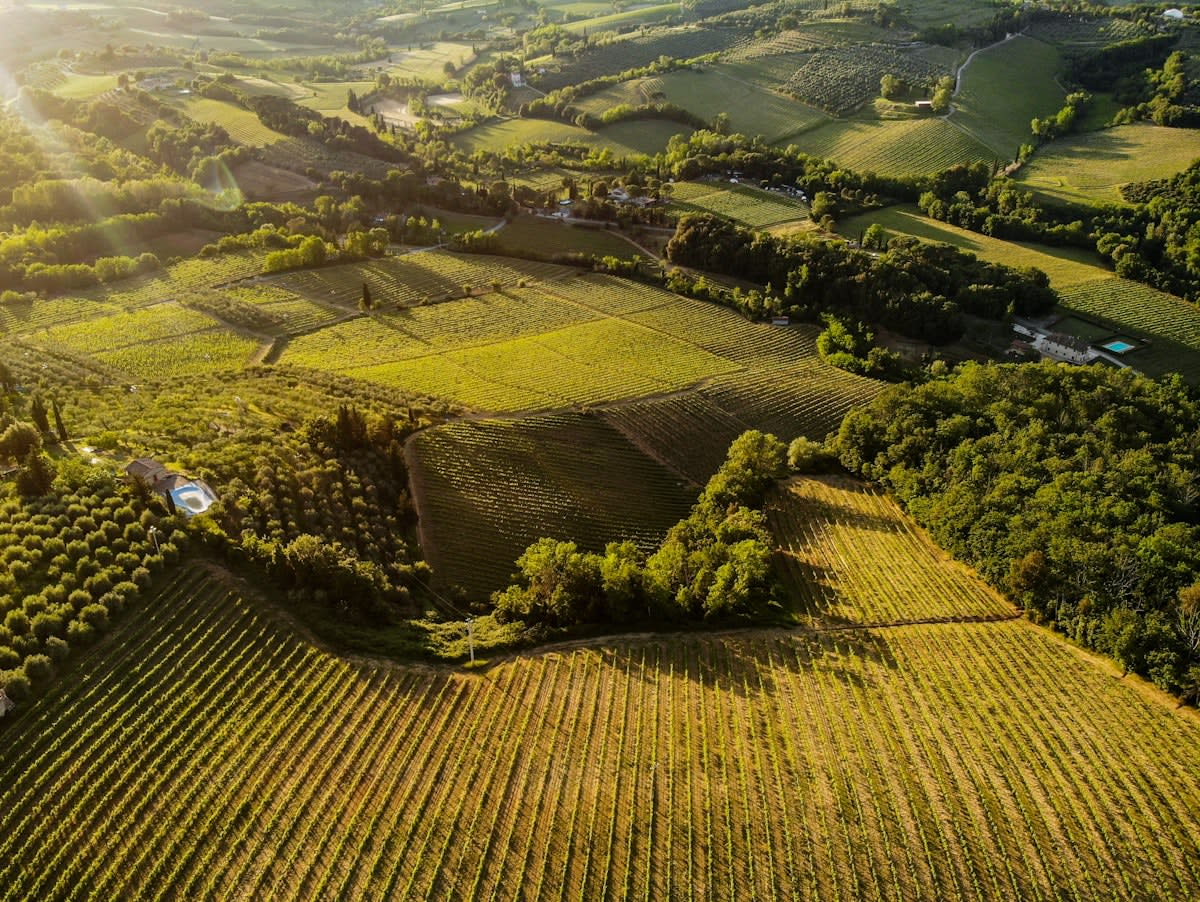
The reaction to this data-dependency is already manifesting as a legal battle for a new kind of property right. Nebraska recently passed the Agricultural Data Privacy Act, which explicitly codifies that the producer is the owner and controller of the agricultural data originating on their farm, land, device, or equipment. This legislation is a recognition that the traditional deed is insufficient. The real asset is no longer the acreage, but the 'digital exhaust' generated by modern agricultural systems. By legally reserving ownership of this data, Nebraska is attempting to prevent the total absorption of private productivity into corporate or state-owned data silos.
The Strategic Pivot
The shift is not from private to public ownership, but from absolute ownership to conditional access. The asset remains, but the power to derive value from it is increasingly externalized.
This erosion of absolute control extends beyond the physical realm and into the heart of intellectual property. For decades, the 'black box' model of proprietary software was the gold standard for value capture. Yet, the Trump administration's recent restrictions on private AI model releases from firms like OpenAI and Anthropic signal a fundamental change. By wielding a 'kill-switch' over models based on private, proprietary data, the federal government has effectively asserted that certain forms of intellectual property are too critical to be purely private. When the state can dictate the release or restriction of a model for national security reasons, the concept of a 'private' AI model becomes a legal fiction.
The resulting tension is fueling a push toward open-source alternatives. Proponents argue that the White House's reach into frontier AI labs creates a vacuum that China is eager to fill with cheaper, open-source models. This creates a paradox: to protect national interest, the state may have to dismantle the very private property protections (IP laws) that allowed these companies to flourish. If the only way to compete globally is to move toward open-weight models, the era of the proprietary AI fortress is coming to an end.
"The scaling of open-source models is going down a dangerous path... private models allow changes after they are deployed, including the revoking of a user’s access."— Dario Amodei, CEO of Anthropic
The systemic shift is not limited to technology and land; it is restructuring the way we view global infrastructure and capital. Dr. Tong Yin describes a 'Half-Century of Re-Bordering,' where deglobalization is forcing a transformation in the tourism and hotel industries. The previous model of global chains—centralized ownership with a frictionless global reach—is becoming untenable. Instead, we are seeing a move toward federated regional operators. These entities maintain shared brand standards at the top but rely on localized data, capital, and technology underneath.
This federated approach suggests that the 'global asset' is being decomposed into a series of regional permissions. In a world without a stable security premium, particularly in the Middle East, the ability to operate a global brand is no longer a matter of owning the assets, but of managing a network of localized partnerships. This is the corporate equivalent of the Nebraska data law: a realization that central control is an illusion in a fragmented geopolitical landscape.
| Asset Class | Traditional Private Property Model | Emerging Layered Model | Primary Driver of Shift |
|---|---|---|---|
| Agricultural Land | Exclusive use of physical soil | Data-driven utility & soil mapping | Precision Ag / FAO CropSuit |
| Intellectual Property | Proprietary 'Black Box' ownership | State-mediated / Open-source | National Security / AI Kill-switches |
| Global Infrastructure | Centralized corporate ownership | Federated regional operation | Deglobalization / Re-bordering |
| Human Capital | Uncapped private borrowing/leverage | State-capped lending limits | Federal Student Loan Reform |
Even the way we leverage future earnings—a form of property known as human capital—is being restructured by state intervention. In Illinois, recent shifts in federal student lending have eliminated Grad PLUS loans and capped Parent PLUS borrowing at $20,000 per year and $65,000 over a lifetime. By limiting the amount of debt families can take on to fund education, the state is effectively capping the amount of future earning potential that can be collateralized. This is a direct intervention in the private financial arrangements of families, shifting the burden of funding from a leveraged private model to one that requires more immediate, tangible capital.
These financial constraints force a pivot toward alternative lending models. Some are now designing private lending systems based on academic performance and future earning potential rather than family wealth. This indicates that as the state restricts traditional forms of credit-based property accumulation, the market will create new, more granular ways to 'own' and trade the value of future labor.

The common thread across these diverse sectors—farming, AI, global hospitality, and education—is the transition from ownership to orchestration. Whether it is the UK's Defra removing 'invite only' restrictions for Countryside Stewardship Higher Tier agreements to encourage agroforestry, or the US government restricting AI model releases, the state is increasingly acting as the orchestrator of how private assets are used to achieve public or national goals. The right to own is remaining, but the right to use is being conditionalized.
Is this a collapse of private property? Not in the sense of a sudden disappearance. Rather, it is a sophisticated decomposition. We are seeing the emergence of a world where you can own the land but not the data that makes it fertile; own the company but not the model that drives its intelligence; and own the brand but not the regional infrastructure that allows it to function. The title deed is becoming a historical artifact, replaced by a complex web of licenses, API keys, and regulatory permissions.