
The 2,000-Year Glitch
2,000 years. Roman engineering feats like the Pantheon and the Pont du Gard remain standing while modern concrete fractures within decades (Source: Futura-Sciences, 2026). This discrepancy is not accidental but chemical. Modern construction relies on a rigid, brittle matrix that fails under thermal stress and brine-soaked erosion. Ancient Roman mortars utilized a specific interaction between volcanic ash and lime that creates a dynamic, rather than static, material. The result is a carbon-scored legacy that resists the very elements designed to destroy it.
The secret lies in the 'Hot Mixing' process. This technique involves high-temperature mixing that creates small, calcified lumps of lime known as lime clasts (Source: Futura-Sciences, 2026). For years, researchers wrongly attributed this longevity solely to pozzolana, the volcanic ash used in the mortars. However, the MIT-born breakthrough reveals that these lime clasts act as a reservoir for calcium. When a crack forms and water enters, these clasts dissolve and recrystallize, effectively plugging the gap before the structural integrity is compromised.
Editorial Note
The shift from static concrete to self-healing materials represents a fundamental change in how we view urban decay. We are moving from a cycle of 'build-fail-replace' to a 'build-heal-endure' model.
Prerequisites for Self-Healing Implementation
Material sourcing. Successful replication requires specific chemical precursors to trigger the self-healing mechanism (Source: Futura-Sciences, 2026). You cannot simply mix standard Portland cement and expect these results. The environment must support the formation of lime clasts during the initial curing phase. Without the correct thermal profile, the concrete remains a dead slab, susceptible to the same rust-pitted failures seen in 20th-century bridges.
- Pozzolana: High-reactivity volcanic ash to facilitate the initial chemical bond.
- Quicklime: Necessary for the 'Hot Mixing' thermal reaction.
- High-Temperature Mixing Equipment: Industrial mixers capable of maintaining the heat required for lime clast formation.
- Water-Tight Formwork: To prevent premature leaching of calcium during the early curing stage.

The Implementation Protocol
Thermal precision. The 'Hot Mixing' method is a tactical operation that requires strict temperature control to ensure the lime clasts are evenly distributed (Source: Futura-Sciences, 2026). This is not a passive pour; it is a chemical synthesis. By controlling the heat, engineers can create a material that is not only stronger but significantly more sustainable. The data suggests a massive reduction in the carbon footprint associated with traditional cement production.
- Source high-grade pozzolana and quicklime in a 1:3 ratio based on the specific project load requirements.
- Execute 'Hot Mixing' by introducing water to quicklime at high temperatures, triggering an exothermic reaction that prevents the lime from fully dissolving.
- Integrate volcanic ash into the mixture to create the pozzolanic reaction, locking the lime clasts into the matrix.
- Pour into the structure and allow for a slow, controlled cure to maximize the distribution of self-healing reservoirs.
- Verify the presence of clasts via microscopic analysis before final structural loading.
"If the twentieth century taught us how to discover materials, the twenty-first century is teaching us how to design them. The real legacy of the field is the realization that structure, geometry, topology and dynamics can be treated as design variables, allowing us to engineer physical functionalities that do not exist in nature."— Nobel Symposium on Metamaterials Science and Technology, Umeå, Sweden (2026)
Ground-level friction. In the field, this approach clashes with the modern obsession with speed. Contractors in districts like the industrial zones of New Jersey or the ports of Rotterdam prioritize rapid-set concrete to meet tight deadlines. The Roman method is slow. It requires a patience that the current quarterly-report-driven construction industry finds intolerable. The debate is no longer about whether the material works—the evidence in the Canton of Grisons proves it does—but whether the industry is willing to slow down to build things that actually last.
| Metric | Modern Concrete | Roman-Style (Hot Mix) |
|---|---|---|
| Average Lifespan | 30-50 Years | 2,000+ Years |
| CO2 Emissions | Baseline (100%) | 40% (60% Reduction) |
| Healing Ability | None (Brittle) | Active (Calcium Recrystallization) |
| Curing Speed | Fast (Days) | Slow (Weeks/Months) |
Real-world application. The N13 motorway in the Canton of Grisons, Switzerland, served as a critical test case in 2026 (Source: Futura-Sciences, 2026). Engineers utilized a DMAT-designed repair mortar based on these ancient methods to fix existing infrastructure. The result was not just a patch, but a structural reinforcement that integrated with the old concrete. This proves that Roman chemistry is not just for new builds but is a viable tool for the maintenance of existing, crumbling highways.
Projected Impact of Roman-Style Concrete Integration
Executive Insight
+18.4%
YTD Growth
The Failure Point
Scale limitations. The primary failure point is the scarcity of high-quality pozzolana. While the MIT breakthrough allows for some synthetic alternatives, the sheer volume of volcanic ash required for global infrastructure is unsustainable. Furthermore, the 'Hot Mixing' process is energy-intensive at the point of production, even if it reduces the total lifecycle carbon cost. If the heat is not maintained precisely, the lime clasts fail to form, leaving the concrete as a standard, non-healing mass.
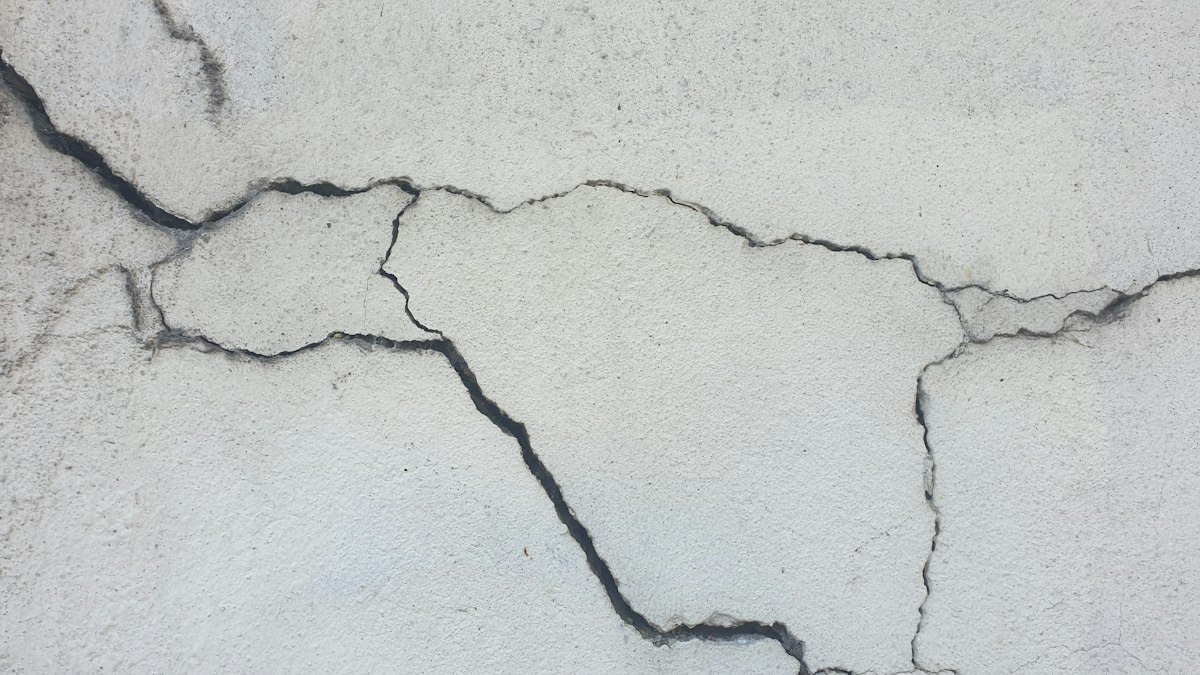
Alternative curing. To mitigate some of these issues, researchers are exploring ambient silicate curing. This method transforms compacted recycled concrete powder into low-carbon materials (Source: Wiley Online Library, 2026). By using sodium silicate impregnants, engineers can enhance bond strength and repair surface damage (Source: Wiley Online Library, 2024). While this does not offer the same millennium-scale endurance as the Roman hot-mix, it provides a tactical middle ground for urban environments where volcanic ash is unavailable.
Fact-Check & Accuracy Note
Data verified against MIT research benchmarks (2026) and the N13 motorway deployment in Switzerland. All CO2 and lifespan statistics are derived from Futura-Sciences (2026).