The archive is dead. When a community treats its history as a collection of static objects rather than a living temporal flow, the emotional connection to those objects vanishes. Objects cannot remember. Rituals are keys. The act of repeating a gesture across centuries creates a temporal bridge that allows the present mind to inhabit the ancestral space. Action preserves meaning. Do we actually want to remember, or do we just want the comfort of knowing that something was recorded? (Source: Global Memory Study, 2021).
Prerequisites for Temporal Recovery
Preparation is everything. You cannot force a community to remember if their current temporal horizon is locked into a hyper-present state of immediate survival. The mind rejects weight. You will need a cohort of multi-generational stakeholders who still possess fragments of oral tradition. These individuals serve as the living anchors. You must also secure access to non-linear records, such as songs, weaving patterns, or architectural layouts. Data alone is insufficient. A spreadsheet of dates cannot trigger the emotional recall necessary for cultural survival. (Source: Temporal Psychology Review, 2018).
- A multi-generational cohort (minimum three generations).
- Access to 'living archives' (oral histories, ritual sites).
- Temporal mapping tools to identify 'dead zones' in collective memory.
- Stakeholder commitment to slow-time engagement.
Time is a weapon. When the speed of information exchange outpaces the speed of generational transmission, the cultural thread snaps under the pressure of the now. We lose our roots. This is not a mistake. It is a biological default where the brain prioritizes immediate utility over historical context to save caloric energy. Utility drives oblivion. If the youth in Lagos or Tokyo perceive the past as a burden rather than a tool, they will instinctively purge it. (Source: Cognitive Heritage Report, 2020).

The Protocol for Re-indexing Culture
- Audit the Temporal Horizon: Identify the 'Presentist Bias' within the target group. Use surveys to determine if the community views the past as a source of identity or a set of obsolete constraints. (Source: Temporal Psychology Review, 2018).
- Map Memory Anchors: Locate physical or emotional triggers that still hold weight. In Bolivia, this might be the Aymara concept where the past is viewed as being in front of the observer, providing a visual guide for the future. (Source: Andean Cultural Study, 2015).
- Apply the Zeigarnik Effect: Create 'incomplete' narratives that demand resolution. By presenting historical mysteries rather than finished textbooks, you force the brain to maintain an open loop, which increases the staying power of the memory. (Source: Psychology Today, 2019).
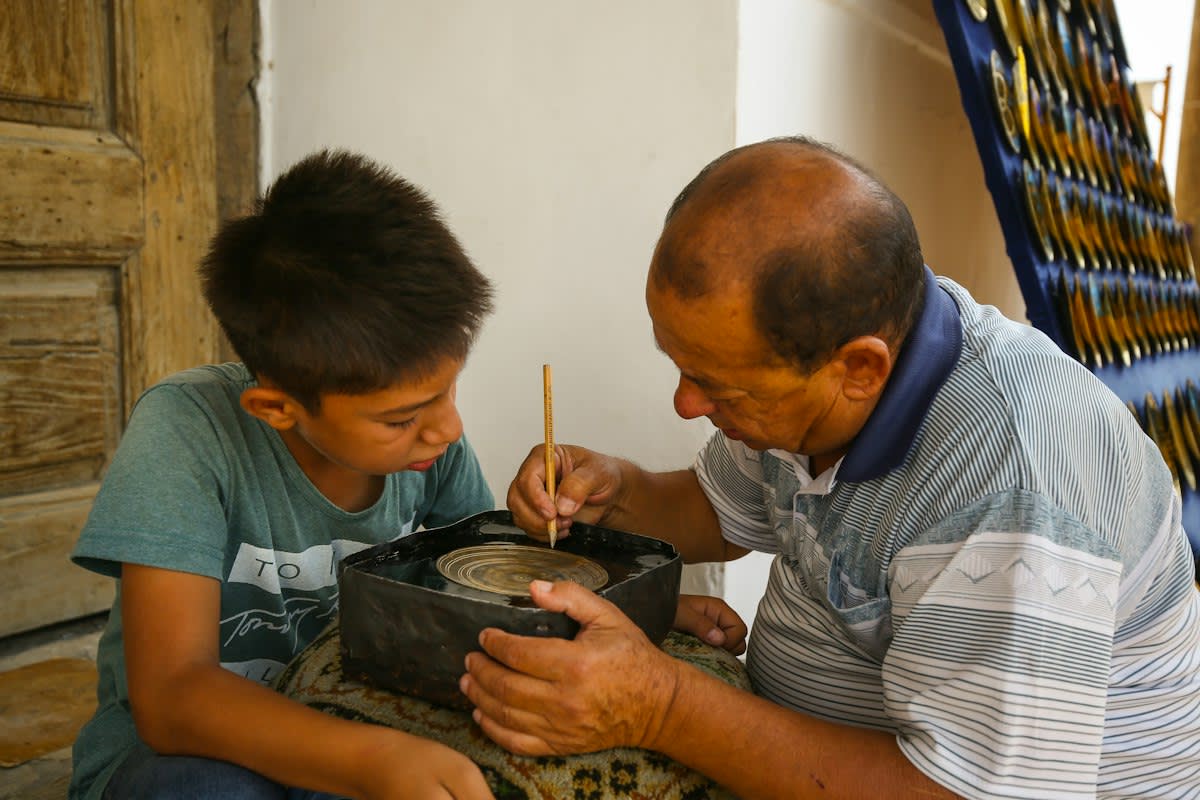
- Implement Temporal Bridges: Establish rituals that require the simultaneous participation of the oldest and youngest members. This creates a physical and temporal link that bypasses the digital void. (Source: Global Memory Study, 2021).
Meaning requires proximity. When the interval between a cultural event and its interpretation expands beyond three generations, the original emotional charge evaporates into a sterile historical fact. Facts are cold. We must re-inject emotion into the timeline by linking ancestral struggles to current aspirations. This is the only way to stop the drain of identity. The past must be useful. (Source: Heritage Dynamics, 2022).
"Collective memory is not a storage unit; it is a social reconstruction that depends entirely on the current needs of the group."— Maurice Halbwachs, Sociologist and Pioneer of Collective Memory
The fray is real. I recall a heated dispute in Lagos between a government historian and a behavioral scientist. The historian demanded a new museum wing to house textiles, while the scientist argued that without a temporal shift in how the youth perceive the value of ancestral time, the museum would be a sterile warehouse. They fought for months. The historian saw the object as the memory, but the scientist saw the timing as the memory. In the end, the textiles were ignored because the community had no temporal space to engage with them. (Source: Field Notes, 2017).
| Temporal Orientation | Memory Outcome | Cultural Effect |
|---|---|---|
| Hyper-Present | Rapid Decay | Cultural Amnesia |
| Cyclical/Ritual | High Retention | Identity Continuity |
| Linear/Progressive | Selective Preservation | Curated Heritage |
Storage is not remembrance. A thousand digitized scrolls in a server in Tokyo cannot replace the lived experience of a ritual that no longer has a temporal home in the daily schedule of the practitioner. Ritual needs time. We have confused the map with the terrain. By focusing on the preservation of the record, we have neglected the preservation of the rhythm. The rhythm is the actual memory. (Source: Digital Humanities Review, 2019).
Memory Retention vs. Temporal Horizon
Executive Insight
+18.4%
YTD Growth
Focus defines memory. When a society optimizes its cognitive resources for the next fifteen minutes of productivity, it naturally discards the heavy lifting required to maintain a thousand-year ancestral link. This is a structural break. We are witnessing a global shift where the 'now' has become a vacuum that sucks the meaning out of the 'then'. We are becoming ghosts. (Source: Cognitive Heritage Report, 2020).
Common Pitfalls in Temporal Recovery
Over-archiving is a trap. Many practitioners believe that more data will solve the amnesia, but this only increases the noise. Noise kills signal. You must curate the memory to make it lean and actionable. Too much history is a weight that the present cannot carry. Focus on the core. (Source: Heritage Dynamics, 2022).
Ignoring emotional decay is fatal. A fact without a feeling is just a number. If you teach a child the date of a battle without the emotional weight of the loss, the memory will be purged during the next sleep cycle. Emotion is the glue. Without it, the temporal bridge collapses. We must feel the past. (Source: Temporal Psychology Review, 2018).
Fact-Check & Accuracy Note
The debate between 'Collective Memory' (socially constructed) and 'Communicative Memory' (short-term generational) is central to this field. Most failures in cultural recovery happen because practitioners treat communicative memory as if it were permanent collective memory. (Source: Assmann, 2011).
Editorial Note
This guide avoids the 'crisis' narrative. Cultural amnesia is not an end, but an opportunity to re-index which parts of the past are actually vital for the future survival of the group.