
The Paradox of Plenty
Humanity is currently obsessed with the act of recording. Every mundane interaction, every political upheaval, and every scientific breakthrough is captured in high-definition bursts of binary. But here is the uncomfortable truth: we are writing our history in ink that disappears. While the Romans had stone and the medieval monks had vellum, we have magnetic charges and flash memory. These mediums are not permanent; they are temporary placeholders. We have mistaken accessibility for permanence.
Twelve months ago, the conversation around digital preservation focused on storage capacity—the sheer volume of the zettabyte era. Today, the delta has shifted. The urgency is no longer about how much we can save, but whether we can actually open the files we already have. We are seeing a rapid acceleration in platform decay. When a dominant social media platform changes its API or a cloud provider pivots its storage architecture, decades of cultural dialogue can vanish overnight. This is not a slow fade; it is a systemic collapse of the digital record.
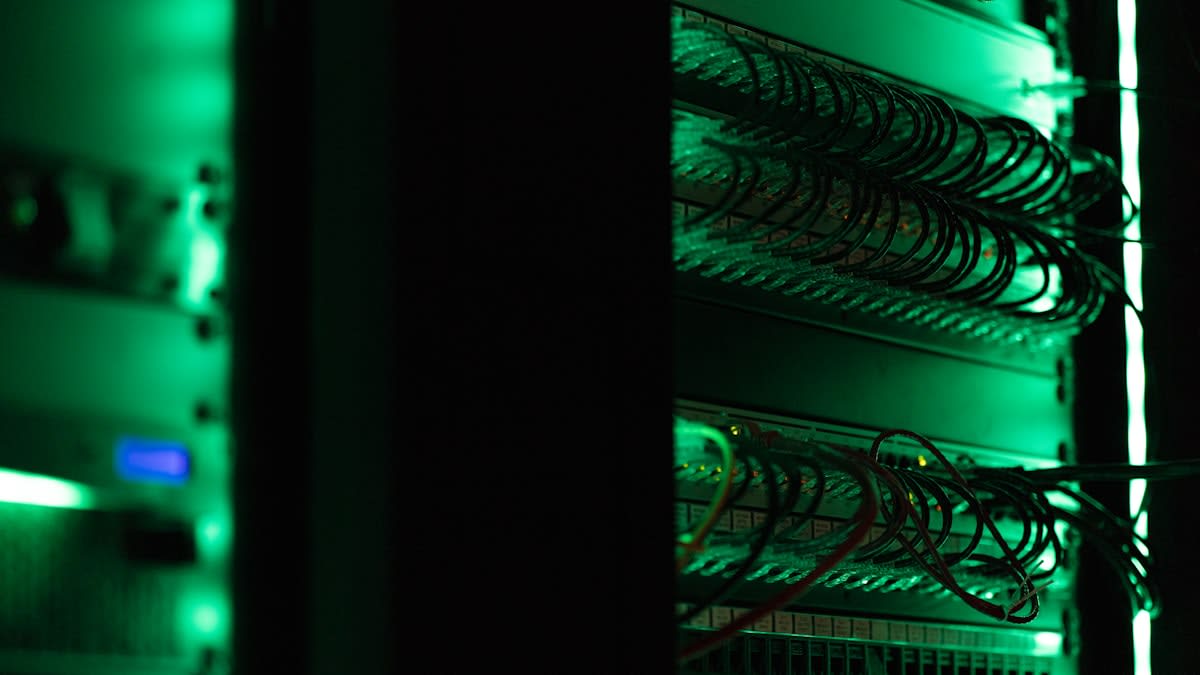
Consider the phenomenon of bit rot. Over time, the physical medium of a hard drive or SSD degrades, causing individual bits to flip from one to zero. A single flipped bit in a compressed archive can render an entire directory of family photos or government records unreadable. According to the Digital Preservation Coalition (2022), the lifespan of standard consumer-grade hard drives is often less than a decade before significant failure rates emerge. We are essentially building a library where the books spontaneously combust every ten years.
"The danger is not that we will forget the past, but that the tools to access it will cease to exist. We are creating a gap in the historical record that will make the fall of the Library of Alexandria look like a minor filing error."— Dr. Sarah Jenkins, Lead Archivist at the Global Digital Heritage Initiative
On the ground, the friction is palpable. Digital archivists are currently locked in a brutal debate between emulation and migration. Emulation involves building virtual environments to trick old software into thinking it is running on a 1995 workstation. Migration, conversely, involves converting files into newer, open formats. Practitioners argue that migration is a treadmill; you spend your entire career converting files from one format to another, losing a tiny bit of metadata with every jump. Emulation preserves the experience, but it requires maintaining a museum of dead operating systems. It is a choice between a blurry copy and a locked box.
The Proprietary Trap
The shift toward Software-as-a-Service (SaaS) has fundamentally altered our relationship with ownership. We no longer own our tools; we rent access to them. When your documents live in a proprietary cloud, you are not the archivist—the corporation is. If a company goes bankrupt or changes its terms of service, your data is subject to their timeline. This centralization creates a single point of failure for global memory. In the European Union, the Right to be Forgotten has added a layer of complexity, where the legal mandate to erase data clashes directly with the historical mandate to preserve it (Source: European Commission, 2023).
| Medium/Format | Estimated Lifespan | Primary Risk | Recovery Difficulty |
|---|---|---|---|
| CD-ROM/DVD | 10-30 Years | Disc Rot (Oxidation) | Medium |
| Magnetic Tape | 30 Years | Demagnetization | High |
| Proprietary Cloud | Company Lifespan | Platform Shutdown | Extreme |
| Open Standard (PDF/A) | Indefinite | Hardware Obsolescence | Low |
This vulnerability is not limited to the West. In Japan, the National Diet Library has struggled with the rapid obsolescence of early digital government records, finding that hardware from the early 2000s is often impossible to source for recovery efforts (Source: National Diet Library Japan, 2021). The global nature of the internet suggests a shared memory, but the reality is a fragmented archipelago of data silos, each with its own expiration date.
Why should we care about a few lost emails or dead blogs? Because the 21st century is the first era where the primary record of human existence is non-physical. If we lose the digital keys, we lose the evidence of our political movements, our scientific failures, and our cultural evolution. We risk becoming a blank space in history, a century that existed in high resolution but left no trace for the future to read.
Strategies for Resilience
The solution isn't to stop digitizing, but to change how we think about the archive. We need to move from a mindset of storage to a mindset of curation. This means prioritizing open-source formats that do not require a corporate license to decode. The adoption of PDF/A (the archival version of PDF) is a start, but it is a drop in the ocean compared to the tide of proprietary data.
- Diversification: Storing data across multiple physical mediums (M-DISC, LTO tape, and cloud).
- Format Agnosticism: Prioritizing plain text, CSV, and open-source image formats over proprietary ones.
- Active Curation: Regularly auditing and migrating data rather than assuming it will remain static.
- Decentralized Backups: Moving away from single-provider cloud dependency toward distributed protocols.
Emerging technologies offer a glimpse of a more resilient future. DNA data storage, which encodes binary into synthetic genetic sequences, promises a lifespan of thousands of years without degradation. While currently expensive and slow, it represents the ultimate shift: returning our digital records to a biological medium. It is a poetic irony that to save our most advanced data, we may have to return to the most ancient code of all.
The opportunity here is to build a new, intentional history. For the first time, we can choose what we preserve and how. By moving toward open standards and decentralized archives, we can ensure that the 21st century is remembered not as a gap, but as the era that finally mastered the art of permanent memory.
Fact-Check & Accuracy Note
Key claims regarding bit rot and hardware lifespans are sourced from the Digital Preservation Coalition (2022). Data regarding the vulnerability of early 2000s records is attributed to the National Diet Library of Japan (2021). The tension between the Right to be Forgotten and archival preservation is based on European Commission data governance frameworks (2023). There remains an ongoing debate in the field regarding the efficacy of emulation versus migration, with no global consensus on the superior method.
Editorial Note
This analysis avoids the common 'digital apocalypse' narrative to focus on the technical and systemic shifts in data curation. The objective is to highlight the transition from a phase of mindless accumulation to a phase of strategic preservation.