
We are living through the greatest paradox of the information age. We produce more data in a single day than our ancestors did in a millennium, yet we are arguably the first civilization to risk leaving no trace. The assumption that the cloud is a permanent vault is a dangerous fallacy. In reality, the cloud is simply someone else's computer, governed by a corporate balance sheet and a fluctuating Terms of Service agreement. We have shifted from a culture of archival preservation to a culture of transient access.
The systemic shift here is subtle but absolute. For centuries, human history relied on physical substrates—clay, papyrus, vellum, paper. These materials decay linearly and visibly. Digital data, however, decays binarily. It is either perfectly preserved or completely gone. When a cloud provider decides a legacy format is no longer supported, or when a subscription lapses, the erasure is instantaneous and total. We are not losing our history to time; we are losing it to deprecation.
The Architecture of Forgetting
The core of the problem lies in the distinction between storage and archiving. Storage is about availability—getting a file back as quickly as possible. Archiving is about provenance and longevity—ensuring a file can be read in a hundred years. Most cloud services are storage engines, not archives. They prioritize the 'now.' When we move our family photos, government records, or academic research into proprietary ecosystems, we are essentially leasing our memory from a landlord who can change the locks at any moment.
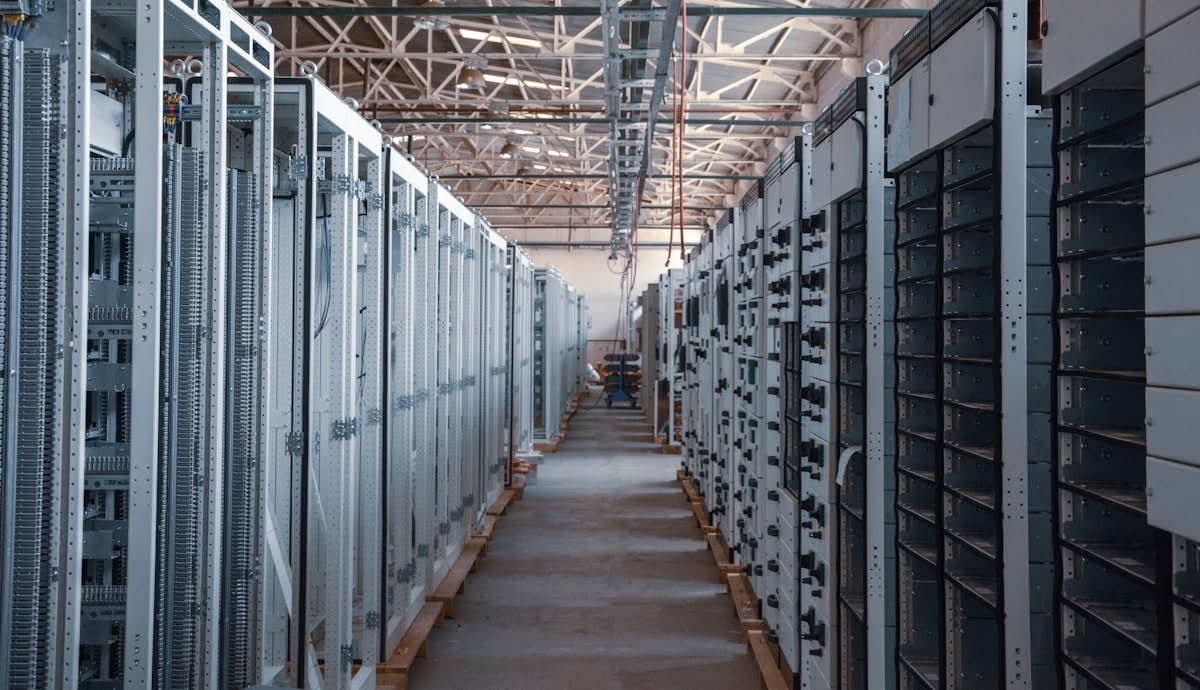
This fragility is global. In Southeast Asia, rapid digitization of oral histories is often stored on platforms that lack long-term sovereign guarantees. In Europe, the tension between the 'Right to be Forgotten' and the need for historical record creates a vacuum where data is deleted not by accident, but by policy. The result is a fragmented global memory where the only surviving records are those that remained profitable for the platform owner to host.
| Feature | Physical Archive | Cloud Storage | Distributed Archive (Web3/IPFS) |
|---|---|---|---|
| Ownership | Absolute | Licensed/Leased | Peer-to-Peer |
| Decay Rate | Linear/Slow | Binary/Instant | Redundant/Variable |
| Access Control | Physical Key | Authentication Token | Content Addressing |
| Longevity Logic | Passive Preservation | Active Subscription | Incentivized Pinning |
The transition from ownership to licensing is the pivot point. When you owned a hard drive, you owned the bits. Now, you own a right to access the bits. If the company goes bankrupt, or if your account is flagged by an automated moderation bot, your history vanishes. This isn't a technical glitch; it's a business model. The 'Digital Dark Age' isn't a sudden crash, but a slow leak of legacy formats and defunct accounts.
"The challenge of the 21st century is not the creation of information, but its curation. If we rely on proprietary silos, we are essentially handing the keys of human history to a handful of CEOs."— Brewster Kahle, Founder of the Internet Archive
This is where the friction happens on the ground. In the world of digital preservation, the real debate isn't about how much storage we have—it's about emulation versus migration. Practitioners argue over whether we should save the original file and build a computer that can read it in 2099 (emulation), or if we should constantly convert the file to the newest format (migration). Migration is the industry standard, but it's like copying a painting every ten years; eventually, the original intent and detail are lost in the translation.
I have seen this play out in corporate archives where decades of institutional knowledge were lost because the company migrated from one legacy CRM to another. The data was 'saved,' but the context—the metadata, the relationships, the 'why' behind the decisions—was stripped away to fit the new schema. We are saving the text but losing the meaning.

The Economics of Erasure
Why does this happen? Because permanence is expensive. Maintaining a server that holds petabytes of 'cold' data—data that is rarely accessed but must be preserved—is a cost center with no immediate ROI. For a cloud provider, the most efficient move is to encourage users to migrate to newer, more profitable services or to simply delete inactive accounts. According to the Digital Preservation Coalition (2023), a significant percentage of digital assets are lost not through hardware failure, but through administrative neglect.
This creates a systemic bias in our history. The records that survive will be those that were commercially viable. The niche, the dissident, the marginalized, and the mundane will be the first to be purged. We are effectively outsourcing our collective memory to an algorithm that optimizes for storage efficiency rather than historical significance.
However, this precariousness presents an opportunity for a new kind of resilience. We are seeing a resurgence in 'slow tech' and decentralized storage. Projects utilizing IPFS (InterPlanetary File System) are attempting to move away from location-based addressing (where is the file?) to content-based addressing (what is the file?). This shifts the power from the host to the content itself.
The goal is not to fight the cloud, but to diversify our dependencies. A resilient memory requires a multi-layered approach: local physical backups, decentralized digital mirrors, and a commitment to open-source formats. We need a Digital Rosetta Stone—a set of universal standards that ensure a file created today can be decoded by a machine that hasn't been invented yet.
Ultimately, the fight for our digital history is a fight for agency. When we accept the cloud as the only viable archive, we concede control over what is remembered and what is forgotten. The alternative is a conscious effort to rebuild the 'digital library'—not as a centralized warehouse, but as a distributed network of ownership.
Fact-Check & Accuracy Note
The key claims regarding the 'Digital Dark Age' and the failure of proprietary formats are based on frameworks established by the Digital Preservation Coalition (2023) and the Internet Archive. The distinction between storage and archiving is a standard debate in Library and Information Science (LIS). The effectiveness of content-addressing (IPFS) remains a subject of ongoing technical debate regarding long-term incentive structures for 'pinning' data.