The Return of the Tangible
We are currently seeing a violent reaction against the minimalism of the last decade. In July 2026, the design world is pivoting toward what is being called 'modern heritage.' This isn't a mere nostalgia trip or a costume party for the wealthy; it is a fundamental reassessment of how we inhabit our space. According to Builder Magazine, the 'America 250' influence is driving a revival of front-porch living and heritage plaids, blending the warmth of older homes with contemporary functionality. Why now? Because the hyper-digital existence of the early 2020s left a void that only craftsmanship and timeless style can fill.
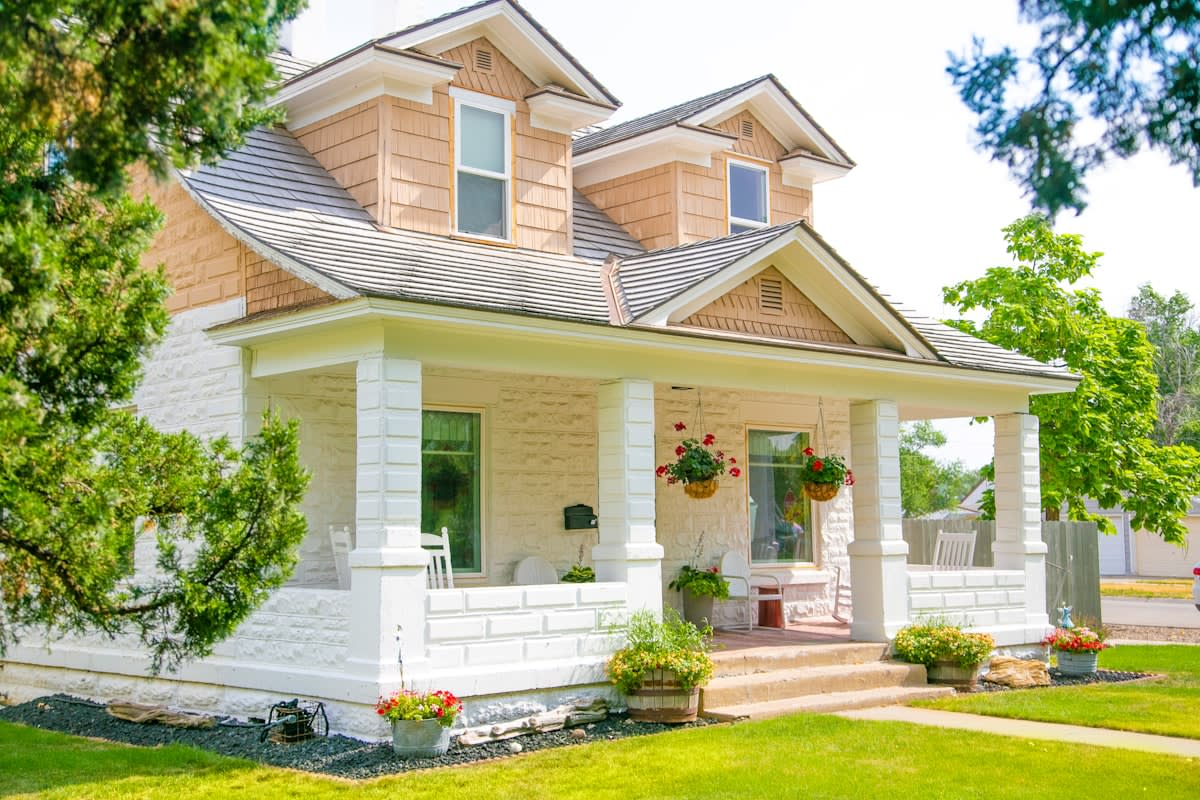
The return of the front porch is particularly telling. It represents a move away from the isolated, fortress-like suburban layouts of the recent past and a return to a pre-industrial model of community surveillance and social cohesion. This shift toward 'front-porch living' is now impacting new-home design within master-planned communities, proving that even the most curated modern developments are craving the unplanned, organic interactions of a previous century. It is a deceleration of the private life in favor of a shared, visible existence.
This aesthetic shift is anchored in a growing second-hand economy. Homeowners are no longer chasing the 'newest' model but are seeking sustainability through the acquisition of items with history. This trend suggests that the value proposition of labor is shifting from the speed of production to the longevity of the product. When we prioritize craftsmanship over convenience, we are effectively voting for a slower, more deliberate model of labor and consumption.
While the West redesigns its porches, other regions are using the same tension between the ancient and the digital to reclaim their cultural identity.
Digital Tools, Ancestral Beats
In Kenya, the deceleration manifests as a sophisticated synthesis of tradition and technology. Digital artists from Maa-speaking peoples, including the Maasai and Samburu, are currently driving a massive music revival. As reported by The Guardian in July 2026, these artists are blending traditional sounds with modern beats to reach a global audience via social media. This is not a dilution of culture but a strategic deployment of modern tools to preserve pre-industrial oral traditions. It is a powerful example of how technology can be used to decelerate the erasure of indigenous identity.
"Nowadays, Maasai shoot with cameras, not spears."— Manager of a Maasai musician
The catalyst for this revival has been a generation of university students who, since the mid-2010s, have used WhatsApp groups and parties to spread songs from their ancestral homes. This grassroots movement proves that the 'modern' does not have to replace the 'traditional.' Instead, the two can exist in a symbiotic loop where the smartphone becomes the new instrument for the shepherd's song. The result is a cultural resilience that refuses to be streamlined into a generic global pop sound.

Does this mean we are retreating from progress? Hardly. It means we are redefining progress to include the preservation of the human spirit. By integrating ancestral rhythms into the digital stream, these artists are ensuring that the 'Great Deceleration' is not a step backward, but a step toward a more integrated human experience.
This desire for integration is not limited to the arts; it is currently dismantling the very structure of the modern corporate hierarchy.
The Death of the Specialist
The industrial era was built on the back of hyper-specialization—the idea that a worker should do one thing exceptionally well and leave the rest to others. However, the AI era is killing the specialist. Boris Cherny, creator of Claude Code, has highlighted a shift toward 'job archetypes' where roles like engineering, product, and design are melting into one. In this new model, the boundary between the 'thinker' and the 'doer' vanishes. We are returning to a pre-industrial artisan model where one person possesses the holistic skill set to take a project from conception to completion.
| Industrial Labor Model | Deceleration (Archetype) Model |
|---|---|
| Domain-Specific Roles | Cross-Functional Archetypes |
| Hierarchical Management | Player-Coaches / Org Leads |
| Siloed Output | Integrated Product Ownership |
| Rigid Job Descriptions | Fluid, Multi-Archetype Spanning |
Notice the linguistic shift: the term 'manager' is being discarded. In its place, leaders are adopting titles like 'player-coach' or 'org lead.' This is a critical distinction. A manager oversees; a player-coach participates. This shift mirrors the guild systems of the pre-industrial world, where the master craftsman didn't just delegate tasks but worked alongside the apprentices. The goal is no longer just efficiency, but a shared mastery of the craft.
By spanning multiple archetypes, employees are reclaiming the agency that was lost during the era of the assembly line. When a single person can navigate the intersection of design, engineering, and product strategy, the friction of communication decreases, and the quality of the output increases. We are seeing the return of the 'polymath' as the most valuable asset in the modern economy.
Yet, as we move toward this holistic professional ideal, the most fundamental of all labors—working the land—is facing a grueling period of adaptation.
The Resilience of the Earth
Agriculture remains the ultimate test of the Great Deceleration. While the corporate world pivots to 'player-coaches,' farmers are battling a brutal economic reality. Data from Farm Journal’s June Ag Economists’ Monthly Monitor reveals a stark divide: while 80% of economists expect consistent or better conditions over the next year, 50% believe that broadly profitable margins for crop agriculture are still three to five years away.
Agricultural Profitability Outlook (July 2026)
Executive Insight
+18.4%
YTD Growth
This three-to-five-year window is a period of forced resilience. Farmers cannot simply 'pivot' their business model overnight; they are tied to the biological clock of the earth. The current margin pressure is forcing a return to more sustainable, long-term thinking. When profitability is a distant horizon, the short-term greed of industrial farming is replaced by a survivalist's focus on soil health and resource efficiency.
Is this a crisis? It can be. But viewed through the lens of the Great Deceleration, it is a correction. The reliance on high-input, high-debt industrial farming is meeting its limit. The farmers who survive this period will be those who embrace a more holistic, pre-industrial understanding of land stewardship, augmented by modern data, rather than those who rely solely on the industrial treadmill.
The need for a more human-centric, less industrial approach is perhaps most urgent in how we care for our most vulnerable.
The Care Gap and the Human Cost
The industrialization of care has led to a massive oversight gap in the United States. A recent GAO report highlights a staggering expenditure: Medicare and Medicaid spent over $12 billion on assisted-living facilities in 2024. Specifically, Medicare spent $8.5 billion for nearly 830,000 people, while Medicaid contributed $3.5 billion. Despite these billions, there is a glaring lack of federal oversight to ensure quality care.
The Oversight Gap
The $12 billion spent on assisted living represents a systemic failure to align funding with quality. While nursing homes are regulated, assisted-living facilities operate in a 'huge oversight gap,' treating care as a commodity rather than a human right.
This is where the Great Deceleration must move from an aesthetic or professional trend to a moral imperative. The industrial model of 'warehousing' the elderly is failing. The solution lies in returning to a model of care that is integrated into the community—much like the 'front-porch living' seen in home design. We need a system where care is not a line item in a federal budget but a social fabric that binds generations together.
Ultimately, whether it is a Maasai musician using a smartphone to preserve a song, a software engineer becoming a 'player-coach,' or a homeowner reclaiming their porch, the signal is the same. We are tired of the sterile, the siloed, and the hyper-efficient. We are choosing a world that is slower, more integrated, and deeply rooted in the heritage of what it actually means to be human.