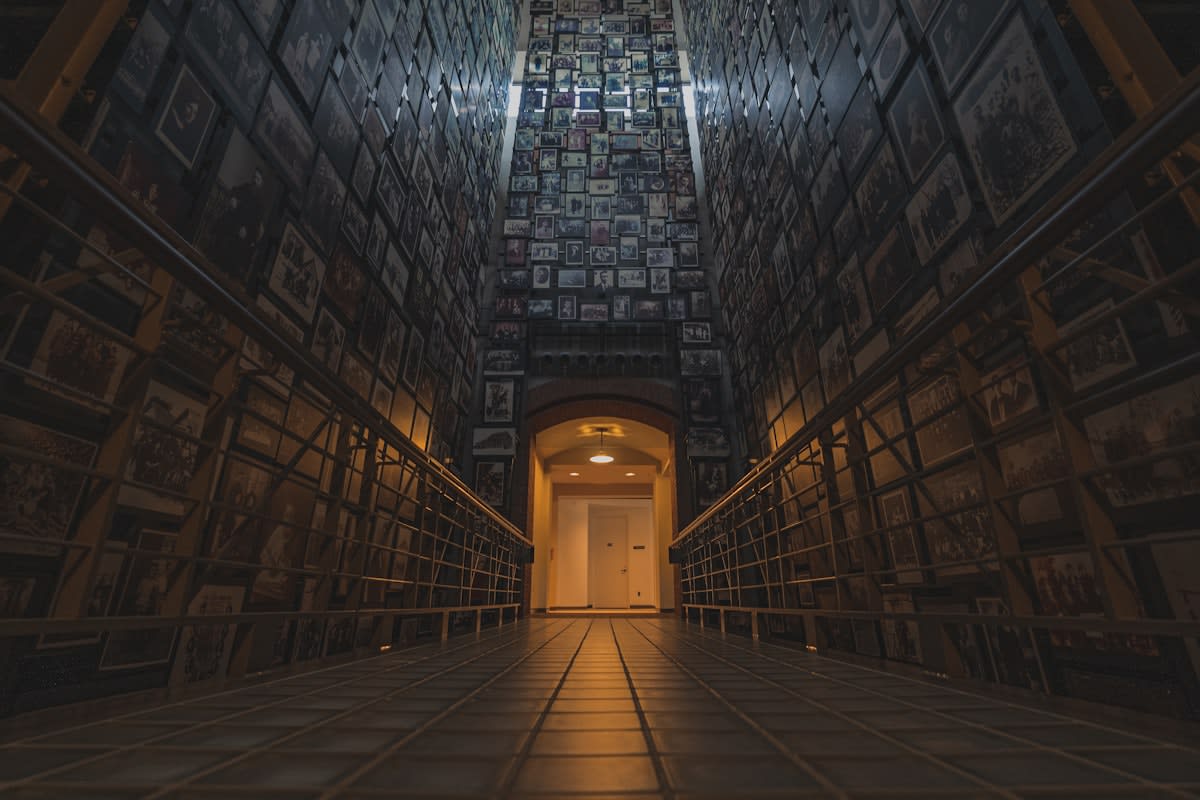
We are currently living through the Great Recording. Every heartbeat, transaction, and fleeting thought is captured in a silicon vault. On the surface, this looks like a victory for history. We no longer rely on the whims of a royal chronicler or the fading memory of an elder to know what happened in a specific street in Nairobi or a boardroom in Tokyo. Yet, a quiet crisis is emerging in the corridors of our minds. We have confused the act of recording with the act of remembering. By outsourcing our memory to the cloud, we are not expanding our intellectual capacity; we are atrophy-ing the very neural pathways that allow us to synthesize experience into wisdom.
Why does this happen? The answer lies in cognitive offloading. When the brain knows that information is stored externally and reliably, it ceases to encode that information into long-term memory. This is not a new phenomenon, but its scale is unprecedented. We used to offload lists or dates; now we offload the narrative of our lives. If you have a photo of every meal you have eaten for a decade, do you actually remember the taste of the food, or do you simply remember the image of the photo? The image becomes the proxy for the experience, and eventually, the proxy replaces the memory entirely.
The Google Effect and the Death of Synthesis
Researchers have termed this the Google Effect. A seminal study indicated that people are less likely to remember a piece of information if they believe it can be found online later (Source: Columbia University, 2011). This shift transforms the human mind from a library of knowledge into a directory of pointers. We no longer know the 'what'; we only know 'where' to find the 'what'. This creates a dangerous fragility. When the pointer breaks—through a 404 error, a platform shutdown, or a lost password—the knowledge doesn't just become hard to find; it ceases to exist in the human consciousness.

Consider the difference between a curated history book and a raw data dump of a million tweets. The former requires a human to make a value judgment: what matters? What is the thread that connects these events? The latter offers total recall but zero understanding. Synthesis is the process of discarding the irrelevant to highlight the essential. By recording everything, we have eliminated the filter. We are drowning in data while starving for meaning.
"The archive is not a neutral repository; it is an act of power. When we automate the archive, we outsource the power of selection to algorithms that value engagement over significance."— Dr. Arlette Quivoron, Digital Historian at the Sorbonne
This algorithmic curation creates a feedback loop. We remember what the algorithm surfaces, not what is historically significant. In Southeast Asia, for instance, the digitization of colonial records often prioritizes documents that are 'searchable' or 'digitally compatible,' leaving vast swaths of handwritten, local-language records to rot in humid basements. The archive doesn't just record the past; it decides which past is allowed to survive into the future.
The Practitioner's Friction: Bit-Rot and the Digital Dark Age
Having spent over a decade navigating the tension between physical and digital preservation, I have seen the ground-level reality of this paradox. In the archive rooms, the debate isn't about how much we can save, but about the terrifying speed of obsolescence. We call it bit-rot. I have watched archivists struggle to open files from the late 1990s because the software that created them no longer exists. There is a profound irony here: a 500-year-old vellum manuscript from the Vatican is instantly readable to anyone who knows Latin, but a WordStar document from 1984 is a locked mystery. Practitioners in the field are currently locked in a desperate war of 'migration'—constantly moving data from one dying format to the next just to keep it alive.
| Metric | Analog Archive | Digital Archive |
|---|---|---|
| Retrieval Speed | Slow / Manual | Instant / Algorithmic |
| Durability | Centuries (if dry) | Decades (format dependent) |
| Curation Logic | Intentional Selection | Total Capture |
| Cognitive Load | High (Requires Memorization) | Low (Requires Indexing) |
This technical fragility mirrors our cognitive fragility. We trust the digital archive because it feels infinite, but infinity is a mirage. The 'Digital Dark Age' is not a future threat; it is happening now. Every time a social media platform pivots its API or a cloud provider changes its terms of service, a piece of the collective human memory is deleted. We are building our history on rented land.

If we continue to prioritize the recording of the event over the experiencing of the event, we risk becoming a species of spectators. We see this in the global trend of 'camera-first' attendance at concerts or protests. The participant is no longer immersed in the moment; they are managing the archive of the moment in real-time. The mental energy required to frame the perfect shot is energy taken away from the emotional processing of the event. We are recording a life we are forgetting to live.
Resilience Through Intentional Forgetting
The solution is not to abandon technology, but to embrace the necessity of forgetting. Forgetting is not a failure of memory; it is a feature of intelligence. It allows the brain to strip away noise and retain the signal. To combat the paradox of the archive, we must move toward 'active curation'—the deliberate choice of what to save and, more importantly, what to let go. This is where the opportunity for resilience lies.
- Prioritizing analog backups for critical cultural markers to avoid bit-rot.
- Practicing digital fasts to re-engage the brain's internal encoding mechanisms.
- Shifting from 'total capture' to 'thematic archiving' in institutional records.
- Encouraging oral history traditions that rely on human transmission rather than just audio files.
We must stop treating the cloud as a prosthetic brain and start treating it as a tool. The goal of a record should be to trigger a memory, not to replace it. When we return to a model where the archive serves as a catalyst for human reflection rather than a substitute for it, we can begin to reclaim the depth of our collective history. The challenge is no longer how to remember everything, but how to remember what actually matters.
Fact-Check & Accuracy Note
This article draws upon established psychological theories regarding cognitive offloading and the Google Effect, specifically referencing the 2011 Columbia University study. The discussion of 'bit-rot' and the 'Digital Dark Age' reflects ongoing professional debates within the archival science community (e.g., discussions led by the Digital Preservation Coalition). While the cognitive effects are widely observed, the exact rate of memory loss due to digital reliance remains a subject of active academic debate.