The modern professional is trapped in a paradox of efficiency. We employ sophisticated AI to automate the mundane, expecting a windfall of reclaimed hours and mental serenity. Yet, the reality is a surge in burnout among the very people driving this innovation. Why does the removal of tedious tasks lead to deeper exhaustion? The answer lies not in the volume of work, but in the systemic shift from a circular, parallel existence to a rigid, linear processing model. We have attempted to reshape human consciousness into the image of an early computer, and the friction is finally becoming unbearable.
The Ghost of Serial Processing
Early information-processing theories in psychology operated on a flawed premise: that human cognition was primarily serial. This assumption was a mirror of early computing, where machines performed one operation at a time in a strict, linear sequence. For decades, our corporate structures and productivity hacks have mirrored this linear logic. We treat our days as a series of blocks to be optimized, ignoring the fact that the human brain is actually a massively parallel structure. With billions of interconnected neurons, we are designed to distribute operations across multiple systems simultaneously, not to march in a single file line of tasks.
"The human information-processing system has finite limits. At any given moment, only so much information can be held and processed, a constraint that bears directly on attention and short-term memory."— Information Processing Theory
This finite channel capacity is where the system breaks. When we force our parallel-processing brains into a linear 'pipeline' of productivity, we create a cognitive bottleneck. A skilled typist, for instance, doesn't think of one letter at a time; they process several letters ahead in parallel. When we strip away the natural rhythms of work and replace them with a relentless stream of linear demands, we aren't becoming more efficient. We are simply redlining our cognitive hardware until it fails.

This cognitive misalignment is exacerbated by the tools we use to visualize progress. We rely on linear objects—like the bars in a chart—because 2-D position and straight lines are easily perceived by the human eye. This preference for linear visualization reinforces a linear mindset. We see our lives as a horizontal x-axis of progress, forgetting that human experience is often more akin to a just-in-time architecture where attention must be directed to the right object at the right time, rather than in a predetermined sequence.
But the problem isn't just how we think; it's how we have structured the very nature of the workday.
The AI Paradox: The Death of the Buffer
Startup founders are currently the canary in the coal mine for the AI era. The promise was simple: AI takes the grunt work, and the founder gets their life back. Instead, a surge of burnout is occurring. The mechanism is insidious. By removing the low-stakes, administrative 'filler' tasks, AI has inadvertently removed the cognitive buffers that once allowed the brain to reset. Now, the workday is composed entirely of high-stakes decisions that actually matter, with almost no breaks in between.
The Compression Effect
When AI removes the 'easy' tasks, it doesn't create free time; it creates a dense concentration of high-pressure decision-making, leading to profound loneliness and mental exhaustion.
Does this sound familiar? The feeling that the day is faster yet more exhausting than ever? This is the result of a linear time trap. We have optimized for output but ignored the human need for 'empty' time. Without the mundane, we are forced into a state of permanent peak performance. This is biologically unsustainable. We are treating our minds like CPUs that can run at 100% utilization indefinitely, ignoring the fact that our biological systems require oscillation—peaks and valleys—to maintain health.
| Dimension | Chronos (Linear Time) | Kairos (Circular/Soul Time) | Cognitive State |
|---|---|---|---|
| Perception | Quantitative, sequential | Qualitative, meaningful | Parallel Processing |
| Work Model | Serial task completion | Presence and depth | Channel Capacity Limit |
| Biological Fit | Disruptive (e.g., night shifts) | Aligned (Circadian rhythms) | Homeostasis |
| Outcome | Burnout and exhaustion | Resilience and meaning | Cognitive Flow |
This disconnect extends beyond the office and into the very cells of our bodies.
Biological Rebellion: The Cost of Ignoring the Circle
Our bodies are programmed for circularity. The circadian rhythm is the ultimate expression of circular time—a loop of wakefulness and sleep that regulates memory, immunity, and metabolism. When we impose a linear, 24/7 economic demand on this system, the results are catastrophic. Night shift work, which forces the body to remain awake when it is programmed to sleep, is a prime example of the linear time trap. It is not merely a matter of tiredness; it is a systemic disruption of the biological clock.
- Increased risk of dementia due to disrupted memory processes.
- Higher incidence of heart disease linked to metabolic disorder.
- Elevated risk of certain cancers tied to circadian system failure.
- Impaired immunity caused by sleep-wake misalignment.
Why do we continue to build systems that fight our biology? Because we have been conditioned to value the linear over the circular. We prioritize the 'deadline' (a linear point) over the 'rhythm' (a circular process). This misalignment creates a state of chronic stress where the body is perpetually signaling for rest while the linear schedule demands output. The result is a physical manifestation of burnout that no amount of 'wellness' apps can fix.
To escape this trap, we must first change the language we use to describe our existence.
Beyond Chronos: Reclaiming Kairos
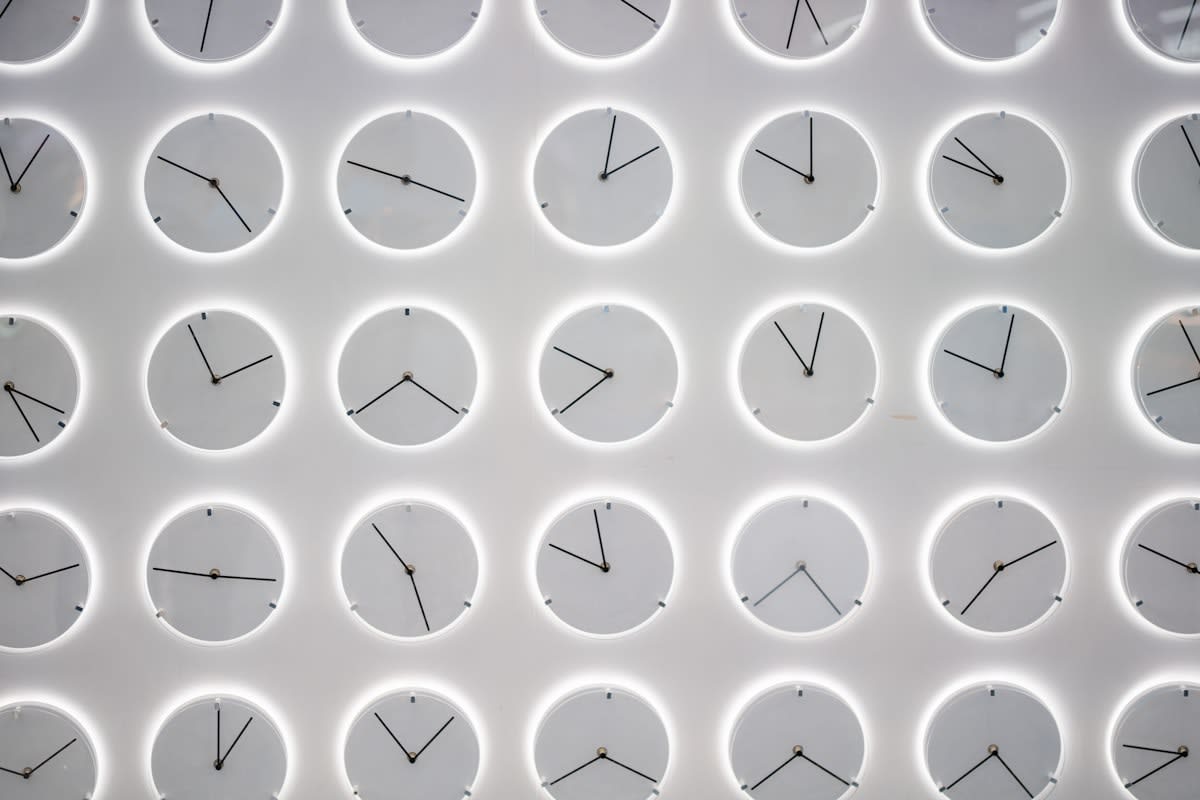
We suffer from a poverty of language. In English and many other global tongues, we have only one word—time—to describe a phenomenon that is both subjective and objective. This linguistic limitation shapes our perception. When we only speak of 'time' in terms of Chronos (the ticking clock, the aging face), we ignore Kairos. Kairos is soul time; it is measured in depth, meaning, and the quality of being present. It is the difference between spending an hour in a meeting and spending an hour in a state of flow.
Can we start thinking of time differently if we have more words for it? Absolutely. By recognizing the distinction between the linear demand and the qualitative experience, we can begin to build resilience. The goal is not to eliminate linear time—which is necessary for coordination in a global economy—but to stop mistaking it for the totality of human existence. We must reintegrate the 'circular' into our professional lives, creating intentional buffers and respecting the parallel nature of our cognitive architecture.
The opportunity here is not to return to a pre-industrial past, but to evolve into a post-linear future. We can leverage AI not to compress our workdays, but to protect our Kairos. Instead of using the time saved by AI to cram in more high-stakes decisions, we can use it to restore the cognitive buffers and biological rhythms that sustain us. The shift from a 'productivity' mindset to a 'capacity' mindset is the only way to end the burnout epidemic.