
The Infrastructure of Extraction
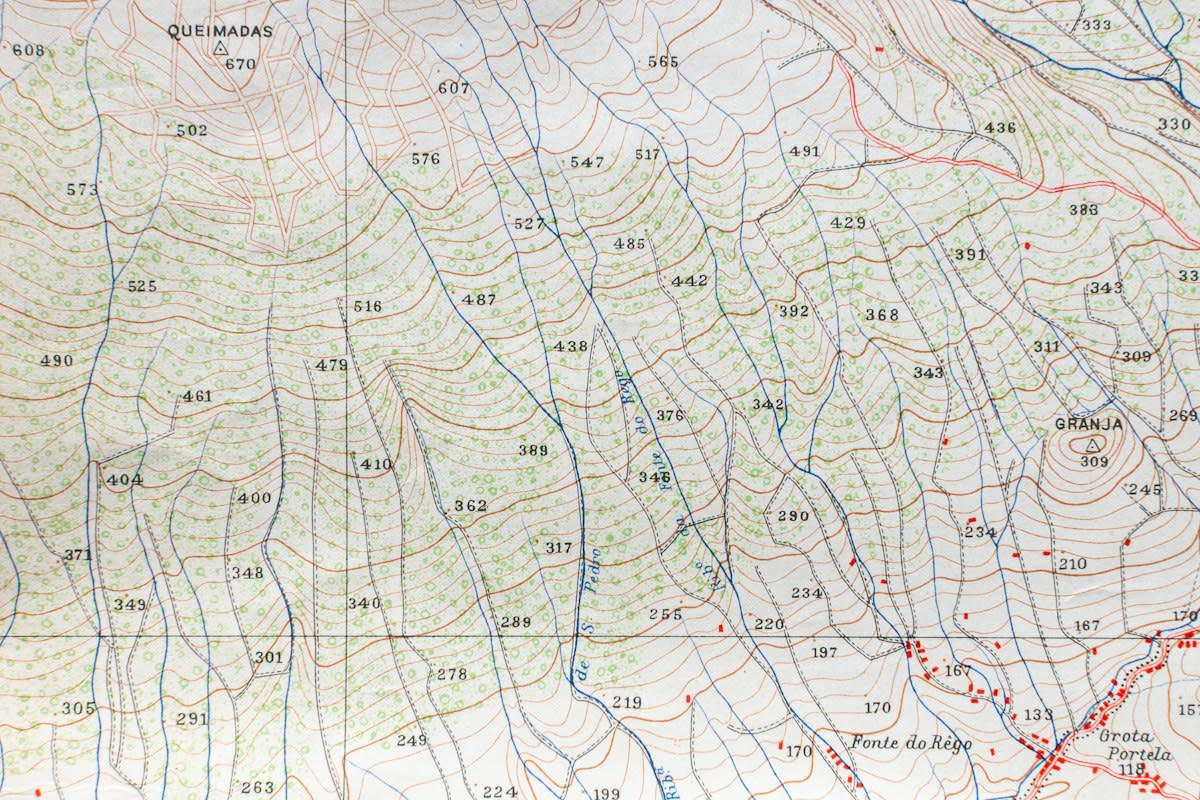
Open Data is a corporate cloak. For decades, the narrative pushed by Western academic institutions and GIS (Geographic Information Systems) providers has been that transparency equals progress. But in the context of Indigenous cartography, transparency is often just a roadmap for theft. When a sacred site in the Western Ghats or a medicinal plant cluster in the Canadian North is digitized without restriction, it isn't being 'preserved' for humanity. It's being indexed for bioprospecting firms and mining conglomerates who use high-resolution mapping to identify targets for extraction before the local community even knows their data has leaked (Source: Global Indigenous Data Alliance, 2019).
The friction lies in the 'Public Domain' myth. Most digital archives operate on a binary: either something is copyrighted or it's free for all. This binary ignores the reality of Traditional Knowledge (TK), which is governed by complex, non-linear protocols of kinship, gender, and seasonality. A map showing hunting grounds might be open to certain clan members in winter but strictly forbidden in summer. Standard copyright law can't handle that. It treats the knowledge as 'ownerless' the moment it enters a museum database, effectively laundering Indigenous intellectual property into the public domain where corporate entities can patent the findings (Source: Local Contexts, 2020).
Prerequisites: Before You Touch the Metadata
You can't just slap a label on a file and call it 'sovereignty.' If you're an archivist or a developer trying to implement Traditional Knowledge (TK) Labels, you're dealing with a legacy of institutional rot. Most databases were built to categorize items by 'Object Type' and 'Date,' not 'Community Protocol' and 'Seasonal Access.' Before you start the technical implementation, you need to clear the bureaucratic brush. You aren't just updating a schema; you're renegotiating power dynamics between the institution and the people who actually own the knowledge.
- Community Mandate: A written or recorded agreement from the recognized knowledge keepers, not just a convenient liaison.
- Metadata Access: Administrative rights to the underlying XML or JSON schemas of the archive; surface-level CMS edits won't cut it.
- Legal Buffer: Counsel familiar with the UN Declaration on the Rights of Indigenous Peoples (UNDRIP) to ensure labels aren't dismissed as 'mere suggestions' in a court of law (Source: UN, 2007).
- Protocol Documentation: A clear map of who can see what, when, and under what conditions.
The Implementation Pipeline
Implementation is where the theory hits the wall of broken hardware and human ego. Most curators hate changing their workflows. They see TK Labels as an extra step in an already bloated process. But the process is the point. The goal isn't 'efficiency'—it's accuracy and respect. If you optimize for speed, you'll miss the nuance of a TK Label that specifies 'Clan-Only' access, and you'll end up publishing a map that violates a spiritual taboo.
- Audit the Asset: Identify every map, coordinate, and description in the dataset. Tag them by origin and current accessibility level.
- Conduct the Consultation: This is the hardest part. Sit in the community halls. Deal with the internal politics of who speaks for the group. Do not rush this. If the community isn't aligned, the labels are useless.
- Map Labels to Metadata: Use the Local Contexts framework to assign specific labels (e.g., TK Seasonal, TK Women/Men, TK Non-Commercial). Integrate these as machine-readable tags in your metadata header.
- Deploy Public-Facing Indicators: Ensure the labels are visible to the end-user. A user should see a TK Label immediately, signaling that the data is subject to Indigenous protocols, regardless of the legal 'Copyright' status.
- Establish a Review Loop: Knowledge isn't static. Set a date every 24 months to revisit the labels with the community to ensure they still reflect current protocols.
"Traditional Knowledge Labels are not a replacement for legal copyright, but a necessary layer of cultural provenance that tells the world: this data is not ownerless, and its use is governed by the people who created it."— Representative, Local Contexts Initiative
The technical friction usually happens at the API level. Many legacy systems in museums and libraries use MARC or Dublin Core standards that don't have a native field for 'Cultural Protocol.' You'll find yourself hacking together custom fields or using 'Notes' sections, which are often ignored by search indexers. To make TK Labels work, you have to force the system to recognize these labels as primary identifiers, not secondary footnotes (Source: Local Contexts, 2020).

Ground-Level Friction: Where the System Breaks
Here is the ugly reality: community consultation is often a battlefield. You will encounter political infighting within tribes over who has the authority to 'label' a map. In some cases, an elder might demand a map be deleted entirely, while a younger community member wants it labeled and shared to prove land claims in court. The operator is caught in the middle of a generational war over data sovereignty. If you try to 'manage' this with a spreadsheet, you've already lost.
Then there's the legal loophole. A TK Label is a powerful social and ethical signal, but in a courtroom in Delaware or London, a corporate lawyer will argue that the label is non-binding because it doesn't fit the narrow definition of a legal contract. This is why the CARE Principles (Collective Benefit, Authority to Control, Responsibility, Ethics) are critical. They shift the conversation from 'Who owns this file?' to 'Who has the authority to govern this knowledge?' (Source: Global Indigenous Data Alliance, 2019).
| Feature | Creative Commons (CC) | TK Labels |
|---|---|---|
| Legal Basis | Western Copyright Law | Indigenous Protocol/Sovereignty |
| Primary Goal | Ease of Sharing | Protection and Provenance |
| Control | Author-centric | Community-centric |
| Flexibility | Static License | Dynamic/Seasonal Protocols |
Common Pitfalls
- The Checklist Mentality: Treating TK Labels as a 'compliance' box to check rather than a living relationship with a community.
- Over-Reliance on Tech: Assuming a digital tag replaces the need for a physical agreement or a face-to-face meeting.
- Ignoring Orality: Trying to force oral traditions into a rigid text-based metadata schema without allowing for audio or video provenance.
- Assuming Consensus: Believing that one 'Chief' or 'Council' represents the entire community's view on a specific piece of knowledge.
Fact-Check & Accuracy Note
The claims regarding the use of 'Open Data' for bioprospecting are well-documented in indigenous rights discourse, though specific corporate 'theft' cases are often settled out of court with non-disclosure agreements. The efficacy of TK Labels as a legal deterrent is still debated; they currently function more as ethical frameworks and social contracts than as enforceable statutes in Western courts. (Source: GIDA, 2019; Local Contexts, 2020).
Editorial Note
This guide is written from the perspective of a field operator. It prioritizes community agency over institutional convenience. The technical steps provided are based on the Local Contexts framework, which is the current industry standard for TK labeling.