Polish President Nawrocki confronts Tusk-backed ‘head of court’ Korwin-Piotrowska as crisis deepens - watch
Source Entity
Latest News: Todays Latest News Headlines from India & World | Hindustan Times
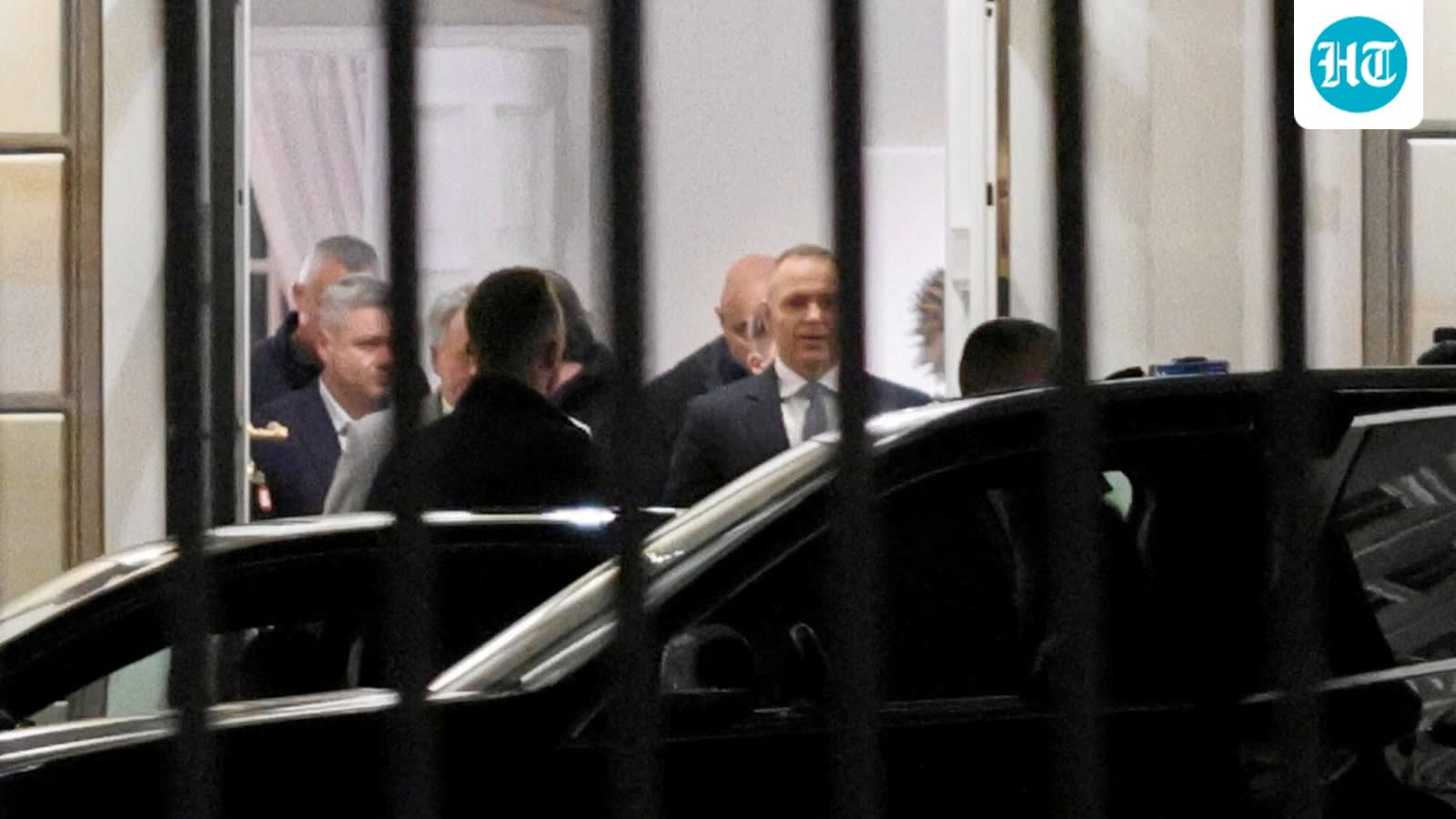
Poland is facing a constitutional crisis as police surround the Constitutional Tribunal following the suspension of two senior justices by Prime Minister Donald Tusk’s government. President Karol Nawrocki has returned to Warsaw, labeling the government's actions a 'coup d'etat' while Tusk defends the move as a necessary step to restore the rule of law.
The Constitutional Crisis in Warsaw: A Deep Dive
Poland has entered a period of heightened political volatility as a direct confrontation between the executive branch and the judiciary unfolds in Warsaw. The deployment of police units around the Constitutional Tribunal marks a significant escalation in the ongoing power struggle between Prime Minister Donald Tusk’s administration and the nationalist Law and Justice (PiS) party, which retains significant influence through its allies, including President Karol Nawrocki.
The Trigger: Judicial Suspensions and 'Coup' Allegations
The crisis reached a boiling point when the Tusk government suspended two senior justices, including the chief justice, Bogdan Swieczkowski, and initiated criminal proceedings against them. The Constitutional Tribunal responded with fierce rhetoric, characterizing the government’s intervention as a 'coup d'etat.' The court maintains that the suspended justices remain the only legally appointed senior officials, setting the stage for a fundamental disagreement over the legitimacy of state institutions.
Executive Rationale: Restoring Rule of Law
Prime Minister Donald Tusk has framed these actions as a necessary, albeit painful, corrective measure. Tusk argues that his government has a mandate to dismantle what he characterizes as years of 'lawlessness' fostered by the previous PiS administration. By targeting the leadership of the Constitutional Tribunal, the government is attempting to purge institutions that it views as compromised by political cronyism, aiming to align the judiciary with a new legal order.
The Presidential Pivot
President Karol Nawrocki, a figure closely aligned with the PiS, demonstrated the severity of the situation by abruptly cancelling an official diplomatic trip to Senegal for the Summer Youth Olympic Games. His immediate return to Warsaw underscores the perceived threat to the existing institutional framework. By positioning himself at the center of the conflict, Nawrocki is acting as the primary institutional bulwark against the Tusk administration’s judicial reforms.
Historical Context and Broader Implications
The Constitutional Tribunal has long been the epicenter of Poland’s rule-of-law disputes. For years, the institution has been caught between the legislative agenda of the PiS and the judicial standards expected by the European Union. This current standoff is not merely a dispute over personnel; it is a battle over the soul of the Polish state. The involvement of riot police at the Tribunal’s gates signifies that the conflict has moved from legislative chambers into the realm of physical state control.
Future Trends and Outlook
As the situation remains fluid, the presence of security forces around the court suggests that the Tusk government is prepared to exert physical control over the judiciary to enforce its reforms. The coming days will likely determine whether the opposition can mount a successful legal or civil resistance. If the government succeeds in consolidating control over the Tribunal, it will likely accelerate its broader reform agenda, potentially deepening the polarization between the current administration and the nationalist opposition.
Verification Required?