
The Great Integration
For years, we treated AI as a sidecar. We opened a separate tab, typed a prompt into a chat box, and then manually carried that output back into our actual work environment. This friction defined the AI Assistant era: a helpful but detached entity that could suggest a line of code or draft an email but had no inherent power to touch the dials of the software it was discussing. In 2026, that boundary has finally collapsed. We are witnessing a systemic shift from assistants that live beside applications to agents that live inside them, fundamentally changing the architecture of digital labor.
What separates an agent from an assistant? It is not a matter of raw intelligence or the size of the parameter count. It is a matter of agency and access. An assistant tells you how to rig a character in a 3D environment; an agent accesses the application's own commands and data to execute the rigging for you. This transition represents a move from consultative AI to operational AI. The goal is no longer to produce a better response, but to trigger a more precise action within a specialized ecosystem.

The catalyst for this shift is the Model Context Protocol (MCP). By establishing an open standard, MCP allows AI agents to connect directly to an application’s internal commands, documentation, and live data streams. This removes the need for the user to act as the middleman, copying and pasting context between a LLM and a tool. When the AI can see the state of the software in real-time and has the permission to execute commands, the 'assistant' becomes an 'operator.' This is not a marginal improvement; it is a total reconfiguration of the user interface.
Consider the recent developments at Siggraph 2026. SideFX and Nvidia have integrated MCP-powered AI agents directly into Houdini 22’s rigging workflow. Instead of an artist searching through documentation to find the correct Apex Script syntax, the agent taps into a curated library of examples and writes the procedural rigging code directly within the software. This is the blueprint for the next decade of software: the AI doesn't just know the manual; it has the keys to the machine.
"The mechanism behind this shift is the Model Context Protocol (MCP), an open standard that lets an AI assistant connect to an application’s own commands, documentation, and data."— Jon Peddie Research
This evolution forces us to ask: if the AI is inside the tool, what happens to the tool itself? We are moving toward a future where the traditional menu-driven interface becomes a secondary fallback. The primary interface becomes a goal-oriented dialogue where the agent translates intent into a sequence of internal software operations. The software is no longer a set of tools for a human to use, but a set of capabilities for an agent to orchestrate on behalf of a human.
While the technical capability is breathtaking, the systemic risk is equally profound. Moving AI from a sandboxed chat window into the heart of enterprise software opens a Pandora's box of security vulnerabilities.
The Fragility of Agentic Trust
The industry is currently intoxicated by the promise of automation, but the hangover is arriving early. A global analyst firm predicts that 40% of agentic AI projects will be canceled by the end of 2027. The reasons are not a lack of intelligence, but a failure of governance. When an agent has the power to execute commands, a hallucination is no longer a funny typo in a chat window; it is a corrupted database, a crashed server, or a misplaced shipping container.
| Feature | AI Assistant (2023-2025) | AI Agent (2026+) |
|---|---|---|
| Location | External/Sidecar | Embedded/Internal |
| Primary Output | Text/Suggestions | Actions/Executions |
| Connectivity | API-based/Manual Input | MCP/Direct System Access |
| Risk Profile | Low (Informational Error) | High (Operational Failure) |
| User Role | Prompt Engineer | System Architect |
The attack surface has expanded exponentially. By using MCP to connect agents with enterprise tools, databases, and external services, organizations have created new vectors for exploitation. If an agent can execute a command in a DCC application or a database, a compromised prompt could lead to systemic failure. Security is no longer about filtering keywords in a chat box; it is about managing the permissions of a digital entity that can act autonomously across a network.
This vulnerability extends beyond the digital realm and into physical infrastructure. In retail environments, agents are now interacting with point-of-sale systems, smart shelves, and IoT devices. In logistics, they are managing warehouse scanners and robotics systems. The stakes have shifted from 'did the AI write a good email?' to 'did the AI accidentally reroute a fleet of autonomous vehicles?' The leaders of this era will not be those with the smartest agents, but those with the most rigorous trust and governance frameworks.
The Governance Gap
The critical failure point for agentic AI in 2026 isn't the LLM's reasoning capability—it's the lack of adequate risk controls and the escalation of operational costs.
As we delegate more execution to agents, we must confront a paradox: the more capable the agent becomes, the more critical the human's role in oversight becomes. We are not being replaced; we are being promoted to supervisors of autonomous systems.
From Prompt Engineering to System Architecture
The myth of the 'prompt engineer' is dying. In the early days of the assistant era, the competitive advantage went to those who knew the magic words to coax a better response from a bot. But in 2026, knowing the right prompt is a trivial skill. The real advantage now lies in the ability to build smarter, more repeatable systems. The shift is from tactical prompting to strategic architecture.
Look at the real estate sector as a case study. The professionals who are thriving aren't those using AI to write a single Instagram caption for a listing—that is a low-value, assistant-level task. Instead, they are using AI to create repeatable systems that handle the busywork of lead qualification and scheduling, freeing them to focus on the high-stakes emotional intelligence required for closing a deal. They aren't using a tool; they are designing a workflow.
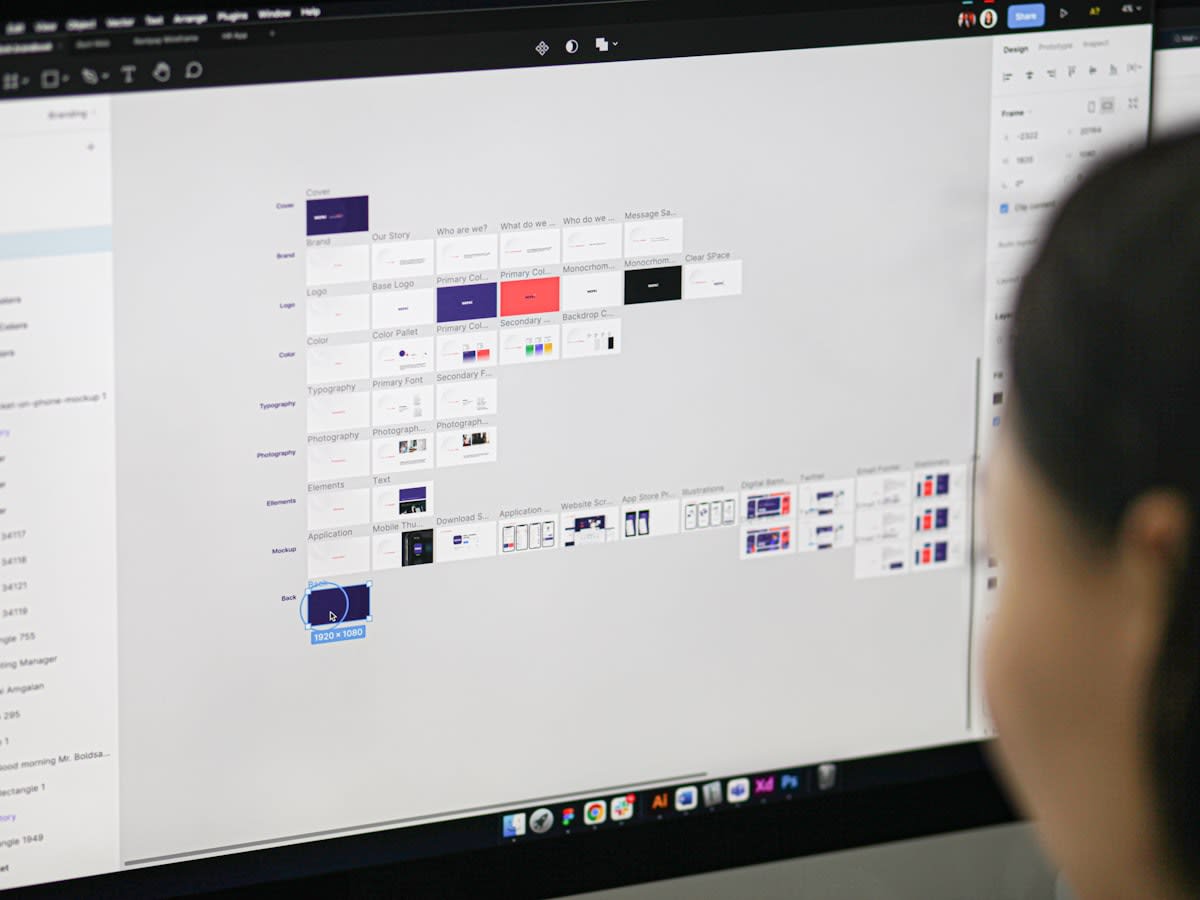
This is a global phenomenon. Whether it is a VFX artist in Tokyo using Houdini 22 to automate rigging or a logistics manager in Rotterdam optimizing a robotic warehouse, the pattern is the same. The value has shifted from the 'output' to the 'system.' If you are still focusing on how to get a better answer from an AI, you are playing a game that ended two years ago. The new game is about how to integrate that AI into a resilient, secure, and repeatable business process.
We must stop asking what the AI can do for us and start asking how the AI changes the structure of our work. When the 'doing' is automated via embedded agents, the only remaining value is the 'deciding.' Judgment, ethics, and strategic direction are the only assets that cannot be reduced to an MCP command. The agents provide the velocity, but the human must provide the vector.
Ultimately, the transition from AI assistants to AI agents is a transition from software as a tool to software as a teammate. It is a volatile, risky, and exhilarating shift that will reward the architects and punish the mere users.