
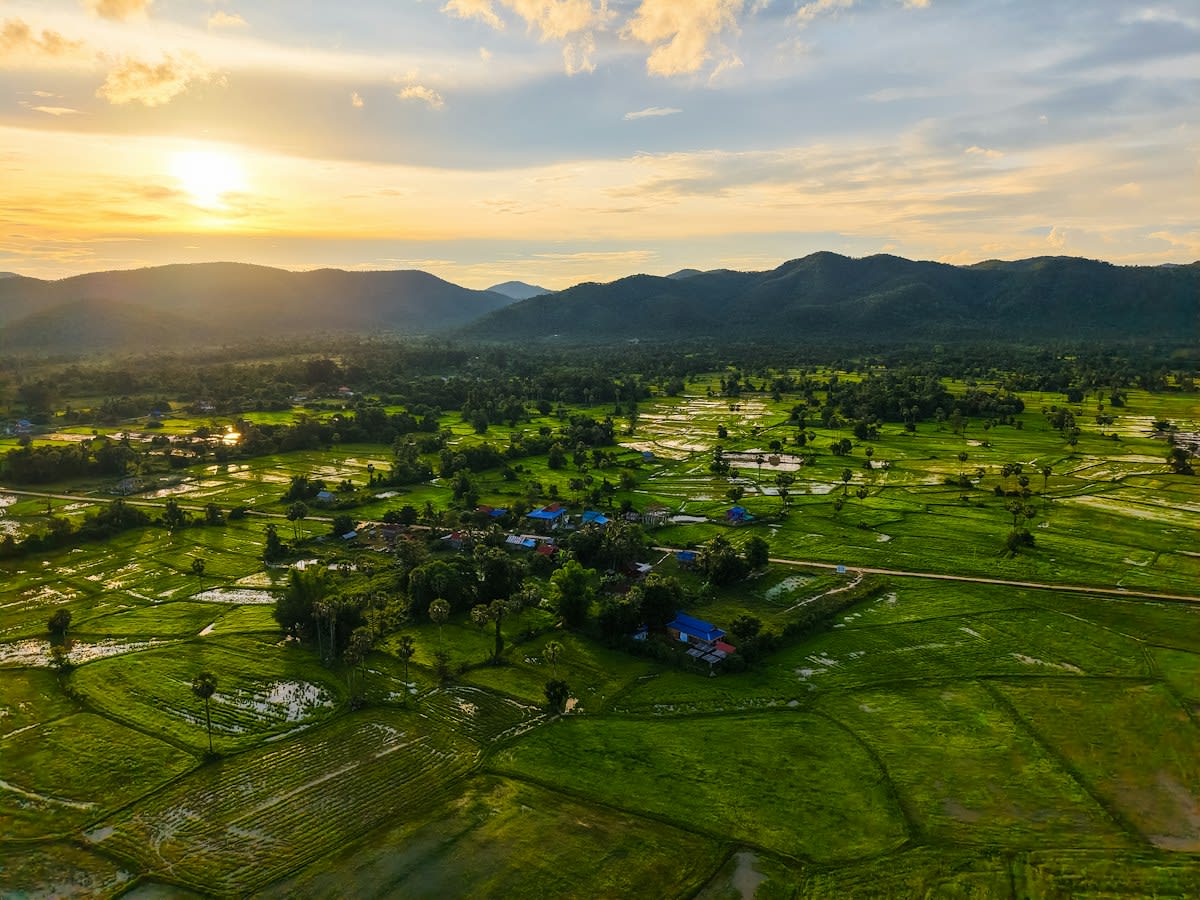
Do you actually believe a silicon-based model understands the specific humidity of a Thai rice paddy? Most precision agriculture tools fail because they assume the land is a static variable. They treat soil like a spreadsheet. Real intelligence happens when the farmer treats the algorithm as a suggestion, not a command. By blending Indigenous knowledge systems (IKS) with AI, practitioners are creating a hybrid intelligence that surfaces missing data points Western science often ignores (Source: Club of Rome, 2026).
Prerequisites for Hybrid Intelligence
Before you attempt to outsmart an algorithm, you need more than just a tablet and a sensor array. You need a foundation in what the Club of Rome calls two-eyed seeing. This is not a vague philosophy. It is a rigorous methodology that harmonizes Western scientific frameworks with Indigenous epistemologies (Source: Club of Rome, 2026). You must possess a deep, empirical understanding of your terrain—grounded in generations of observation—and the willingness to challenge the default metrics provided by software vendors.
- Access to land-based practice data (multi-generational observations).
- Basic precision tools (drones, soil sensors, or automated irrigation).
- A network of local peers to validate multispecies stewardship outcomes.
- Knowledge of local small-processor application hubs to ensure market access (Source: Market.us, 2026).
The Execution: Steps to Outsmart the Algorithm
The goal is not to replace the AI, but to wrap it in a layer of local context. Algorithms are brittle. They break when they encounter biological anomalies that weren't in the training set. To avoid this mechanical failure, you must implement a layered approach to field management.
- Implement Two-Eyed Seeing: Stop relying on a single data stream. Validate AI-driven soil recommendations against traditional land-based practices. If the AI suggests a nitrogen boost but the local flora indicates a different nutrient deficiency, trust the biological indicator. This process recognizes Indigenous knowledge as living and dynamic (Source: Club of Rome, 2026).
- Deploy Physical Algorithmic Buffers: Use color-combined films to manipulate the environment in ways the AI cannot track. For instance, utilize black-and-white longitudinal strip configurations. The white strips allow sunlight to reach the soil for early root development, while black strips suppress weeds and reduce root heat damage (Source: Frontiers, 2026). This physical hack ensures crop survival even if the AI's irrigation timing is slightly off.
- Scale via Small-Processor Hubs: Avoid the trap of large-scale corporate supply chains. Leverage small-processor application hubs, which are currently expanding in Southeast Asia, India, and Latin America (Source: Market.us, 2026). These hubs allow you to maintain control over the value-added process of your crops, such as textured soy protein production, rather than letting an algorithm dictate your price point.
- Integrate Multispecies Literacy: Move beyond yield-per-acre metrics. Adapt your success markers to include emotional and multicultural literacy as core learning outcomes. This involves monitoring the health of non-human life and water systems alongside crop volume (Source: Club of Rome, 2026).
Consider the speed of adoption in neighboring regions. In China's Heilongjiang Province, crop-protection drones jumped from a 3.4 percent adoption rate to 94.3 percent by 2024 (Source: Asia Pacific, 2026). That is an aggressive saturation. When automation moves that fast, the danger is not the technology itself, but the loss of the human eye. The drones handle seeding, fertilizing, and pest control, but they cannot perceive the fray of a changing ecosystem without human intervention.
"Democratizing knowledge and ways of knowing is essential for food sovereignty, agroecology and biocultural diversity."— M. P. Pimbert, Researcher cited in Club of Rome (2018)
The real friction exists in the boardroom, not the field. I have seen the disputes between data scientists and field practitioners. The scientists want clean, standardized data. The farmers know the land is messy. This tension is where the opportunity lies. When you introduce multispecies stewardship into an AI design, you are essentially forcing the machine to account for variables it was designed to ignore. It is a quiet rebellion against the simplification of nature.
Tactical Benchmarks: Automation vs. Indigenous Logic
| Metric | Standard AI Approach | Hybrid Intelligence Approach |
|---|---|---|
| Soil Health | Chemical sensor readings | Two-eyed seeing (Sensors + IKS) |
| Weed Control | Chemical spraying via drone | Black-and-white color-combined films (Source: Frontiers, 2026) |
| Market Access | Global commodity exchange | Small-processor application hubs (Source: Market.us, 2026) |
| Success Indicator | Yield volume | Multispecies literacy (Source: Club of Rome, 2026) |
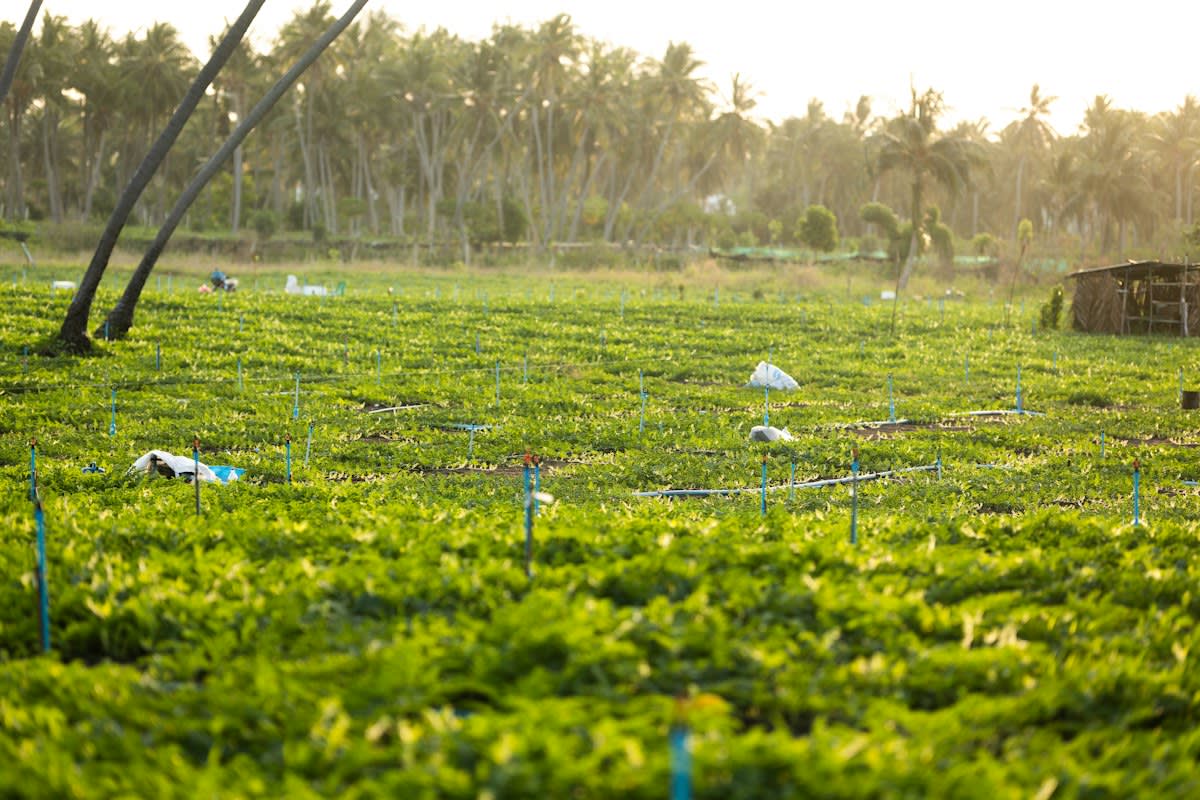
Do not mistake this for a return to the past. It is a forward-leaning integration. We use biodegradable plastics that decline in polymer molar mass when exposed to natural matrices like soil and sand (Source: Frontiers, 2026). We use this chemistry to protect the crop while the AI manages the macro-irrigation. This is how you suture the gap between high-tech efficiency and ecological survival.
Common Pitfalls
The most common failure is the Over-Reliance Trap. This happens when a practitioner stops observing the land because the dashboard says everything is green. Remember that AI design often misses the emotional and relational ethics of land stewardship (Source: Club of Rome, 2026). If you stop walking the rows, you lose the ability to calibrate the machine.
- Ignoring local micro-climates in favor of regional AI averages.
- Using non-biodegradable plastics that leave residual film hazards (Source: Frontiers, 2026).
- Scaling too quickly into global markets before securing local small-processor hubs (Source: Market.us, 2026).
- Treating Indigenous knowledge as a static relic rather than a living, empirical system.
Fact-Check & Accuracy Note
This guide relies on data from the Club of Rome (2026) regarding Indigenous Knowledge Systems, Frontiers (2026) regarding plastic mulching, and Asia Pacific (2026) regarding drone adoption in China. There is ongoing academic debate regarding the scalability of Indigenous-led labs (as seen in Australia and Canada) to diverse Southeast Asian contexts, specifically concerning the differing legal frameworks of land tenure.
Editorial Note
Editorial Note: This guide prioritizes the integration of local knowledge over total automation. The focus is on adaptation and the creation of food sovereignty through a hybrid intelligence model.