
The modern obsession with learning complex skills in half the time is a seductive lie. We are told that with the right 'hack' or the perfect AI-driven curriculum, we can bypass the grueling years of deliberate practice required for true mastery. But this narrative ignores a fundamental biological reality: the struggle is not an obstacle to learning; the struggle is the learning. When we attempt to compress the timeline of skill acquisition through algorithmic shortcuts, we aren't optimizing the brain—we are bypassing the very neural frictions that create lasting expertise.
Consider the current trajectory of human-AI interaction. We see a global rush toward automation, fueled by massive capital injections, such as Meta's plan to raise up to $95 billion in equity to fund its AI-related expansion of data centers and cloud computing (Source: Reuters, 2026). While these investments promise efficiency, they simultaneously build an infrastructure that encourages us to stop thinking. The goal is no longer to help humans master skills faster, but to make the human element redundant in the process of execution.
The Mechanics of Perception and the Myth of Speed
To understand if we can actually 'rewire' for speed, we have to look at how the brain handles competing streams of information. Recent experiments at the University of California, Berkeley, revealed a startling level of agility in the primate brain. Researchers recorded alternating neural patterns in macaques that shifted roughly 15 times per second when the animals were presented with two different faces through anaglyph glasses (Source: UA.NEWS, 2026). This suggests that the hardware for rapid processing exists, but there is a massive difference between the brain's ability to alternate perceptions and the ability to synthesize complex, high-level skills.
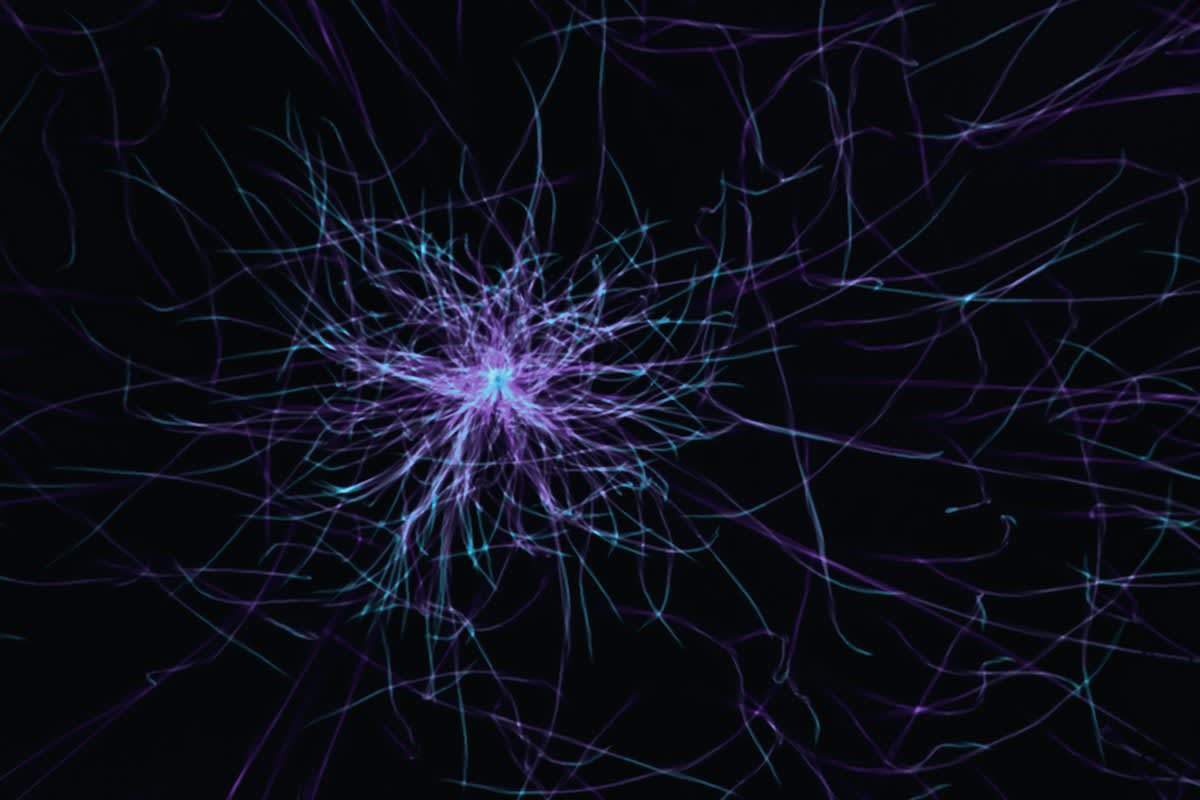
Why does this matter? Because the 'half the time' crowd mistakes processing speed for cognitive depth. The Berkeley study shows that the brain can switch focus rapidly, but conscious perception still dominates the output (Source: UA.NEWS, 2026). Mastery isn't about how fast you can switch between patterns; it is about the strength and stability of the neural networks you build through repetition and failure. When we use AI to skip the failure phase, we are essentially trying to build a skyscraper without a foundation.
"Continuous use of autoflight systems could lead to degradation of the pilot's ability to quickly recover the aircraft from an undesired state."— Federal Aviation Administration, 2013 Safety Alert
This degradation is what academics call 'cognitive surrender.' It is a systemic shift where the practitioner stops engaging with the core logic of their craft and begins to trust the automation implicitly. This isn't a new phenomenon; pilots have been battling this for decades. The risk is that even the most seasoned experts can experience deskilling when they repeatedly outsource cognitive tasks to a system that provides the 'correct' answer without requiring the user to understand the 'why' (Source: Business Insider, 2026).
As a long-time observer of professional development, I've seen this friction play out in real-time. In the boardrooms of global firms, there is a heated, often invisible debate between the 'efficiency' camp and the 'depth' camp. The efficiency camp wants AI agents to handle all first-draft thinking to save time. The depth camp—the ones who have been in the trenches for twenty years—knows that if the junior associates never struggle through the first draft, they will never develop the intuition required to spot a subtle, catastrophic error in the final product. We are effectively breeding a generation of supervisors who cannot actually do the work they are supervising.
The Environmental Sculpting of Intelligence
The plasticity of the brain is not a magic switch we can flip in adulthood; it is a lifelong interaction between genetics and environment. In children, this is most evident in the development of the 'reading fluency network.' Brain development researchers use MRI and EEG to show how exposure to environmental noise—ranging from digital screens to the trauma of war—shapes how children think, read, and attend to tasks (Source: Ynetnews, 2026). This proves that the environment does not just support learning; it physically carves the architecture of the brain.
If the environment of a child shapes their reading fluency, what does an environment of total AI dependence do to the adult brain? We are creating a world where the 'environmental noise' is an algorithmic feed that provides answers before the question is even fully formed. This doesn't rewire the brain for mastery; it rewires the brain for dependency. We are moving away from the 'reading fluency network' toward a 'prompting fluency network,' where the skill is no longer in the synthesis of information, but in the ability to query a black box.
| Learning Dimension | Traditional Deliberate Practice | AI-Assisted 'Fast-Tracking' |
|---|---|---|
| Neural Engagement | High (Error-correction loops) | Low (Validation loops) |
| Skill Retention | Long-term (Structural changes) | Short-term (Dependency-based) |
| Cognitive State | Active Synthesis | Cognitive Surrender |
| Risk Profile | Slow initial progress | Rapid deskilling of experts |
The data on human reliance is staggering. An experiment involving 72 participants found that roughly 90% to 95% of people either relied on AI to generate answers or used it to validate their existing assumptions, rather than using the tool to challenge and deepen their thinking (Source: Business Insider, 2026). This is the opposite of mastery. Mastery requires the cognitive dissonance of being wrong and the mental effort of finding the correct path. When 95% of us use AI as a validation tool, we aren't mastering skills; we are reinforcing our own biases at high speed.
The Paradox of Recursive Improvement
While we struggle with our own cognitive decline, the systems we've built are attempting the opposite. The industry is chasing 'Recursive Self-Improvement' (RSI), where AI systems could potentially build better versions of themselves without human intervention. However, even the leaders of this movement are cautious. Sundar Pichai, CEO of Google, has stated that AI self-improvement remains in its early stages and that current systems are not yet fully autonomous in their model-building capabilities (Source: Crypto Briefing, 2026).

There is a profound irony here. We are investing billions into making AI autonomous (Source: Reuters, 2026), while simultaneously making ourselves more dependent on those very systems. If we continue to outsource our thinking to agents that are still in the 'early stages' of their own self-improvement, we are essentially handing the keys of our intellectual development to an unfinished product. We aren't rewiring our brains to be faster; we are atrophy-ing the circuits that allow us to function without a digital crutch.
Can we rewire our brains to master skills in half the time? The biological evidence suggests no. We can process information faster, as seen in the Berkeley macaque study, but mastery is a structural change, not a speed change. The path to resilience and true intelligence is not found in the removal of friction, but in the intentional pursuit of it. To master a complex skill, you must be willing to be slow, to be wrong, and to resist the urge to surrender your cognition to the machine.
Fact-Check & Accuracy Note
The claims regarding neural patterns in macaques are based on a preprint from UC Berkeley (Source: UA.NEWS, 2026). The statistics on AI reliance (90-95%) are attributed to research by Vivienne Ming (Source: Business Insider, 2026). The concept of 'cognitive surrender' is developed by Steven Shaw of King's College London (Source: Business Insider, 2026). Debate continues on the extent to which AI can act as a scaffold for learning versus a replacement for thought.