
Compute moats require silicon. 80% of enterprise SSD bit demand grew YoY (Source: TrendForce, 2026). This growth reflects a desperate scramble for storage that can keep pace with massive AI inference workloads. In the current environment, a moat is not a software feature but a physical stockpile of lithography tools and high-bandwidth memory. Entities that fail to secure hardware now face a future of stunted production ceilings and obsolete architectures.
Prerequisites for Compute Sovereignty
Building a compute moat demands more than just capital; it requires a specific set of industrial assets. First, you need access to Deep Ultraviolet (DUV) immersion lithography, specifically systems like the NXT:1980Di, which can produce 7nm processors even without sanctioned Extreme Ultraviolet (EUV) tools (Source: Tom's Hardware, 2026). Second, a robust pipeline for DRAM and NAND memory is essential to avoid the price volatility seen in Q4, where DRAM prices climbed 10-15% and NAND rose 15-20% (Source: TrendForce, 2026). Finally, a massive, curated dataset is required to ensure that the hardware is not wasted on low-quality training tokens.
Tactical Steps to Establish a Hardware Moat
- Aggressive Stockpiling: Acquire lithography tools ahead of regulatory deadlines to ensure long-term production capacity.
- Memory Buffer Expansion: Secure long-term contracts for DRAM and NAND to hedge against QoQ price spikes.
- Architectural Optimization: Implement Mixture-of-Experts (MoE) models to reduce active parameter counts and lower compute overhead.
- Data Curation: Filter raw internet tokens aggressively to increase the signal-to-noise ratio of training sets.
Aggressive stockpiling is the primary defense against geopolitical instability. China demonstrated this by spending over $13 billion to stockpile ASML DUV tools between 2024 and 2025 (Source: TrendForce, 2026). This strategy ensured that China accounted for 41% of ASML's net system sales by shipment destination in 2024 and 33% in 2025 (Source: TrendForce, 2026). By securing these machines early, a state or corporation can maintain a production ceiling that survives the sudden imposition of export controls.
| Year/Period | China's Share of ASML Net Sales | Key Driver |
|---|---|---|
| 2024 | 41% | Aggressive DUV Stockpiling |
| 2025 | 33% | Continued Advanced Chip Push |
| Q1 2026 | 19% | Regulatory Tightening |
| Q2 2026 | 14% | Export Control Impact |
Securing the memory layer is the next vital phase. AI inference demand is broadening beyond High Bandwidth Memory (HBM), driving a massive buildout across GPUs and networking (Source: TrendForce, 2026). This has led to Q2 DRAM revenue jumping 59.5% QoQ to $154.7 billion (Source: TrendForce, 2026). Without a stable memory supply, the most advanced GPUs become bottlenecks, unable to feed data to the processing cores fast enough to maintain efficiency.
Beyond raw hardware, the moat is strengthened through architectural efficiency. When compute is limited, the goal is to maximize the utility of every active parameter. Reflection AI's Beam model provides a blueprint for this approach, utilizing a 501B open-weight MoE model that only requires 23B active parameters for coding and agentic workloads (Source: MarkTechPost, 2026). This allows for high-performance output without requiring the massive power draw of a dense model.
"Beam was pretrained on 23.8 trillion tokens from the web, public sources and proprietary licensed datasets. Reflection team states that its curation removed about 95% of raw internet tokens."— Reflection AI Technical Documentation, 2026
This focus on data curation is as vital as the hardware itself. By keeping 1.8 trillion high-quality tokens that conventional filters would have discarded, Reflection AI creates a moat of intelligence that does not rely solely on the number of GPUs (Source: MarkTechPost, 2026). This proves that a refined dataset acts as a force multiplier for existing compute resources.
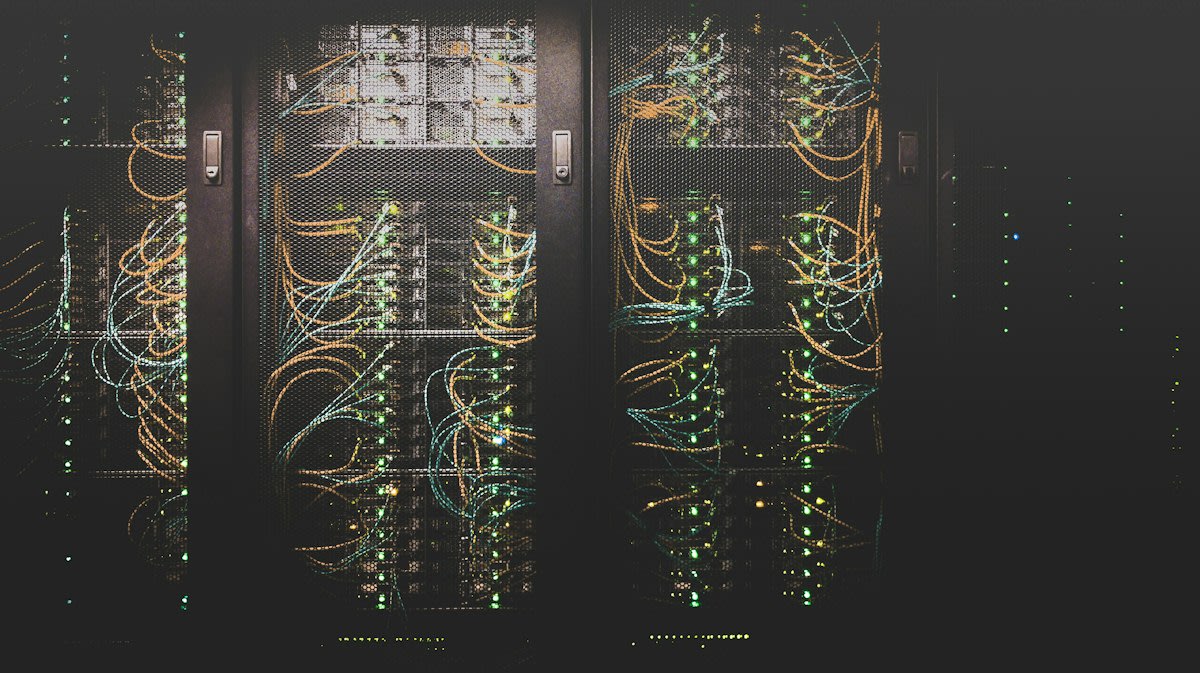
In a concrete-raw facility in Mumbai, the air is copper-scented and thick with the hum of cooling fans. Engineers here deal with the grease-slicked reality of maintaining aging lithography tools while fighting the friction of delayed parts. They witness the double-ordering phenomenon firsthand, where procurement officers buy twice the needed capacity because they fear the next shipment will be blocked by a diplomatic cable. This ground-level chaos is the true cost of attempting to build a moat in a fragmented global market.
Failure Point: The 2027 Ceiling
The most dangerous failure point for any compute moat is the theoretical production ceiling. For China, the current DUV fleet could support the annual production of 434 million AI chips equivalent to NVIDIA's H100 by 2035 (Source: TrendForce, 2026). However, if new imports are halted in 2027, that ceiling crashes to 153 million units annually by 2035 (Source: TrendForce, 2026). This 64% drop in potential output represents a catastrophic failure of the moat, turning a strategic advantage into a legacy system.
Common Pitfalls
- Over-reliance on stockpiling without innovating architectural efficiency (e.g., MoE).
- Ignoring the 'double-ordering' trap where artificial demand inflates costs without increasing end-use capacity.
- Failing to curate training data, leading to 'garbage in, garbage out' despite having massive compute.
- Underestimating the volatility of memory pricing, specifically the 10-20% QoQ swings in DRAM and NAND.
Editorial Note
This guide focuses on the physical and architectural requirements of compute moats. It assumes the reader has the capital necessary to engage in the high-stakes procurement of ASML-grade hardware and high-bandwidth memory.
Fact-Check & Accuracy Note
All statistics regarding ASML sales and chip production ceilings are attributed to TrendForce (2026) and Tom's Hardware (2026). Model specifications for Beam are sourced from MarkTechPost (2026). All data reflects reported figures as of October 2026.