Henri Kagan, Kenso Soai win Nobel Prize in Chemistry for solving ‘mirror image’ mystery
Source Entity
The Indian Express
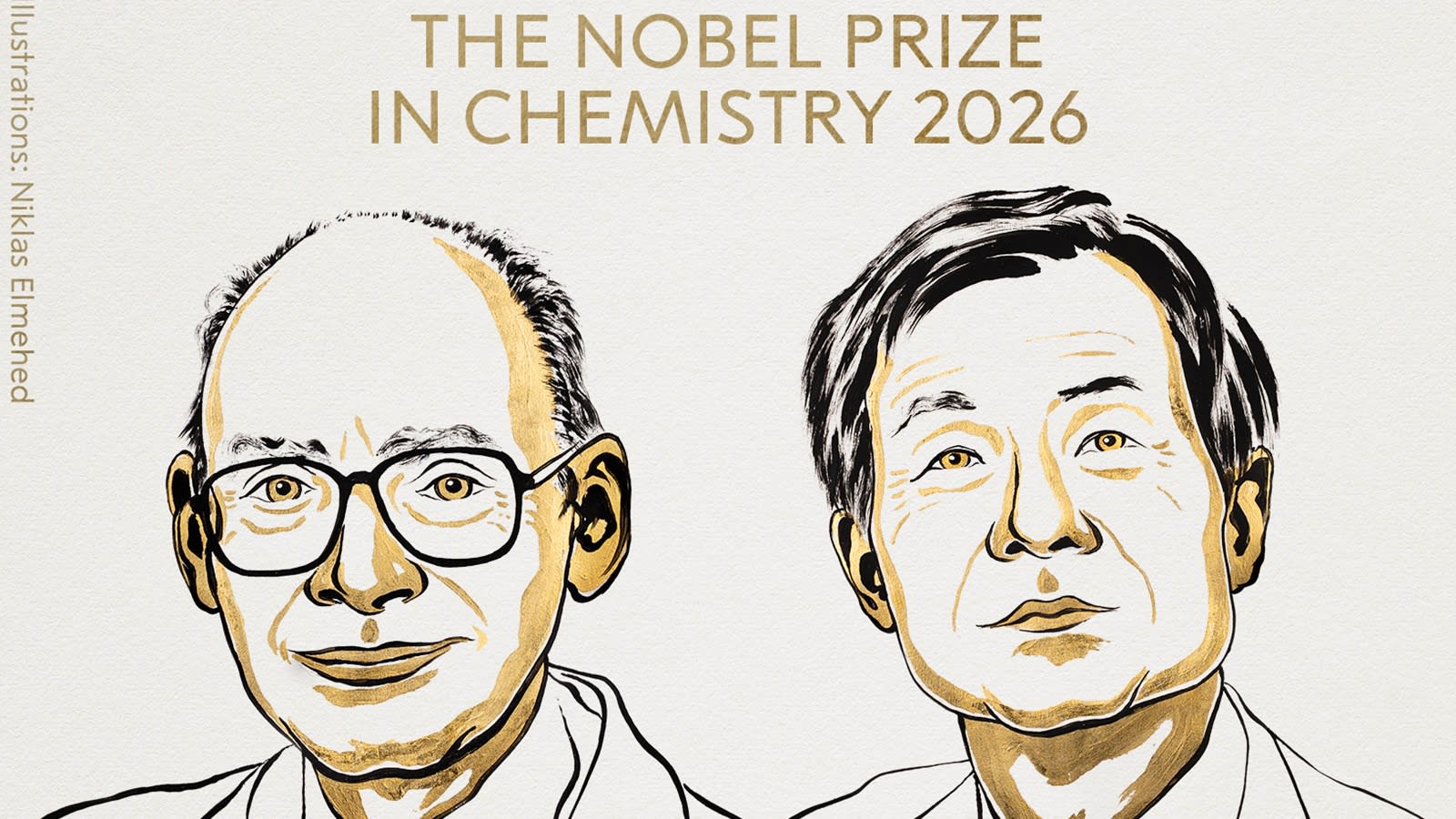
The 2026 Nobel Prize in Chemistry has been awarded to Henri B. Kagan and Kenso Soai. They are recognized for their groundbreaking discoveries regarding non-linear effects and autocatalysis in asymmetric organic synthesis, which explain how biological homochirality emerges.
The 2026 Nobel Prize in Chemistry: Solving the Mystery of Life's Asymmetry
On October 7, 2026, the Royal Swedish Academy of Sciences announced the Nobel Prize in Chemistry, awarded to Henri B. Kagan of Université Paris-Sud and Kenso Soai of the Tokyo University of Science. This prestigious recognition celebrates their pioneering work on the mechanisms behind asymmetric organic synthesis, specifically the discovery of non-linear effects and autocatalysis.
The Enigma of Molecular Chirality
At the heart of this discovery lies the concept of chirality, or 'handedness,' in molecules. Many essential biological building blocks, such as amino acids, exist in two forms that are mirror images of one another, much like a person’s left and right hands. Despite this, living organisms are highly selective, almost exclusively utilizing only one of these mirror images. For decades, the origins of this biological homochirality remained one of chemistry's most profound mysteries, as standard chemical reactions typically produce equal mixtures of both forms.
Breakthroughs in Asymmetric Synthesis
Henri B. Kagan and Kenso Soai addressed this fundamental question by demonstrating how chemical systems can break symmetry. Through their research into non-linear effects and autocatalysis, they showed how a small initial bias in molecular orientation could be amplified to produce a dominant mirror image. This 'choosing' of a mirror image is a cornerstone of modern chemical synthesis, providing a bridge between simple inanimate chemical reactions and the highly selective processes found in biology.
The Impact of Autocatalysis
Autocatalysis—a process where a product of a reaction acts as a catalyst for its own production—was instrumental in the laureates' findings. By manipulating these feedback loops, Kagan and Soai proved that chemical environments could be engineered to favor one specific enantiomer. This discovery has profound implications for pharmaceutical manufacturing and material science, where the specific 'handedness' of a molecule can determine its biological activity, safety, and efficacy.
Historical and Global Significance
This award continues the legacy of Alfred Nobel, whose will established the prizes to honor those who have provided the 'greatest benefit to humankind.' By solving the mystery of how life achieved its specific molecular structure, Kagan and Soai have expanded the boundaries of synthetic chemistry. The recognition of 95-year-old Kenso Soai highlights the enduring nature of this research, which has spanned decades of dedicated study in both France and Japan.
Future Trends in Chemistry
The implications of this work are far-reaching. As we look toward the future, the ability to control molecular asymmetry with such precision will likely lead to more sustainable and efficient synthesis methods in drug development. By understanding the natural mechanisms of non-linear amplification, scientists are now better equipped to design catalysts that mimic nature’s own selectivity, potentially revolutionizing how we produce complex, life-saving medicinal compounds.
Multiple Citing Sources