Florida scientists use AI to predict when Burmese pythons are most likely to be caught
Source Entity
TOI TECH DESK
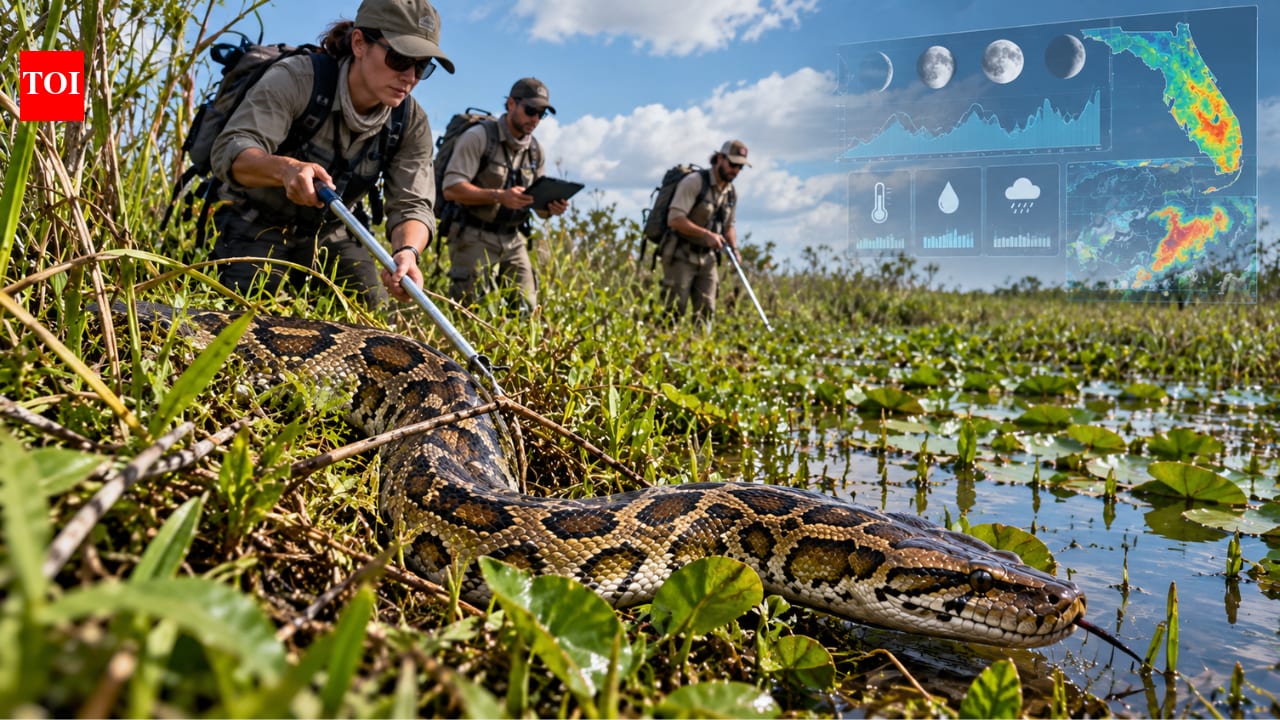
University of Florida researchers have developed a Weighted Removal Index using machine learning to optimize Burmese python capture. This AI-driven approach targets high-impact reproductive females based on environmental and lunar data to more effectively curb the invasive species' population growth.
Leveraging Artificial Intelligence Against Invasive Species
In a significant development for ecological management in South Florida, scientists from the University of Florida have pioneered a new methodology to combat the proliferation of Burmese pythons. By integrating machine learning with demographic and environmental data, researchers have developed a 'Weighted Removal Index.' This tool is designed to move beyond simple capture counts, instead prioritizing the removal of snakes that exert the greatest pressure on the local ecosystem.
The Strategic Importance of Targeting Reproductive Females
The core innovation of this research lies in its focus on high-impact individuals. Burmese pythons have devastated native wildlife populations in the Everglades, and biological data suggests that large, reproductive females play an outsized role in the species' rapid expansion. By assigning greater weight to these individuals in removal efforts, the index ensures that conservation resources are directed toward the snakes most capable of driving future population growth.
Environmental Factors and Predictive Modeling
Predictive success in the field is rarely linear, as it is heavily influenced by external variables. The researchers incorporated complex datasets, including specific weather patterns and moon phases, to determine the optimal conditions for survey success. By identifying the environmental triggers that dictate snake activity, the AI model allows teams to deploy resources when detection probabilities are highest, thereby maximizing the efficiency of every search operation conducted in the field.
Testing the Model in South Florida
The unique, often harsh environment of South Florida serves as the real-world proving ground for this technology. Because the region offers a vast and challenging terrain for tracking elusive reptiles, the application of machine learning provides a necessary analytical edge. The data gathered from these specific regional surveys have been instrumental in refining the model, transforming raw environmental observations into actionable intelligence for wildlife managers.
Measuring Success Beyond Capture Totals
Historically, the success of invasive species management has often been measured simply by the number of animals removed. This new approach shifts the paradigm toward a more nuanced metric of 'survey value.' By focusing on the biological impact of each removal rather than just the total headcount, scientists can now quantify the long-term effectiveness of their interventions. This shift is critical for sustainable, data-driven ecological restoration.
Future Implications for Conservation
The integration of AI into wildlife management represents a broader trend in environmental science. As invasive species continue to threaten biodiversity globally, the ability to predict behavior and prioritize high-impact targets will become an essential component of the conservationist's toolkit. This study not only offers a pathway to better manage the python crisis in Florida but also provides a scalable framework that could be applied to other invasive species management programs worldwide.