Rewilding great Indian bustards: The project and the challenges ahead
Source Entity
Nikhil Ghanekar
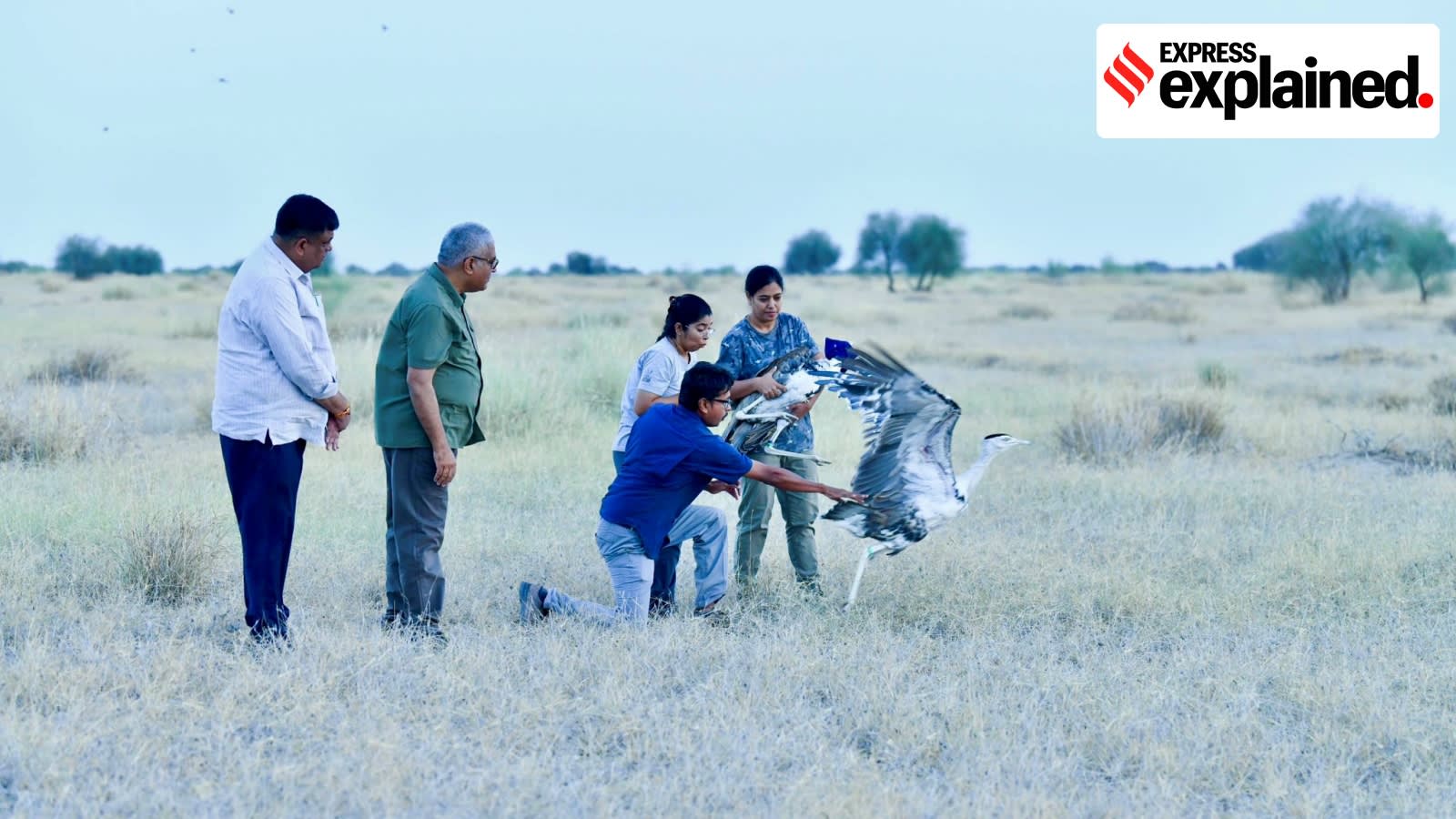
Conservationists have achieved a milestone by releasing two captive-bred Great Indian Bustards into Rajasthan's Desert National Park. This pilot project marks a critical step in preventing the extinction of the critically endangered species.
A New Chapter for the Great Indian Bustard
On October 4, a significant milestone was reached in the ongoing battle to save the Great Indian Bustard (GIB) from the brink of extinction. Two captive-bred male GIBs were released into the wild within Rajasthan’s Desert National Park, near Jaisalmer. This pilot release represents the first time captive-reared birds have been introduced back into their natural habitat, marking a pivotal shift in the collaborative 'Project GIB.'
The Collaborative Framework of Project GIB
The initiative is a multi-stakeholder effort involving the Indian Central government, the Wildlife Institute of India, and the state governments of Rajasthan and Gujarat. By pooling resources and expertise, these entities are attempting to reverse the population decline of a species that once thrived across vast stretches of the Indian subcontinent. This collaboration is essential, as the GIB faces threats that span regional boundaries, requiring a unified policy approach to habitat preservation and species management.
Historical Decline and Ecological Significance
The Great Indian Bustard is a large, ground-dwelling bird historically found in the savannahs, grasslands, and deserts of India. Its range was once vast, covering 11 states from Haryana in the north to the southern reaches of the country during the late 19th and early 20th centuries. The dramatic reduction in their population and range is a consequence of habitat loss, fragmentation, and anthropogenic disturbances, which have restricted the species to a few isolated pockets.
The Science of Rewilding
Rewilding is a complex conservation strategy that goes beyond simple protection; it involves active intervention to restore a species' presence in the wild. For the GIB, this means ensuring that captive-bred individuals possess the necessary survival skills—such as foraging, predator avoidance, and social integration—before being released. The success of these two males will provide researchers with critical data regarding their ability to adapt to the harsh environment of the Thar Desert.
Challenges and Future Implications
Despite the success of the October 4 release, the project faces significant hurdles. The GIB’s reliance on open grasslands makes them particularly vulnerable to infrastructure development, such as power lines and wind farms, which have been cited as major threats to the species. Future efforts will likely focus on mitigating these risks while scaling up captive breeding operations to ensure long-term genetic diversity and population stability.
Conclusion
The release of these two birds is more than a conservation victory; it is a test case for the survival of one of India's most iconic avian species. By integrating captive breeding with habitat restoration, the stakeholders of Project GIB are charting a course that could serve as a model for other critically endangered species. While the road to recovery remains long and fraught with environmental challenges, this milestone offers a glimmer of hope for the future of the Great Indian Bustard.