Karl Deisseroth once wanted to be a writer. He went on to win the Nobel Prize in Medicine
Source Entity
Latest News: Todays Latest News Headlines from India & World | Hindustan Times | Hindustan Times
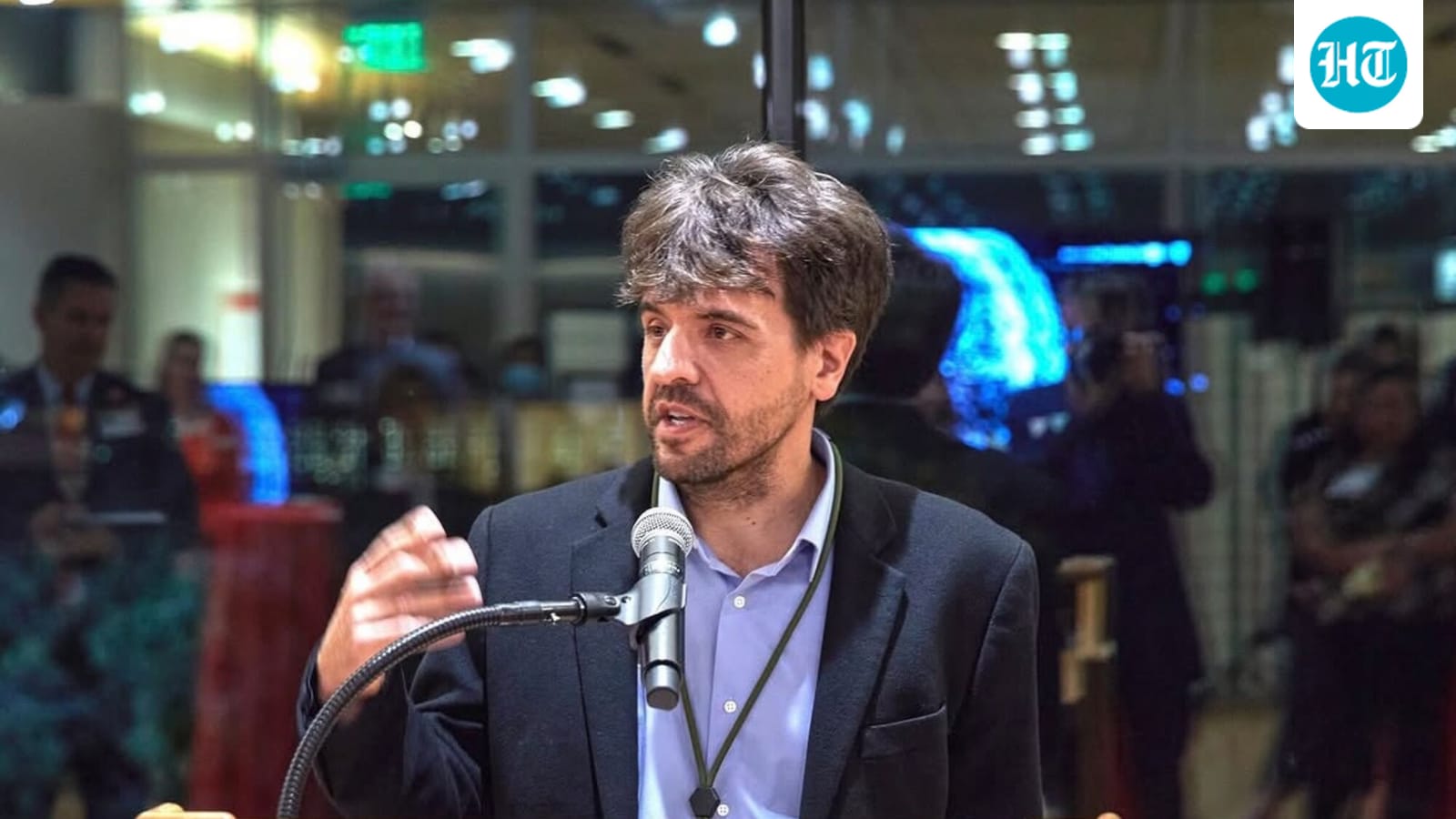
Stanford neuroscientist Karl Deisseroth has been awarded the 2026 Nobel Prize in Medicine alongside Peter Hegemann and Georg Nagel. Their groundbreaking work in optogenetics enables the precise control of nerve cells using light, revolutionizing neurological research.
The Scientific Odyssey of Karl Deisseroth
From Literary Aspirations to Scientific Breakthroughs
Karl Deisseroth, a distinguished Stanford neuroscientist, has been awarded the 2026 Nobel Prize in Medicine, a recognition of his pivotal contributions to the field of optogenetics. Interestingly, Deisseroth’s path to the Nobel stage was not linear; he famously harbored dreams of becoming a writer, a passion he once described as his “first love.” This intersection of creative storytelling and rigorous scientific inquiry suggests that his ability to synthesize complex biological systems might be rooted in the same curiosity that originally drew him toward literature.
The Birth of Optogenetics
Deisseroth shares this prestigious honor with German scientists Peter Hegemann and Georg Nagel. Together, their collaborative efforts birthed the field of optogenetics, a revolutionary technique that allows researchers to manipulate the activity of specific nerve cells using light. By integrating light-sensitive proteins into neurons, scientists gained the unprecedented ability to turn cells on or off with high precision, effectively providing a toolkit to map the brain's complex circuitry in real-time.
A Foundation in Science
Born in Boston in 1971, Deisseroth was raised in an environment saturated with scientific inquiry. His father, a physician and professor, and his mother, a high school chemistry teacher, provided a domestic framework that prioritized academic exploration. This early exposure to the principles of medicine and chemistry served as the bedrock for his future career, even as he balanced these influences with his burgeoning interest in the narrative arts.
Broader Implications for Neuroscience
The development of optogenetics has fundamentally altered how we understand the brain. Before this technology, neuroscientists relied on less precise methods—such as electrical stimulation or pharmacological agents—that often affected entire regions of the brain rather than specific neuronal populations. Optogenetics removed these barriers, allowing for the precise interrogation of neural pathways involved in behaviors, memories, and neurological disorders. The ability to control neural circuits with light has paved the way for potential future therapies for conditions like Parkinson’s disease, epilepsy, and depression.
Future Trends in Neurological Research
As optogenetics continues to evolve, the scientific community expects to see even more refined applications, including the potential for human clinical trials using gene therapy approaches to deliver light-sensitive proteins. The 2026 Nobel Prize serves as both a validation of the past two decades of work and a springboard for next-generation neuro-engineering. Deisseroth’s journey highlights a critical trend in modern science: the necessity of interdisciplinary approaches, where skills in observation and communication are as vital as technical expertise in the laboratory.
Conclusion
Karl Deisseroth’s achievement is a testament to the power of curiosity-driven research. By bridging the gap between fundamental biological discovery and applied technology, he and his colleagues have provided the scientific community with a powerful new lens through which to view the brain. His story reminds us that the most significant scientific leaps often come from those who bring diverse perspectives to the bench, ultimately changing our understanding of human cognition and behavior.
Verification Required?