France’s Henri Kagan, Japan’s Kenso Soai win 2026 Nobel Chemistry Prize
Source Entity
RAJEEV SINGH
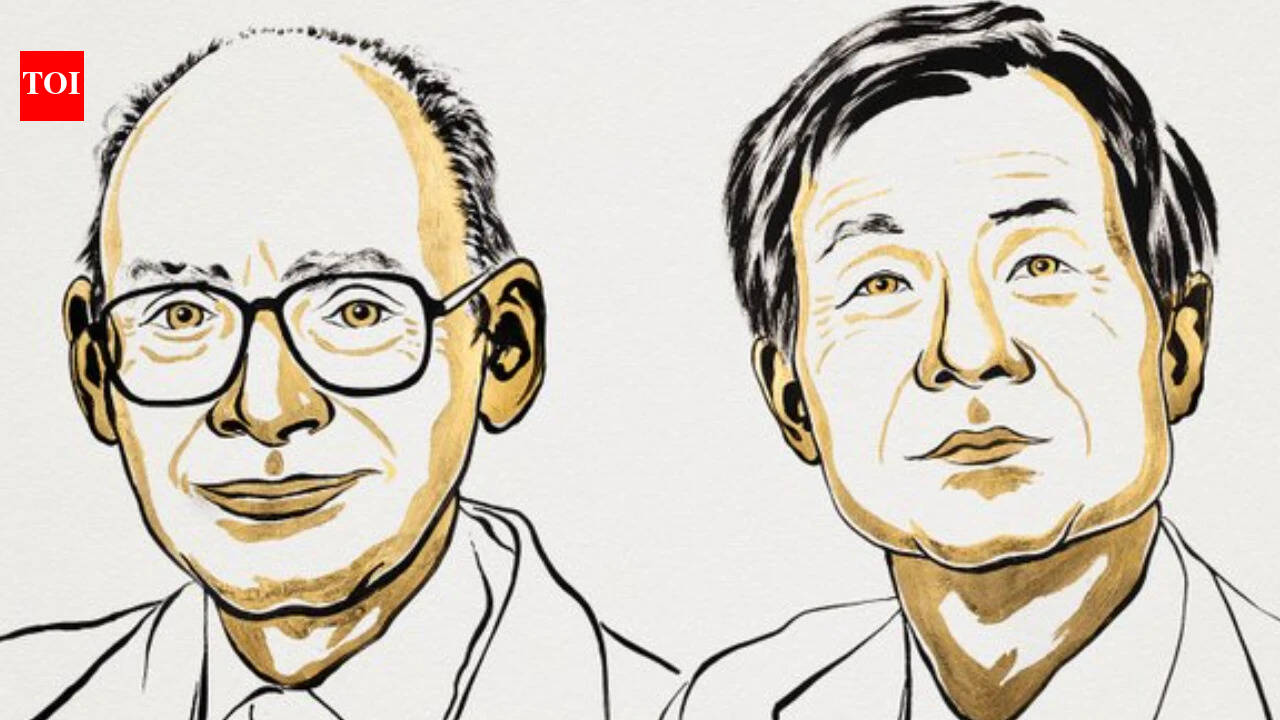
Henri B. Kagan and Kenso Soai have been awarded the 2026 Nobel Prize in Chemistry for their groundbreaking work on non-linear effects and autocatalysis in asymmetric organic synthesis. Their research provides a vital explanation for how biological asymmetry, specifically the preference for one mirror-image variant of molecules, emerged in living organisms.
Unlocking the Origins of Chirality: The 2026 Nobel Prize in Chemistry
The Royal Swedish Academy of Sciences has awarded the 2026 Nobel Prize in Chemistry to Henri B. Kagan of Université Paris-Sud and Kenso Soai of the Tokyo University of Science. This prestigious recognition celebrates their fundamental contributions to the understanding of non-linear effects and autocatalysis within the field of asymmetric organic synthesis. By addressing the long-standing mystery of molecular "handedness," or chirality, these scientists have provided a definitive explanation for one of the most profound puzzles in biochemistry.
The Mystery of Molecular Mirror Images
At the heart of this discovery is the concept of chirality, where molecules exist as two mirror-image variants, much like a person’s left and right hands. In the natural world, biological systems are famously selective; for example, living organisms almost exclusively utilize one specific mirror image of amino acids over the other. For decades, chemists struggled to understand how this chemical asymmetry emerged from a chaotic, non-asymmetric primordial soup. Kagan and Soai’s work identifies the mechanisms—specifically autocatalysis and non-linear effects—that allowed nature to "choose" a specific mirror image, setting the stage for the evolution of life as we know it.
Autocatalysis and Non-Linear Effects
Autocatalysis refers to a process where the product of a chemical reaction acts as a catalyst for its own production. When paired with non-linear effects, this mechanism allows a small initial imbalance of mirror-image molecules to be amplified exponentially. Henri B. Kagan’s pioneering work in asymmetric synthesis laid the foundational theory, while Kenso Soai’s experimental breakthroughs demonstrated these effects in practical laboratory settings. Together, their research proves that once a slight preference for one mirror image is established, the system naturally reinforces that bias, leading to the homochirality observed in all living cells.
Broader Implications for Science and Medicine
The implications of this research extend far beyond theoretical chemistry. Asymmetric synthesis is a cornerstone of modern pharmaceutical development. Because the two mirror images of a molecule—known as enantiomers—can have vastly different effects on the human body, the ability to selectively produce one form is essential for safety and efficacy. Understanding how to control these reactions through the principles discovered by Kagan and Soai allows chemists to design more effective drugs, reduce toxic side effects, and create complex materials with precise structural properties.
Historical Context and Legacy
Established by the will of Alfred Nobel, the Nobel Prize in Chemistry aims to honor those who provide the "greatest benefit to humankind." The work of Kagan and Soai fits squarely into this tradition by solving a fundamental mystery of existence. Their research bridges the gap between simple organic chemistry and the complex biological machinery that defines life. As we look toward the future, the mechanisms they elucidated will remain central to synthetic chemistry, providing a roadmap for future scientists to manipulate molecular structures with unprecedented control and precision.