New process helps remove toxins, pick rare earth metals from wastewater
Source Entity
Ritu Sharma
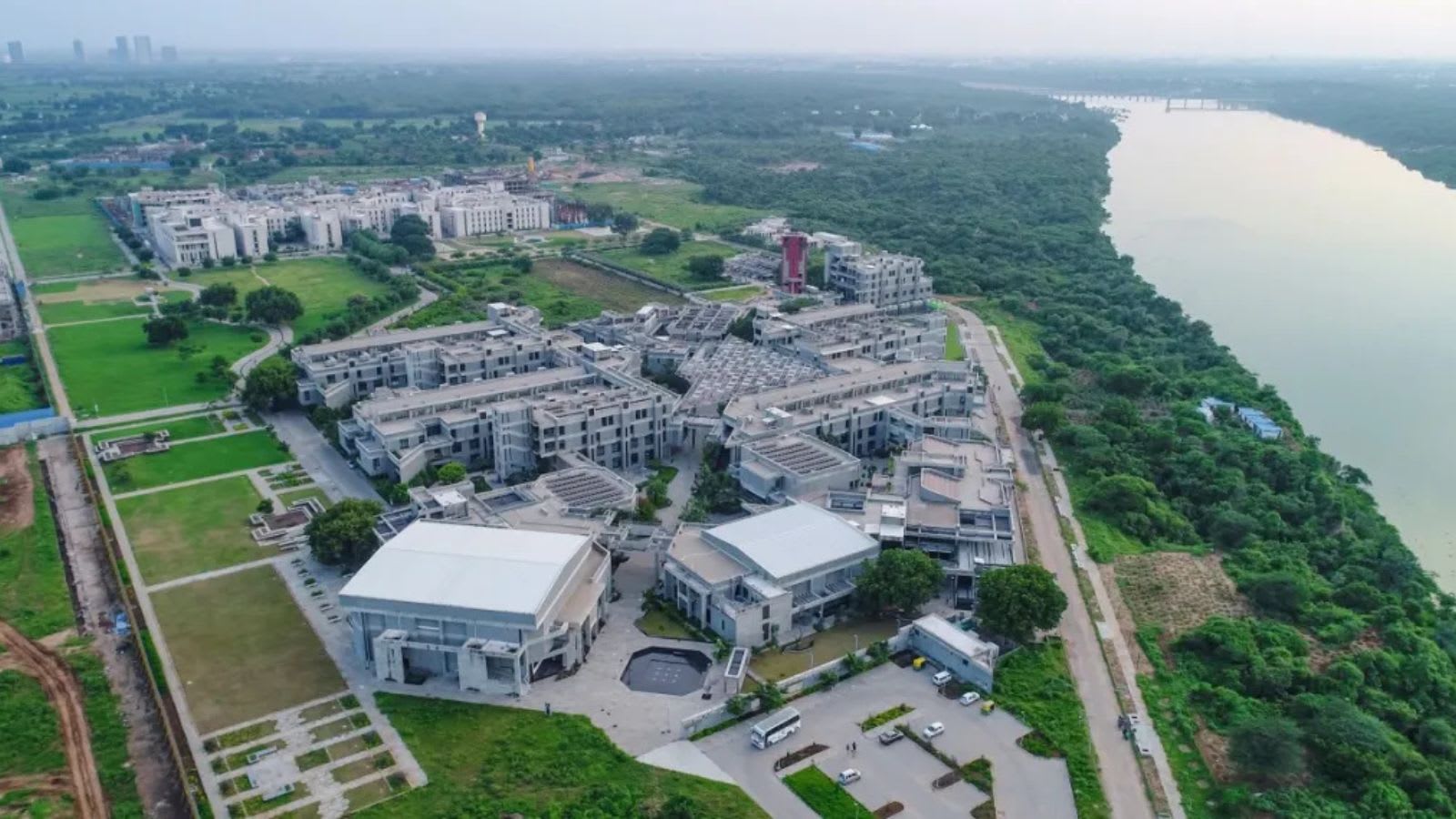
Researchers from IIT Gandhinagar, Cambridge, and Birmingham have developed a new method using metal-organic frameworks to extract rare earth elements from wastewater. This innovation addresses both toxic contamination and the urgent need for sustainable recovery of critical materials.
A Breakthrough in Sustainable Resource Recovery
In a significant advancement for environmental engineering and resource management, a collaborative research team from the Indian Institute of Technology, Gandhinagar (IITGN), the University of Cambridge, and the University of Birmingham has unveiled a novel protocol for water treatment. As detailed in the journal Nature Protocols, this research introduces a method to simultaneously capture toxic metals and recover valuable rare earth elements (REEs) from contaminated wastewater. This dual-action approach represents a critical pivot toward a circular economy, where industrial waste is treated not merely as a liability, but as a secondary source of high-value raw materials.
The Role of Metal-Organic Frameworks (MOFs)
The cornerstone of this innovation is the utilization of metal-organic frameworks (MOFs). These are highly porous, crystalline materials that can be engineered at the molecular level to have specific surface areas and chemical affinities. By leveraging the unique structural properties of MOFs, the research team has created a filter capable of selectively binding to specific metallic ions. This precision is essential, as traditional wastewater treatment processes often struggle to differentiate between common pollutants and trace amounts of rare earth elements, which are present in extremely low concentrations in typical waste streams.
Addressing the E-Waste Lifecycle
Professor Superb Misra, the Jibaben Patel Chair Professor at IITGN, highlighted the everyday origins of this problem: the discarded electronics that permeate our waste streams. Items like broken camera lenses, earphones, and obsolete smartphones are rich in REEs—metals vital for modern technology, including high-performance magnets, superconductors, optical devices, and advanced battery systems. Currently, these elements are frequently lost when electronic waste leaches into water systems, making their extraction both technically challenging and economically prohibitive.
Broader Implications for Global Supply Chains
Rare earth elements are the backbone of the green energy transition, yet their extraction from traditional mines is often environmentally destructive and geographically concentrated. By developing a method to recover these elements from wastewater, the researchers are offering a potential solution to supply chain volatility. If this protocol can be scaled effectively, it would reduce the global reliance on primary mining, providing a localized, secondary source of materials for the semiconductor and renewable energy sectors.
Environmental and Economic Synergy
Beyond the recovery of valuable materials, the process serves a vital environmental function by remediating toxic heavy metals from water supplies. Industrial wastewater often contains hazardous pollutants that pose significant risks to human health and ecosystems. By integrating detoxification with resource recovery, this method lowers the overall cost of water treatment. The ability to offset the operational expenses of wastewater facilities through the sale of recovered REEs provides a compelling economic incentive for industries to adopt greener disposal practices.
Future Trends and Scalability
As this technology moves from the laboratory to industrial pilot programs, the focus will likely shift toward the durability and reusability of the MOFs used in the process. The research published in Nature Protocols serves as a foundational guide for how these materials can be deployed in real-world scenarios. Looking ahead, the integration of such advanced filtration systems into urban water management infrastructure could mark a paradigm shift in how we conceive of 'waste,' transforming municipal and industrial discharge into a harvestable resource for the next generation of technology.