Francis Halzen Wins Physics Nobel For Astrophysical Neutrinos' Discovery
Source Entity
NDTV News Search Records Found 1000
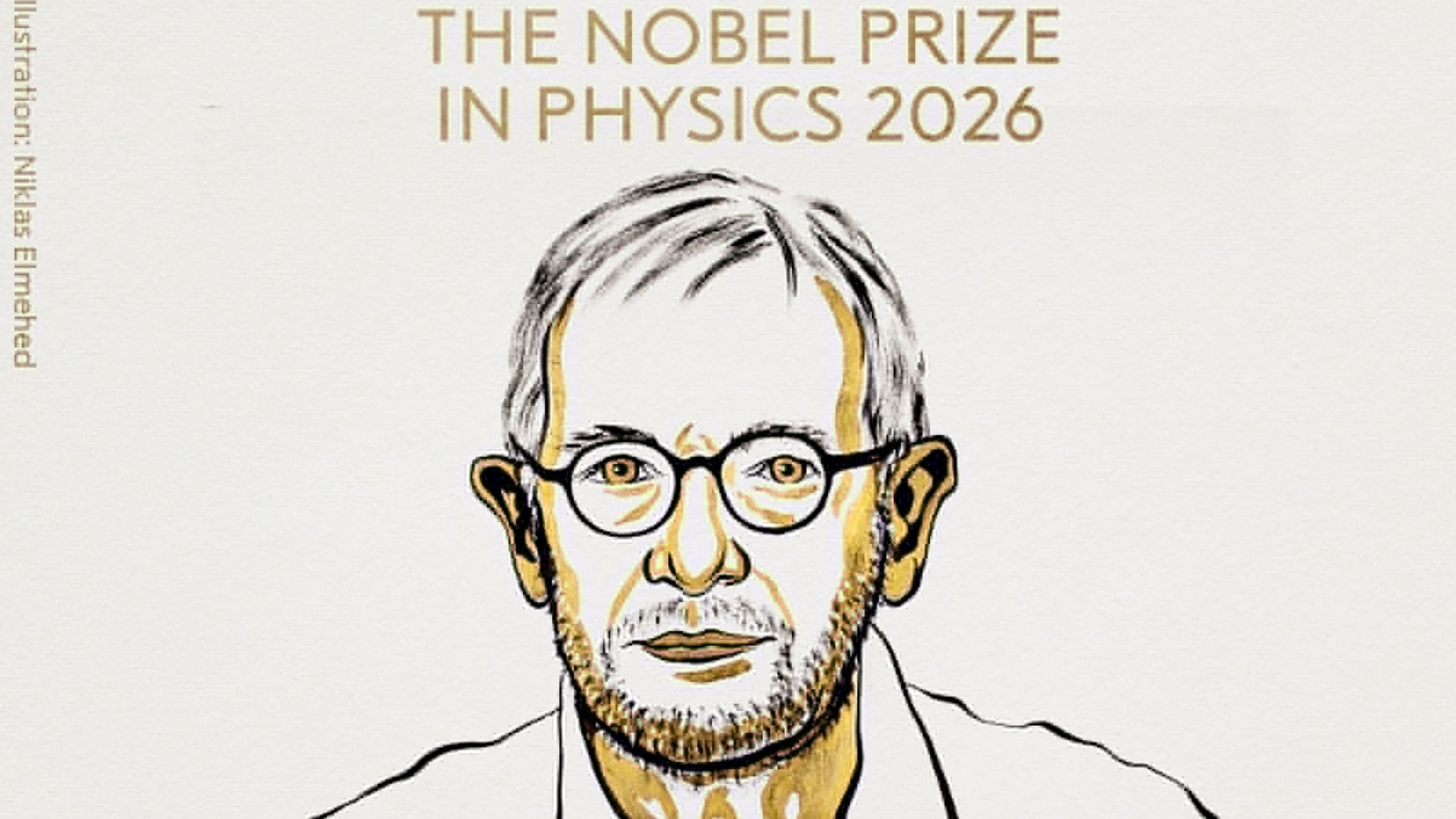
Belgian physicist Prof. Francis Halzen has been awarded the Nobel Prize in Physics for his leadership in developing the IceCube Neutrino Observatory. This Antarctic facility detects cosmic neutrinos, providing unprecedented insights into high-energy astrophysical phenomena.
A New Window into the Cosmos: Francis Halzen and the IceCube Legacy
The scientific community celebrates a monumental achievement as Belgian physicist Professor Francis Halzen is awarded the Nobel Prize in Physics. This recognition honors his visionary leadership in the development of the IceCube Neutrino Observatory, a groundbreaking facility located deep within the ice at the South Pole. By utilizing a cubic kilometer of Antarctic ice embedded with sophisticated light sensors, Halzen has successfully pioneered a new method for observing the universe.
The Science of 'Ghost Particles'
At the heart of this discovery are neutrinos, often colloquially referred to as "ghost particles." These subatomic entities are notoriously difficult to detect because they possess almost no mass and interact extremely weakly with matter. Halzen’s work focuses on capturing these particles as they travel from the most violent, high-energy regions of the cosmos. By detecting them, researchers can trace their origins back to extreme astrophysical events that were previously invisible to traditional electromagnetic telescopes.
Decades of Scientific Persistence
The journey to this Nobel honor began in 1988, when Professor Halzen first presented his ambitious vision for a neutrino detector at the South Pole. The transition from a theoretical concept to an operational, world-class observatory required immense international collaboration and decades of persistence. As noted by the Royal Swedish Academy of Sciences, Halzen’s scientific leadership was the fundamental catalyst that transformed this daring idea into a functional instrument capable of revealing the secrets of the distant universe.
Global Collaboration and Technical Mastery
IceCube represents a triumph of international cooperation, involving a vast team of researchers and engineers. Under Halzen’s guidance, the team navigated the logistical challenges of installing sensitive equipment into the harsh, remote Antarctic environment. This "fantastic instrument," as described by colleagues, has successfully turned a massive volume of natural ice into a particle detector, proving that large-scale, innovative engineering is essential for modern high-energy physics.
Broader Implications for Astrophysics
This award underscores the shift in modern physics toward multi-messenger astronomy. By studying neutrinos, scientists are no longer limited to the light spectrum; they can now analyze the high-energy processes driving the evolution of galaxies and black holes. The data provided by IceCube continues to challenge our understanding of cosmic rays and the fundamental forces governing the universe, setting the stage for future breakthroughs in particle astrophysics.
Financial Recognition and Future Outlook
The Nobel Prize, which includes a monetary award of 12 million Swedish kronor (approximately $1.2 million), serves as a testament to the societal and scientific value of Halzen's contributions. As we look to the future, the foundation laid by the IceCube project will likely inspire the next generation of observatories. Professor Halzen’s legacy is not just in the particles detected, but in the creation of an entirely new field of study that continues to push the boundaries of human knowledge.
Multiple Citing Sources
Verification Required?