Nobel Prize in Physics goes to Francis Halzen
Source Entity
Hacker News
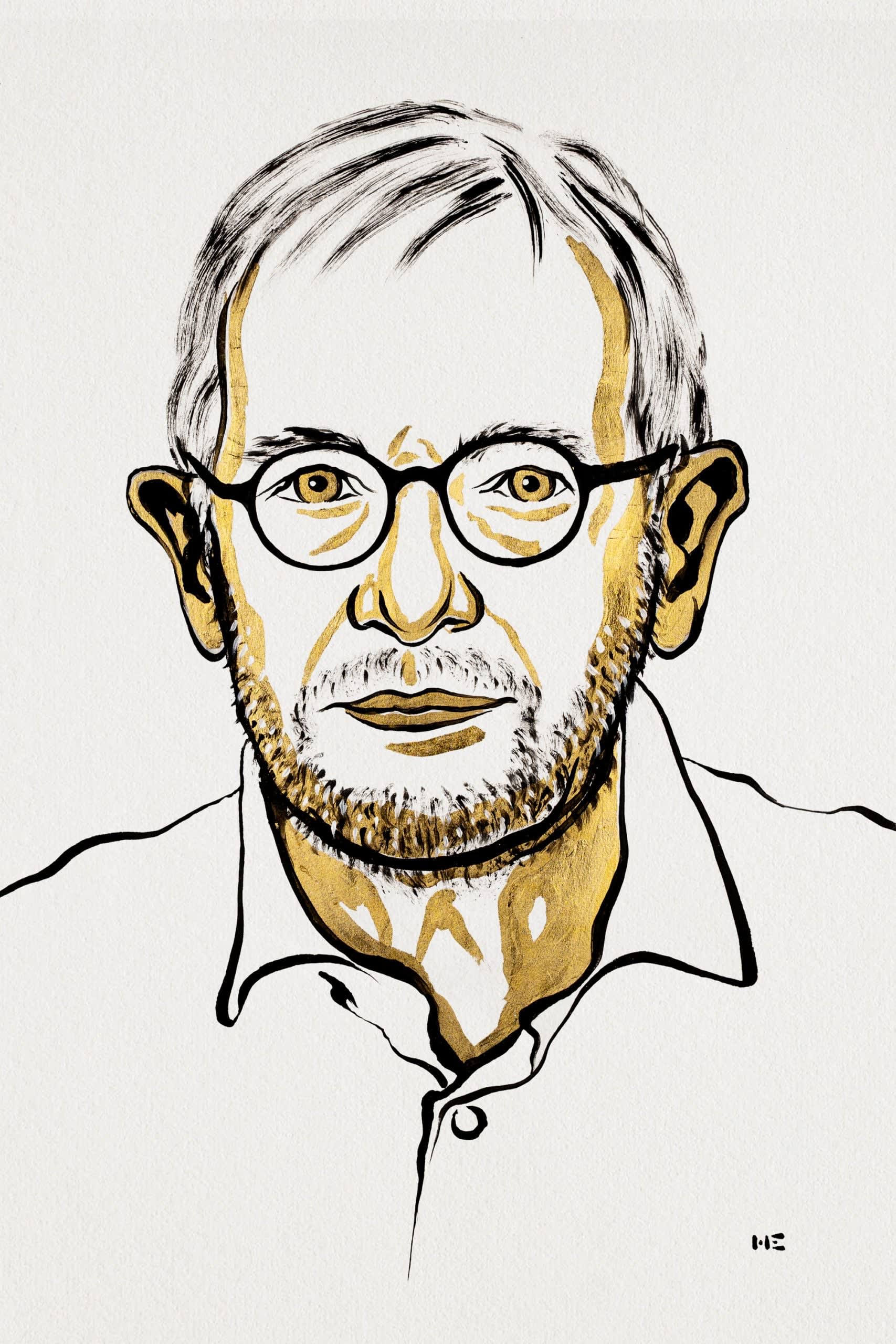
Belgian physicist Francis Halzen has been awarded the Nobel Prize in Physics for his leadership in developing the IceCube Neutrino Observatory. His work at the South Pole enables scientists to detect 'ghost particles' that reveal high-energy cosmic processes.
A New Era of Neutrino Astronomy
Belgian physicist Professor Francis Halzen has been awarded the Nobel Prize in Physics, a recognition of his monumental contributions to astrophysics and his visionary leadership in the development of the IceCube Neutrino Observatory. The prize, which carries a monetary award of 12 million Swedish kronor (approximately $1.2 million), honors his decades-long dedication to detecting 'ghost particles' that traverse the universe, providing humanity with a new lens through which to view the cosmos.
The Vision of IceCube
Halzen’s journey to this achievement began in 1988 when he first proposed the ambitious concept of utilizing the Antarctic ice sheet as a massive detector. Unlike traditional telescopes that rely on light, IceCube leverages a cubic kilometer of pristine Antarctic ice, embedded with sophisticated light sensors, to capture the elusive signatures of neutrinos. These subatomic particles, often dubbed 'ghost particles' due to their ability to pass through matter almost unimpeded, are the key to unlocking the mysteries of the distant universe.
Scientific Leadership and Global Collaboration
The Royal Swedish Academy of Sciences highlighted that Halzen’s scientific leadership was fundamental to the success of the observatory. By spearheading an international coalition of researchers and engineers, Halzen transformed a theoretical concept into a functional, world-class instrument. The success of IceCube serves as a testament to the power of global scientific collaboration, bringing together diverse expertise to overcome the extreme logistical challenges of building a research facility at the South Pole.
Decoding Violent Cosmic Processes
Neutrinos detected by IceCube originate from some of the most violent and energetic processes in the cosmos. Because they do not interact with electromagnetic fields, they travel in straight lines from their source, acting as messengers from regions of space that are otherwise obscured from our traditional optical telescopes. By studying these particles, scientists are now able to trace high-energy events such as blazars, black hole interactions, and supernovae with unprecedented precision.
Historical Significance and Future Outlook
This Nobel Prize places Halzen among the ranks of scientists who have fundamentally shifted our understanding of the universe. The history of the Nobel Prize is marked by breakthroughs that redefine human knowledge, and IceCube’s contribution to neutrino astronomy is certainly one of them. As the observatory continues to collect data, we can expect future discoveries to refine our models of particle physics and galactic evolution. The legacy of Halzen’s work will undoubtedly influence generations of astrophysicists who will continue to use the Antarctic ice as a gateway to the high-energy universe.
Multiple Citing Sources