99-million-year-old amber reveals insect with mouthpart twice its body length
Source Entity
TOI SCIENCE DESK
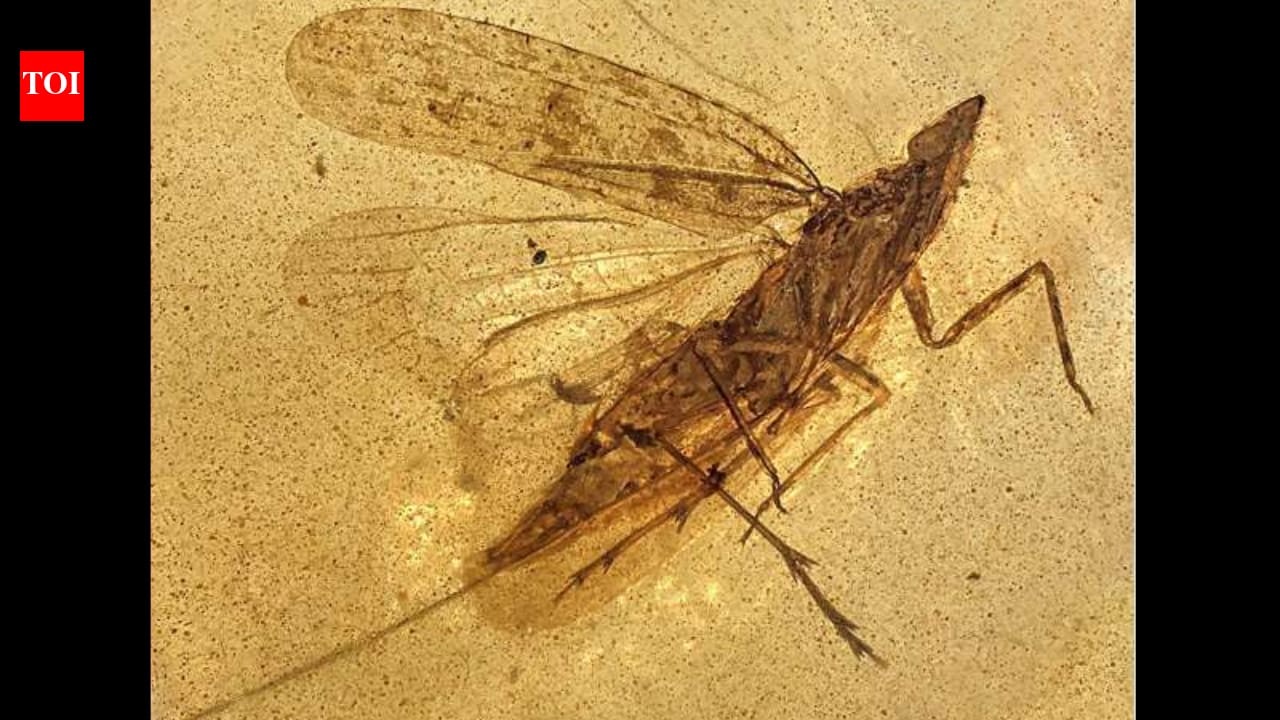
Scientists have discovered a new insect species, Cretodorus noonoo, preserved in 99-million-year-old amber from Myanmar. This unique creature features specialized, flexible mouthparts twice its body length, likely used for feeding on tree sap.
The Remarkable Discovery of Cretodorus noonoo
A groundbreaking paleontological discovery has emerged from the depths of 99-million-year-old amber sourced from Myanmar. Researchers have successfully identified a previously unknown insect species, named Cretodorus noonoo, which offers a rare, high-definition glimpse into the biological intricacies of the Cretaceous period. By analyzing 13 individual specimens preserved in this ancient resin, scientists have uncovered a morphology that challenges our understanding of prehistoric insect evolution.
Specialized Morphological Adaptations
The most striking feature of Cretodorus noonoo is its extraordinary mouthpart, which measures nearly twice the length of its entire body. This flexible, elongated structure represents a highly specialized evolutionary adaptation. Unlike the generalized mouthparts found in many contemporary insects, this anatomical feature suggests a niche ecological role, specifically designed for probing deep into the crevices of tree bark to access nutrient-rich sap.
Taxonomic Significance and the Neazoniidae Family
This discovery places the species within the Neazoniidae family, a group already recognized by the scientific community for possessing remarkably long mouthparts. The identification of Cretodorus noonoo serves as a critical data point in mapping the evolutionary lineage of this family. It confirms that the specialized feeding strategies observed in modern insects have deep roots in the Cretaceous, showcasing a long-standing evolutionary trend toward highly specific dietary habits.
Insights into Cretaceous Ecosystems
Beyond the individual characteristics of the insect, this find provides a broader perspective on the ecological interactions within ancient forests. The reliance on tree sap as a primary food source indicates a complex relationship between insects and the flora of the era. Understanding how these organisms successfully exploited such resources helps scientists reconstruct the food webs and environmental pressures that defined the Cretaceous landscape.
Evolutionary Strategies and Future Research
The discovery of Cretodorus noonoo highlights the immense diversity of evolutionary strategies that shaped ancient ecosystems. By surviving as a specialized feeder, this species demonstrated how evolutionary pressure can drive extreme anatomical changes to secure survival in a competitive environment. Future research will likely focus on comparing these ancient mouthparts with those of modern sap-feeding insects to determine how these specialized traits have been conserved or modified over tens of millions of years.
Conclusion
In summary, the unearthing of Cretodorus noonoo is a testament to the preservative power of amber and its utility in modern science. By bridging the gap between the Cretaceous period and our current understanding of insect biology, this discovery illuminates the intricate, specialized, and highly adaptive nature of life millions of years ago.