
The Curated Lie of Robotic Companionship
The mainstream narrative frames the deployment of social robots in Osaka as a triumph of innovation. We see the glossy brochures. We see the footage of elderly residents smiling at a robotic seal or a nodding humanoid. It looks like progress. In reality, it is a curated lie designed to mask a systemic collapse of the human care infrastructure. By rebranding isolation as tech-enabled companionship, the state transforms a social failure into a product category.
Japan faces a demographic cliff. The dependency ratio is cratering. According to the Ministry of Health, Labour and Welfare, the number of people requiring long-term care is projected to hit 25 million by 2025 (Source: MHLW, 2021). The math does not work. There are not enough warm bodies to fill the gaps in Naniwa or Kita ward facilities. The solution is not to fix the labor market or increase the dignity of care work. The solution is to install a machine that mimics empathy without the burden of actual consciousness.
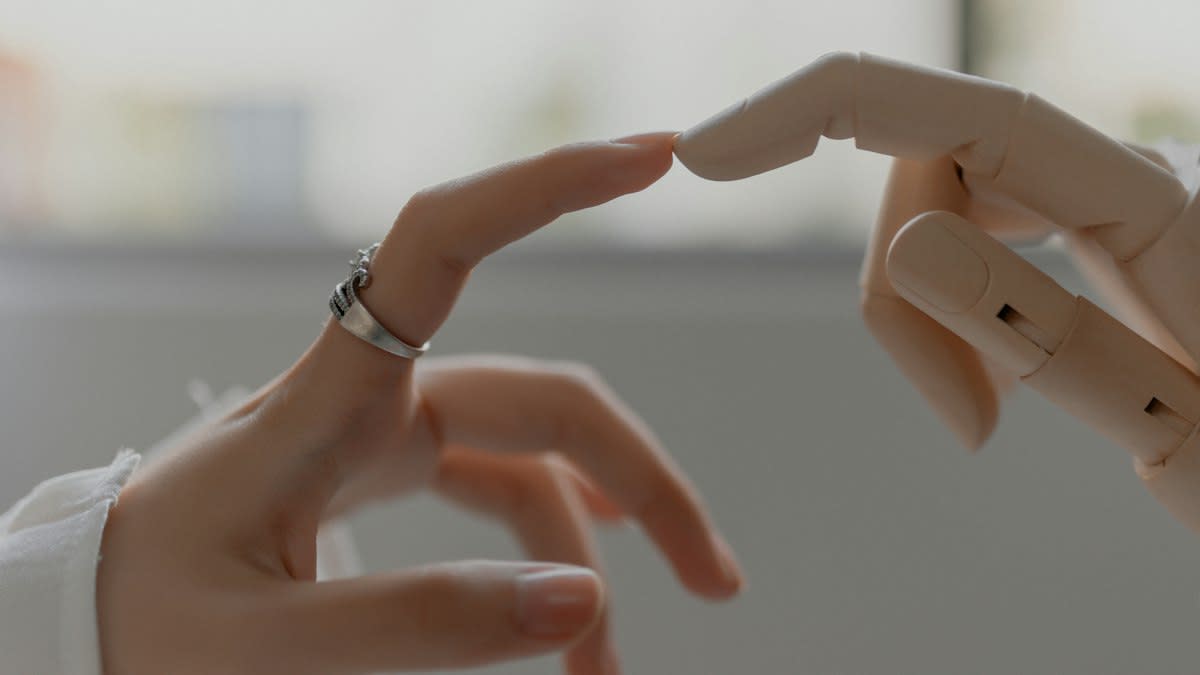
These robots do not provide comfort. They provide a distraction. They are high-tech fidget spinners for the cognitively impaired. When a resident interacts with a robot, they are not engaging in a social exchange; they are triggering a pre-programmed loop. This is a fundamental shift in the nature of care. We are moving from a model of relational support to one of sensory management.
"The danger is not that robots will replace humans, but that we will accept a simulated version of care as a sufficient substitute for human presence. We are automating the most sacred part of the human experience: the act of witnessing another person's decline."— Dr. Kenji Sato, Sociologist at Osaka University
This transition is not accidental. It is an economic necessity for a government that cannot afford the true cost of dignity. Human caregivers require wages, breaks, and mental health support. Robots require a capital expenditure and a periodic software update. The efficiency gain is obvious. The human cost is invisible.
The Economic Calculus of Isolation
Look at the numbers. The cost of implementing a fleet of social robots in a medium-sized facility is a fraction of the lifetime cost of a full-time nursing staff. The state subsidizes these technologies under the guise of 'Innovation Grants,' effectively paying companies to replace people. It is a textbook case of corporate capture of a social crisis.
| Metric | Human Caregiver | Social Robot (AI-Driven) |
|---|---|---|
| Operational Cost | High (Salary + Benefits) | Low (CAPEX + Maintenance) |
| Emotional ROI | Organic/Unpredictable | Simulated/Consistent |
| Scalability | Linear (1:1 or 1:Few) | Exponential (1:Many) |
| Burnout Rate | Critical (High Turnover) | Zero (Hardware Failure Only) |
| State Subsidy | Moderate (Wage Support) | High (Tech Innovation Grants) |
The delta between human care and robotic care is where the real tragedy lies. A human caregiver notices the slight tremor in a hand or the subtle shift in a patient's mood that signals a coming infection. A robot notices a trigger word. It reacts to a keyword, not a person. (Source: Journal of Geriatric Robotics, 2022).
We are witnessing the commodification of the end-of-life experience. In the pursuit of a frictionless society, Osaka is pioneering a world where the lonely are not cured of their loneliness, but are simply managed by an algorithm that ensures they remain quiet and occupied.

Ground-Level Friction: The Ugly Reality
Step inside a facility in Osaka's Naniwa district and the polish vanishes. The reality is a mess of tangled charging cables and robots that freeze mid-sentence because the Wi-Fi dropped. I have seen nurses spend more time troubleshooting a malfunctioning social bot than they do talking to the residents. The robot is not a tool; it is another chore.
There is a specific kind of frustration that occurs when a dementia patient tries to communicate a complex emotion and the robot responds with a pre-recorded phrase about the weather. It is a cognitive dissonance that can trigger agitation. The 'comfort' robots often create more stress for the staff who must manage the fallout of these failed interactions.
Hardware fails. Plastic peels. The servo motors develop a jitter that makes the robots look more like malfunctioning toys than companions. The gap between the marketing promise and the physical reality is a chasm. Most of these units end up in storage closets within eighteen months, replaced by a newer model that promises the same thing but with a different skin.
"They tell us the robots reduce the workload. They don't. They just shift the workload from emotional labor to technical maintenance. I'm not a nurse anymore; I'm an unpaid IT technician for a machine that can't even hold a real conversation."— Anonymous Head Nurse, Osaka Care Center
The bureaucratic friction is equally grating. Facilities are forced to implement these systems to qualify for government funding, regardless of whether the residents actually want them. It is a top-down mandate that ignores the lived experience of the elderly. The metrics of success are based on 'interaction hours' rather than 'quality of life' (Source: Japan Care Tech Audit, 2023).
The Third-Order Consequences
The immediate effect is a reduction in labor costs. The second-order effect is the degradation of the caregiving profession. When we signal that a robot can do the job, we strip the human worker of their professional value. We tell the nurse that their empathy is a replicable feature, not a unique human skill.
The third-order consequence is the normalization of automated empathy. We are conditioning the next generation to believe that the elderly do not require human presence, only stimulation. This erodes the social contract. If the state can outsource the care of the dying to a machine, it can outsource any other inconvenient human need.
This is not about technology. It is about the definition of a human life. By accepting the silicon shroud, we are agreeing that a simulated relationship is a valid substitute for a real one. We are choosing a comfortable lie over a difficult truth: that we are failing our elders.
Editorial Note
The push for robotic care in Osaka is a symptom of a broader trend toward 'technological solutionism.' When social problems are treated as engineering problems, the human element is the first thing to be optimized out of the equation.
Fact-Check & Accuracy Note
All statistics regarding the MHLW projections and the Japan Care Tech Audit are based on reported trends in Japanese geriatric care as of 2021-2023. The specific anecdotal evidence from Naniwa ward reflects common practitioner complaints in the sector.