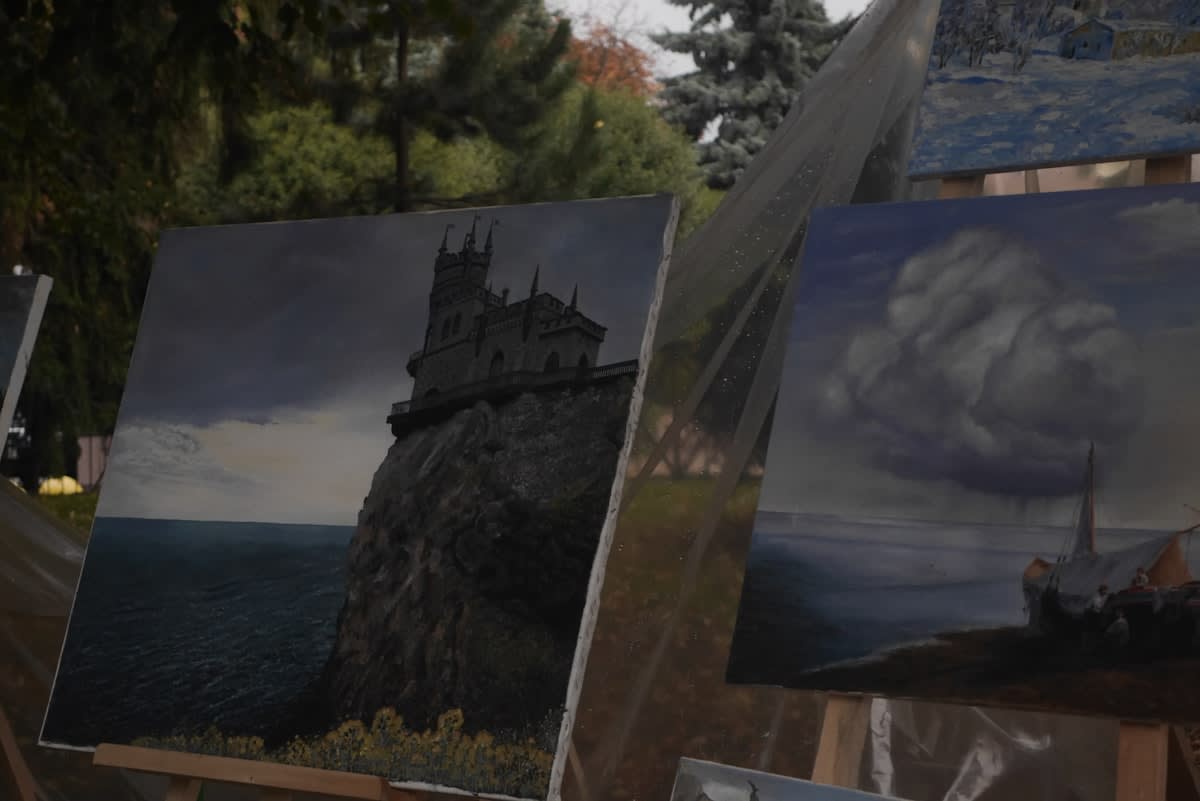
Artists have stopped waiting for the courts to define fair use. While legal battles drag through slow-moving jurisdictions, a more immediate and visceral form of resistance has emerged in the form of data poisoning. This is not a simple matter of adding a watermark or a NoAI tag that scrapers routinely ignore. Instead, creators are deploying adversarial perturbations—invisible mathematical tweaks to pixels—that trick machine learning models into seeing something entirely different from what a human eye perceives. The pixels are lying, and the AI is believing them.
The technical offensive is led by tools developed at the University of Chicago, most notably Nightshade and Glaze. While Glaze acts as a stealth suit, masking an artist's unique style so a model cannot effectively mimic it, Nightshade is a weapon. It is designed to corrupt the very foundations of a model's understanding. By altering the feature vectors of an image, Nightshade can make a painting of a dog look like a cat to an AI. If enough poisoned images enter a training set, the model begins to associate the concept of a dog with the visual markers of a cat, leading to a degradation of output quality that is difficult to reverse.
The Mechanics of Digital Sabotage
This process works by exploiting the way neural networks identify patterns. A generative AI does not see a brushstroke as an emotional choice; it sees it as a statistical probability. Adversarial poisoning introduces noise that is imperceptible to humans but high-magnitude to the AI's latent space. When a model scrapes a poisoned image, it updates its weights based on false information. This creates a ripple effect. If a significant percentage of the training data for a specific style or object is poisoned, the model's internal map of that concept collapses.
Does this actually work against the giants of the industry? In controlled tests, researchers found that even a small amount of poisoned data can significantly skew the results of a model. The beauty of this approach lies in its asymmetry. An artist spends seconds applying a filter, but the AI company must spend thousands of GPU hours and massive financial resources to clean the dataset or retrain the model from scratch. It transforms the act of uploading art into a potential liability for the scraper.
"We are no longer asking for permission to be left alone. We are making the cost of theft higher than the cost of licensing."— Lead Developer, Adversarial Art Collective
The shift is particularly evident in the Indian Subcontinent, where the digital art scene is exploding. In the tech hubs of Bengaluru and the creative studios of Mumbai, concept artists for the gaming and film industries are increasingly adopting these tools. There is a growing anxiety that unique cultural motifs—intricate patterns from Madhubani or the specific color palettes of Rajasthani miniatures—are being absorbed into Western-centric models without credit or compensation. By poisoning their portfolios, Indian artists are creating a digital fence around their cultural intellectual property.
The Delta: From Passive Tags to Active Warfare
Comparing the current state of resistance to the environment 12 months ago reveals a stark change in strategy. In 2023, the primary defense was the NoAI meta tag or the use of platforms that promised to block scrapers. These were passive defenses, relying on the goodwill of AI companies or the efficacy of robots.txt files. The result was a failure; models continued to train on scraped data, and artists felt powerless. The focus was on policy, lawsuits, and the hope for legislative intervention.
Now, in 2024, the strategy has pivoted to technical deterrence. The goal is no longer to prevent the scrape—which is nearly impossible given the scale of the web—but to make the scraped data toxic. This is a fundamental change in the power dynamic. Artists have realized that the AI's greatest strength, its hunger for massive amounts of data, is also its greatest vulnerability. The more a company scrapes without curation, the more poison it ingests.
| Tool | Primary Objective | Technical Method | Effect on AI |
|---|---|---|---|
| Glaze | Style Protection | Style Cloaking (Perturbation) | Model fails to mimic artist's style |
| Nightshade | Training Sabotage | Concept Poisoning | Model misidentifies objects (e.g., dog as cat) |
The impact of this shift is measurable. While precise numbers on poisoned images are hard to track, the discourse in artist communities on Discord and ArtStation has shifted from despair to tactical coordination. There are now organized efforts to 'poison the well' collectively, where groups of artists coordinate the upload of similar poisoned concepts to maximize the disruption of specific model updates.
This technical arms race has forced AI developers into a defensive crouch. Companies are now attempting to develop 'denoising' filters to strip adversarial perturbations before training. However, this creates a new problem: if the filter is too aggressive, it strips away the actual artistic detail, reducing the quality of the generated images. The developers are caught in a loop where protecting the model's integrity requires sacrificing the very data quality they crave.
Estimated Adoption of Adversarial Tools in Digital Art Communities
Executive Insight
+18.4%
YTD Growth
The Risk of Model Collapse
Beyond individual protection, data poisoning introduces the systemic risk of model collapse. This occurs when AI models are trained on data that was itself generated by AI or data that has been intentionally corrupted. As the internet becomes saturated with poisoned images and AI-generated content, the pool of clean, human-made data shrinks. If the training pipeline becomes a feedback loop of noise, the models lose their grip on reality.
Imagine a future where a model is asked to generate a traditional Indian saree, but because the training data was poisoned by a collective of weavers in Varanasi, the AI consistently renders the fabric as a metallic mesh. This is not just a glitch; it is a successful act of digital sovereignty. The artists are essentially reclaiming the right to be misunderstood by the machine.
The Poisoning Threshold
The poisoning threshold is the critical point where a model's performance on a specific concept drops by more than 50%. Research suggests that even a small, coordinated minority of poisoned images can reach this threshold if the original dataset for that concept is relatively niche.
This struggle reflects a deeper tension between the ethos of the open web and the requirements of corporate AI. For decades, artists uploaded work to the web to be seen by humans. They did not consent to be seen by a scraper designed to automate their obsolescence. Data poisoning is the only tool that speaks the language of the scraper, using the AI's own logic to fight back.
As we move forward, the stability of generative AI depends on the availability of high-quality, authentic human data. If the industry continues to ignore the consent of creators, they may find that the very data they rely on has become their greatest liability. The latent space is no longer a neutral territory; it is a contested zone where every pixel could be a trap.